Telescope Comparison
Vaonis Vespera Pro vs ZWO Seestar S50
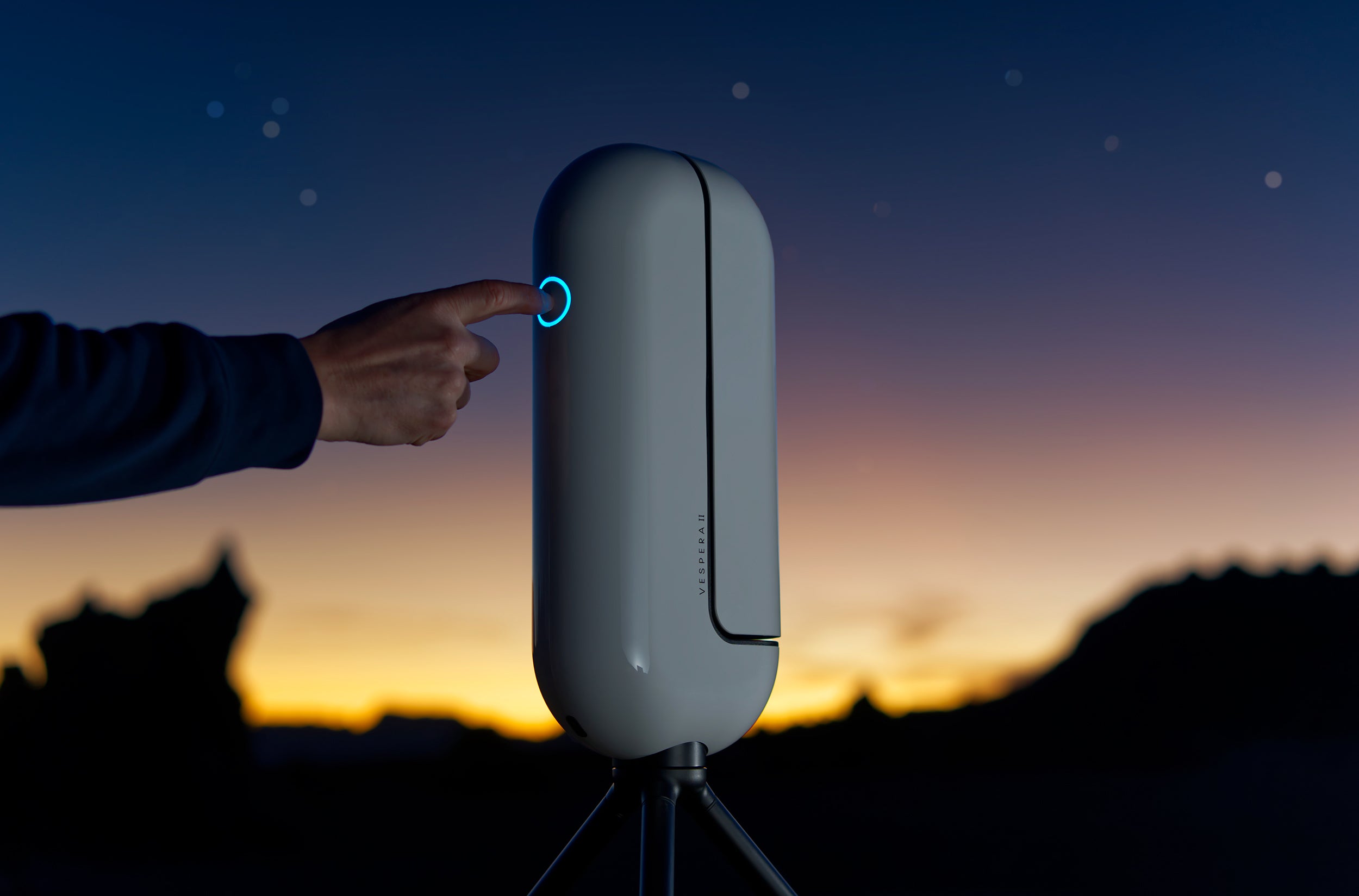
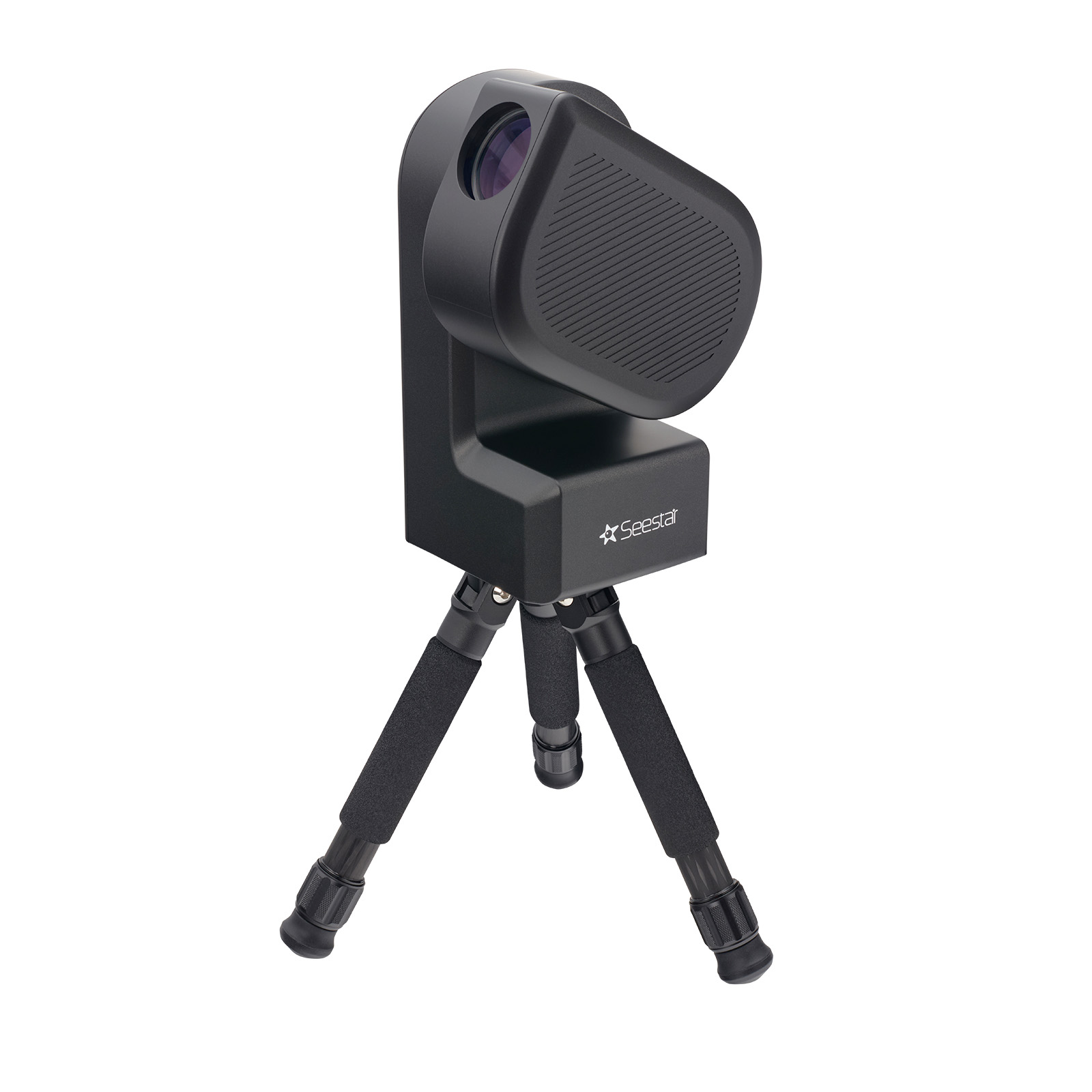
The price gap is real. The question is whether the extra capability is worth it at your stage.
Affiliate links — we earn from qualifying purchases at no extra cost to you.
First light
Vaonis · 50mm · £949
The app-native deep-sky imager
- 50mm sensor-based smart telescope — no traditional eyepiece
- Connects to a smartphone app; the app selects, slews to, and stacks targets automatically
- Best for: faint deep-sky objects — galaxies, nebulae, star clusters built up over minutes
- Not for direct eyepiece viewing — every view is delivered on a phone or tablet screen
- 3.5kg compact all-in-one unit
ZWO · 50mm · £539
The app-native deep-sky imager
- 50mm sensor-based smart telescope — no traditional eyepiece
- Connects to a smartphone app; the app selects, slews to, and stacks targets automatically
- Best for: faint deep-sky objects — galaxies, nebulae, star clusters built up over minutes
- Not for direct eyepiece viewing — every view is delivered on a phone or tablet screen
- 2.5kg compact all-in-one unit
The full picture
The numbers that separate these two scopes — and what they mean at the eyepiece.
Aperture
Effectively equal light-gathering. Aperture won't settle this comparison — the mount, focal ratio, and observing experience are what differ.
Focal length
Same focal length — identical magnification with any given eyepiece. Differences come from optical design and coatings.
Focal ratio
Focal ratio is not meaningful for smart telescope sensor systems — the optics are optimised for the built-in sensor rather than interchangeable eyepieces.
Mount type
Same mount type — setup experience and ergonomics will be similar. Differences lie in build quality and included accessories.
Weight (OTA)
ZWO Seestar S50's optical tube is 1.0kg lighter. Relevant if you plan to use it on multiple mounts or carry the tube to dark-sky sites separately.
Optical design
Both sensor-based smart telescopes — no eyepiece, app-controlled, live stacking. The differences are in sensor size, aperture, and companion software quality.
At the eyepiece
Vaonis
Vaonis Vespera Pro
You won't use an eyepiece. Let the scope align itself, select a target in the app, and watch the image build over a minute or two as frames stack automatically. The Orion Nebula (M42) starts as a faint smear and brightens into a structured object with the Trapezium visible as a tight cluster. The Andromeda Galaxy (M31) shows more than a smudge — on a good night the bright core separates from the outer halo. Hand your phone to someone who has never looked at the night sky and they will immediately understand what they're seeing. The trade-off is direct: there is no eyepiece, and the view is always mediated by the app.
ZWO
ZWO Seestar S50
You won't use an eyepiece. Let the scope align itself, select a target in the app, and watch the image build over a minute or two as frames stack automatically. The Orion Nebula (M42) starts as a faint smear and brightens into a structured object with the Trapezium visible as a tight cluster. The Andromeda Galaxy (M31) shows more than a smudge — on a good night the bright core separates from the outer halo. Hand your phone to someone who has never looked at the night sky and they will immediately understand what they're seeing. The trade-off is direct: there is no eyepiece, and the view is always mediated by the app.
The real tradeoff
Both scopes are capable. The question is which one fits the way you actually observe.
The Vaonis Vespera Pro costs 76% more. The premium buys a more capable mount and better build quality, not larger optics. For a first telescope, the ZWO Seestar S50 is the smarter entry point. Return to the Vaonis Vespera Pro when you know from experience what you actually need.
The dark side
Every scope has a personality. Here’s where each one gets difficult.
Vaonis
Vaonis Vespera Pro
No eyepiece — ever
Every view is mediated by the app. If you wanted the experience of pressing your eye to a lens and looking at the sky, this is the wrong scope.
App dependency is total
Poor connectivity, a software update, or a phone issue can end a session. There is no manual fallback.
Not designed for fine planetary detail
Smart telescopes excel at faint deep-sky objects through live stacking. Fine planetary detail — Jupiter's cloud bands at high resolution, Saturn's Cassini Division — is not what these are optimised for.
ZWO
ZWO Seestar S50
No eyepiece — ever
Every view is mediated by the app. If you wanted the experience of pressing your eye to a lens and looking at the sky, this is the wrong scope.
App dependency is total
Poor connectivity, a software update, or a phone issue can end a session. There is no manual fallback.
Not designed for fine planetary detail
Smart telescopes excel at faint deep-sky objects through live stacking. Fine planetary detail — Jupiter's cloud bands at high resolution, Saturn's Cassini Division — is not what these are optimised for.
Which is right for you?
Two different buyers. Two different right answers.
The app-native deep-sky imager
Vaonis · Vaonis Vespera Pro
You’ll love this if…
- You want to show someone a processed image of a distant galaxy on your phone and have them immediately understand what they're seeing
- You observe from a heavily light-polluted area where a traditional telescope would struggle to show faint deep-sky objects without long effort
- A traditional eyepiece-based telescope sounds like more effort than you want right now — you want the imaging to be automatic
This will frustrate you if…
- You wanted the experience of pressing your eye to an eyepiece and looking at the sky — there is no eyepiece here, and every view is on a screen
- You observe in a location with unreliable WiFi or phone connectivity — the app is the entire interface, and without it the session ends
The app-native deep-sky imager
ZWO · ZWO Seestar S50
You’ll love this if…
- You want to show someone a processed image of a distant galaxy on your phone and have them immediately understand what they're seeing
- You observe from a heavily light-polluted area where a traditional telescope would struggle to show faint deep-sky objects without long effort
- A traditional eyepiece-based telescope sounds like more effort than you want right now — you want the imaging to be automatic
This will frustrate you if…
- You wanted the experience of pressing your eye to an eyepiece and looking at the sky — there is no eyepiece here, and every view is on a screen
- You observe in a location with unreliable WiFi or phone connectivity — the app is the entire interface, and without it the session ends
Our verdict
At £539 versus £949, the Vaonis Vespera Pro costs 76% more. The extra money buys a more capable mount and better build quality, not larger optics.
For most buyers starting out, the ZWO Seestar S50 is the sensible choice — put the savings into a better eyepiece. The Vaonis Vespera Pro makes sense once you know exactly why you need what it offers. If I had to choose: the ZWO Seestar S50, and spend the difference on a quality eyepiece.
Vaonis Vespera Pro
View Vaonis Vespera Pro →ZWO Seestar S50
View ZWO Seestar S50 →Affiliate links — we earn from qualifying purchases at no extra cost to you.
Deep field: Full specifications
Every data point, for those who want to go further.
Full specifications
Fields highlighted in blue or amber indicate the better value for that spec. Data is manufacturer-stated and may vary.
How much can it see?
| Spec | Vaonis Vespera Pro | ZWO Seestar S50 |
|---|---|---|
Aperture The most important spec — bigger = more light = better views | 50mm | 50mm |
Focal Length Longer = more magnification potential | 250mm | 250mm |
Focal Ratio Lower f-number = wider field of view; higher = more magnification per eyepiece | f/5 | f/5 |
Optical Design The type of optics — each design has different strengths | Smart Telescope | Smart Telescope |
Coatings Better coatings = more light transmission through the optics | Multi-coated ED doublet objective | Multi-coated ED doublet objective |
How do you point it?
| Spec | Vaonis Vespera Pro | ZWO Seestar S50 |
|---|---|---|
Mount Type The mechanical system that holds and moves the telescope | Integrated | Integrated |
GoTo Computer-controlled pointing — finds any of thousands of objects automatically | ||
Tracking Motor keeps objects centred as the Earth rotates — essential for astrophotography |
The focuser
| Spec | Vaonis Vespera Pro | ZWO Seestar S50 |
|---|---|---|
Focuser Size 2" accepts wider eyepieces and gives better low-power views | — | — |
Focuser Type Rack-and-pinion is standard; Crayford and dual-speed are smoother | Motorised electric focuser with auto-focus | Motorised electric focuser (auto-focus via software) |
Size & weight
| Spec | Vaonis Vespera Pro | ZWO Seestar S50 |
|---|---|---|
OTA Weightⓘ Optical tube only — useful for comparing mount load capacity | 3.5kg | 2.5kg |
Total Weightⓘ Full setup including mount — this is what you lug to the car | 3.5kg | 2.5kg |
Tube Length | — | 270mm |
Tube Material | Aluminium alloy | Aluminium alloy with polycarbonate housing |
What's in the box?
| Spec | Vaonis Vespera Pro | ZWO Seestar S50 |
|---|---|---|
Diagonal Tilts the eyepiece 90° for comfortable viewing — useful on refractors |
Smart features
| Spec | Vaonis Vespera Pro | ZWO Seestar S50 |
|---|---|---|
Built-in Camera Records and stacks images automatically — no separate camera needed | ||
App Controlled | ||
WiFi | ||
Battery Included | ||
Sensor | 1/1.8" Sony CMOS | 1/2.8" Sony IMX462 CMOS |
Sensor Resolutionⓘ Higher megapixels captures finer detail | 4MP | 2.1MP |
Blue highlight: Vaonis Vespera Pro advantage · Amber highlight: ZWO Seestar S50 advantage · Greyed cells: equal or subjective.