Browse·Compounds·Celestron EdgeHD 8" + CGX
Celestron
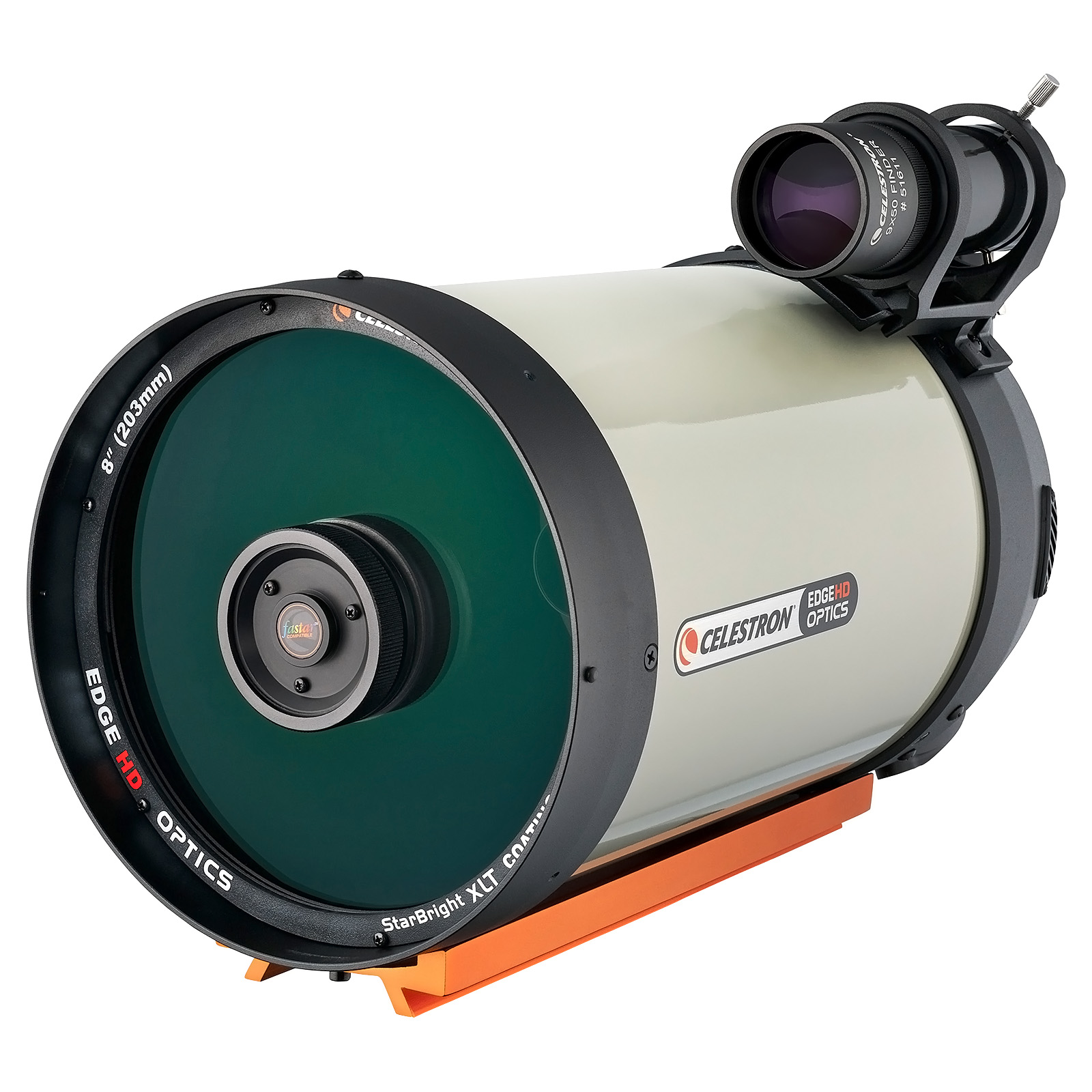
Celestron EdgeHD 8" + CGX
Closed-tube SCT delivering exceptionally sharp off-axis stars when properly cooled.
Affiliate link — we earn from qualifying purchases at no extra cost to you.
From the community
What owners say
Based on 24 Cloudy Nights discussions
What they love
- ✓Sharp field performance across entire field of view when properly cooled and collimated
- ✓Superior off-axis sharpness compared to standard SCTs
- ✓Excellent performance on planets, moon, and double stars
- ✓Clean Airy patterns achievable under good seeing conditions
- ✓Better central star sharpness than standard C8 models
What caught them off guard
- !Extended cool-down time due to sealed optical design - takes 3-4 hours to reach thermal equilibrium versus 1-2 hours for…
- !Heat trapped inside baffle tube creates thermal currents affecting star images
- !In-focus star images appear mushy and blurred even with perfect collimation and good seeing
- !Stars show flaring and lack the crisp appearance of refractors
- !Poor visual performance compared to non-Edge C8 models for visual observing
Top targets reported by owners
What you'll see
Jupiter
described as 'very good' on warm nights with steady seeing; excellent for planetary detail and split…
Moon
consistently praised for detail and contrast
Mars during opposition
'unbelievably steady' daytime viewing with striking color contrast; capable of detailed surface feat…
Double stars
cleanly split even when other star images appear soft; useful for assessing actual performance vs.
Worth knowing before you buy
Long thermal cool-down time due to sealed optical design: takes 3-4 hours to reach thermal equilibrium, significantly lo…
Trapped heat inside the closed baffle tube causes extended thermal issues and heat plumes visible in defocused star imag…
Stars appear fuzzy or mushy at medium to high magnifications (150X-300X) when scope is not fully thermally equilibrated,…
Head to head
How it compares
EdgeHD 8" + CGX
Celestron
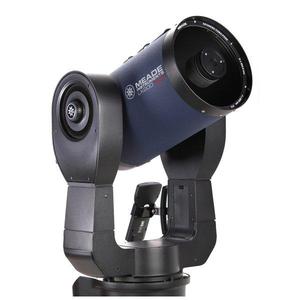
Meade LX200 8"
Meade Instruments
203mm · GoTo Schmidt-Cassegrain vs 203mm · GoTo Schmidt-Cassegrain
Full comparison →
EdgeHD 8" + CGX
Celestron
CGEM II 8 SCT
Celestron
203mm · GoTo Schmidt-Cassegrain vs 203mm · GoTo Schmidt-Cassegrain
Full comparison →
EdgeHD 8" + CGX
Celestron
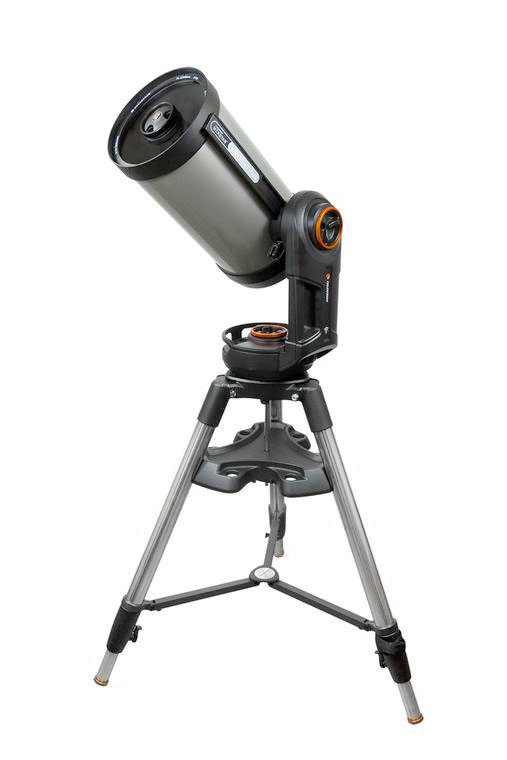
NexStar Evolution 9.25
Celestron
203mm · GoTo Schmidt-Cassegrain vs 235mm · GoTo Schmidt-Cassegrain
Full comparison →
EdgeHD 8" + CGX
Celestron
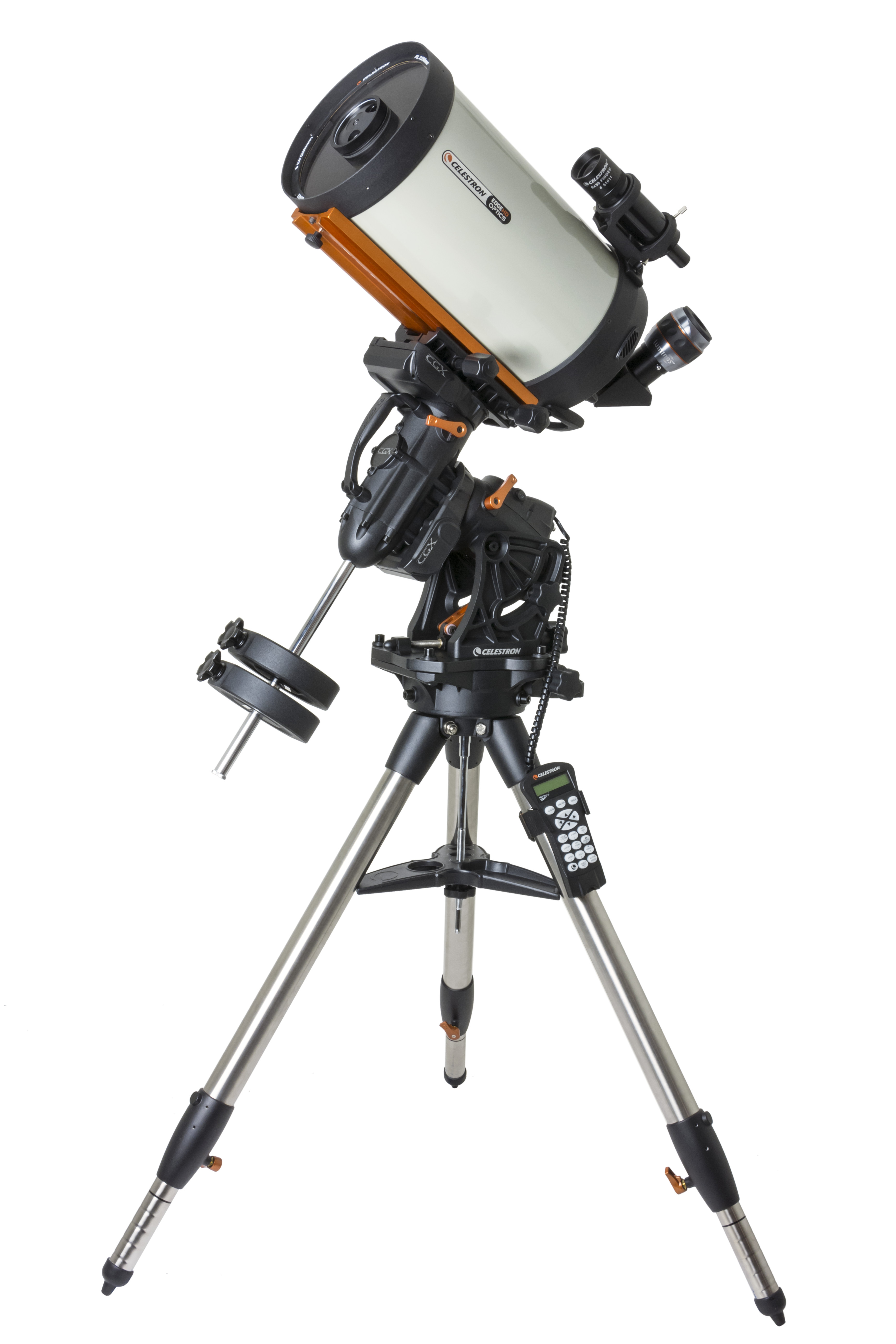
EdgeHD 9.25"
Celestron
203mm · GoTo Schmidt-Cassegrain vs 235mm · GoTo Schmidt-Cassegrain
Full comparison →
Frequently asked
Questions from owners
Sourced from Cloudy Nights discussions.
- Why do my stars look fuzzy even after collimation?
- Thermal equilibration is the primary culprit—the EdgeHD 8's sealed baffle tube traps heat and takes 3–4 hours to cool down completely, significantly longer than standard SCTs. Poor atmospheric seeing, high magnification beyond 25× per inch of aperture, and astigmatism in your observing eye also contribute.
- Is the EdgeHD 8 good for visual observation compared to a standard C8?
- When properly cooled and collimated under good seeing, the EdgeHD produces sharper stars across the entire field due to its coma-corrected design, especially off-axis. However, owners note that in poor seeing conditions or without adequate thermal equilibration, a standard C8 or C8 XLT may deliver better practical results because their simpler optical path cools faster.
- How long does the EdgeHD 8 take to cool down?
- Multiple owners report 3–4 hours for complete thermal equilibrium in winter conditions, compared to around 1–2 hours for standard SCTs. The closed baffle tube design with optical elements at the rear restricts air circulation and heat escape.
- What collimation method works best for the EdgeHD 8?
- Using a high-speed camera with Metaguide or similar software provides more reliable collimation than visual Ronchi or Airy disk methods, which are difficult to perform accurately under typical seeing conditions. Multiple owners emphasize that collimation must be verified on an actual in-focus star image at the edge of the field, not just by achieving a concentric donut in the out-of-focus pattern.
- Does back focus distance matter for visual use like it does for imaging?
- While back focus is critical for imaging to achieve proper spacing and avoid optical anomalies, visual observers report it has minimal practical impact as long as focus is achievable with the eyepiece and diagonal combination you choose. However, using a shorter visual back (like the 2-inch shorty) instead of the longer supplied back may improve cooling slightly by reducing tube length.
- Should I buy the EdgeHD 8 or stick with a standard C8 for visual use?
- Choose the EdgeHD if you observe under consistently good seeing conditions, have patience for long cool-down periods, and value a sharp field edge-to-edge. Choose the standard C8 XLT if you want faster cool-down, shorter thermal equilibration time, or observe under average to poor seeing where the simpler design performs comparably.
Full Specifications
Optics
| Aperture | 203mm |
| Focal Length | 2032mm |
| Focal Ratio | f/10 |
| Optical Design | Schmidt-Cassegrain |
| Coatings | StarBright XLT fully multi-coated, EdgeHD flat-field corrector |
Mount & Tracking
| Mount Type | GoTo (Computerised) |
| GoTo (Computerised) | Yes |
| Tracking | Yes |
| Tracking Motor | Dual axis (CGX equatorial GoTo mount) |
Focuser
| Focuser Size | 2" |
| Focuser Type | SCT rear-cell focuser (2" visual back included) |
Physical
| OTA Weight | 5.4kg |
| Total Weight (with mount) | 28kg |
| Tube Length | 432mm |
| Tube Material | Aluminium |
Included Accessories
| Eyepieces | 25mm Plössl |
| Finder Scope | StarPointer red dot finder |
| Diagonal | No |