Browse·Compounds·Celestron NexStar 5SE
Celestron
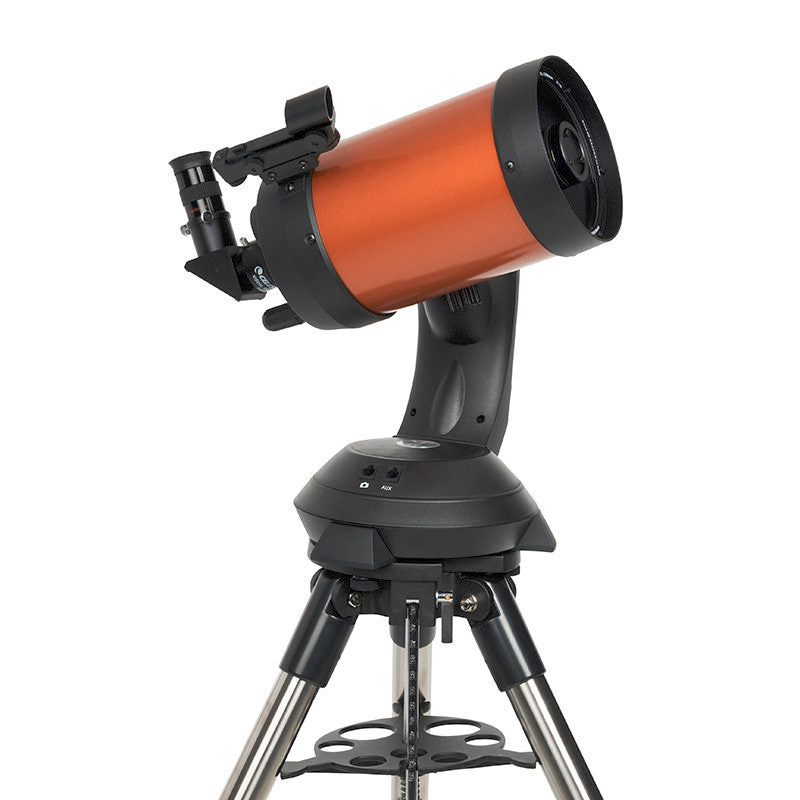
Celestron NexStar 5SE
Versatile five-inch SCT that excels at planets while remaining genuinely portable.
Affiliate link — we earn from qualifying purchases at no extra cost to you.
From the community
What owners say
Based on 25 Cloudy Nights discussions
What they love
- ✓Sharp views on planets, especially Jupiter showing cloud bands, loops, ovals, and the Great Red Spot
- ✓Good lunar observation showing thousands of craters and detail
- ✓Excellent for double stars and asterisms like the Pleiades
- ✓Reliable GoTo functionality from the hand controller
- ✓Compact and portable for a 5-inch scope
What caught them off guard
- !Limited ability to see faint DSOs from light-polluted suburban locations
- !Narrow field of view compared to refractors, limiting observation of large objects
- !The mount becomes overloaded when mounting cameras for astrophotography
- !Poor wedge implementation on SE mount makes polar alignment and astrophotography challenging
- !Not suitable for high-quality DSO astrophotography without significant additional investment
Top targets reported by owners
What you'll see
Jupiter
shows cloud bands, loops, ovals of white and dark brown, barges, Great Red Spot (appears more pink t…
Saturn
spectacular ring system, Cassini Gap visible, B gap glimpsed in good seeing, planet shows as tinted…
Moon
thousands of craters visible, craters within craters, excellent detail
Orion Nebula
viewable and satisfying from light-polluted areas
Worth knowing before you buy
The focuser accepts standard 1.
The SE mount (shared with 4SE) becomes overloaded when adding cameras or heavy accessories like binoviewers, requiring users to upgrade to a separate equatorial mount for imaging purposes.
The included tripod legs are not sturdy enough to handle the optical tube's weight without significant vibration that takes 5-6 seconds to settle after the slightest touch.
Head to head
How it compares
NexStar 5SE
Celestron
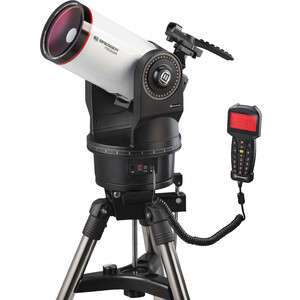
Messier MC-127/1900 GoTo
Bresser
125mm · GoTo Schmidt-Cassegrain vs 127mm · GoTo Maksutov-Cassegrain
Full comparison →
NexStar 5SE
Celestron
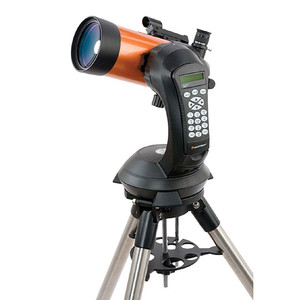
NexStar 4SE
Celestron
125mm · GoTo Schmidt-Cassegrain vs 102mm · GoTo Maksutov-Cassegrain
Full comparison →
NexStar 5SE
Celestron
Meade LX65 6" Mak
Meade Instruments
125mm · GoTo Schmidt-Cassegrain vs 152mm · GoTo Maksutov-Cassegrain
Full comparison →
NexStar 5SE
Celestron
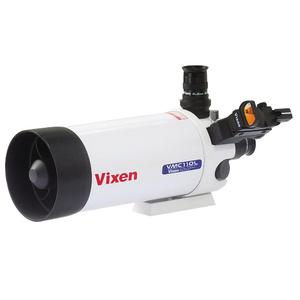
VMC110L
Vixen
125mm · GoTo Schmidt-Cassegrain vs 110mm · Manual Maksutov-Cassegrain
Full comparison →
Frequently asked
Questions from owners
Sourced from Cloudy Nights discussions.
- How much can I actually see with the 5SE from suburban/light-polluted skies?
- Multiple observers report that from light-polluted areas like suburban San Diego or Los Angeles, the 5SE shows the Moon and planets well, but DSOs are limited to brighter Messier objects like Orion Nebula and Andromeda. One owner with a 4SE in Los Angeles could only reliably see Orion Nebula and Andromeda as a faint fuzzball over years of use; stepping up to an 8-inch Evolution revealed vastly more DSO detail.
- Is the 5SE mount stable enough for astrophotography?
- Multiple users report the SE mount is adequate for visual observing but becomes overloaded when adding a camera, counterweights, and accessories. One experienced observer upgraded from a 5SE to a CG5 equatorial mount specifically because the SE mount was insufficient for imaging.
- How does the 5SE compare to the 4SE and 127 Mak for my needs?
- The 5SE offers better aperture than the 4SE (more DSO light grasp) and faster focal ratio (F10 vs F13) for astrophotography, plus it accepts focal reducers that the 127 Mak cannot use effectively. However, the 127 Mak provides sharper, higher-contrast views on planets due to its optical design, though with a narrower field of view and heavier weight.
- Can I use 2-inch eyepieces on the 5SE to get wider fields of view?
- While the 5SE can technically accept a 2-inch diagonal and focal reducer, real-world testing shows vignetting and aperture limitations severely restrict actual field of view gains. One detailed observer tested various eyepieces and found practical maximum fields of view around 1 degree for the 5SE even with larger eyepieces, not the 2+ degrees calculated theoretically.
- Is the 5SE good for a beginner who wants to do observing, astrophotography, and DSOs all at once?
- Multiple experienced observers warn that no single small scope excels at all three simultaneously—visual DSO observing, planetary imaging, and DSO astrophotography each have conflicting requirements. One frustrated beginner found that after months of trying, the 5SE/6SE with a wedge could do limited planetary imaging but was awkward for DSO AP and not optimal for wide-field visual.
- Will the tripod and mount vibration be a problem on my balcony?
- Multiple observers report that balcony observing introduces vibration from foot traffic and structural flex, especially if the balcony is wooden rather than concrete. One user found that moving from a balcony to a lawn below it significantly improved image steadiness and reduced thermal issues.
Full Specifications
Optics
| Aperture | 125mm |
| Focal Length | 1250mm |
| Focal Ratio | f/10 |
| Optical Design | Schmidt-Cassegrain |
| Coatings | StarBright XLT fully multi-coated on all optical surfaces |
Mount & Tracking
| Mount Type | GoTo (Computerised) |
| GoTo (Computerised) | Yes |
| Tracking | Yes |
| Tracking Motor | Single axis (alt-az) |
Focuser
| Focuser Size | 1.25" |
| Focuser Type | SCT rear-cell focuser |
Physical
| OTA Weight | 2.7kg |
| Total Weight (with mount) | 9.8kg |
| Tube Length | 330mm |
| Tube Material | Aluminium |
Included Accessories
| Eyepieces | 25mm Plössl |
| Finder Scope | StarPointer red dot finder |
| Diagonal | No |