Browse·Refractors·Celestron StarSense Explorer DX 102AZ
Celestron
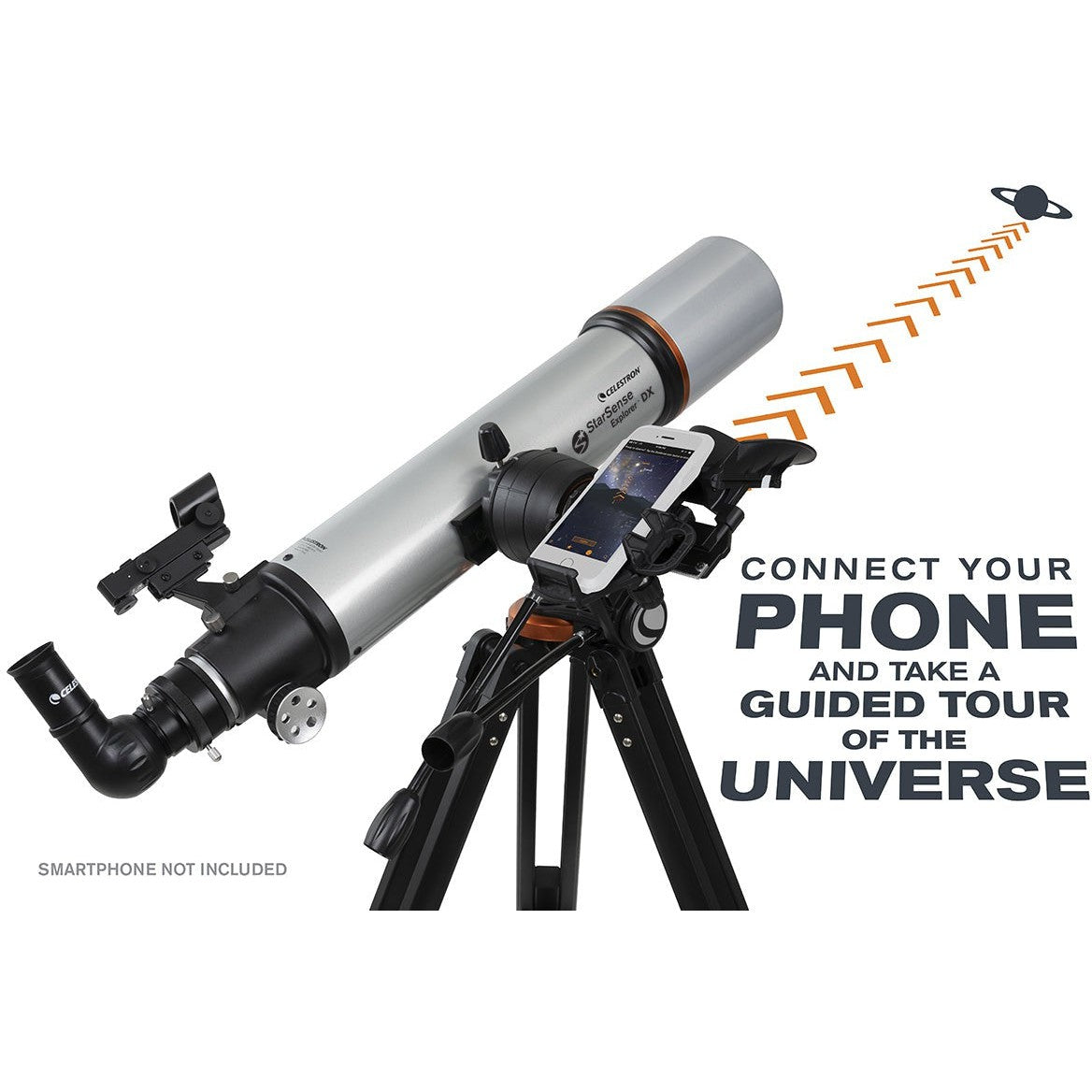
Celestron StarSense Explorer DX 102AZ
A smart four-inch refractor that finds celestial objects effortlessly for visual observers.
Affiliate link — we earn from qualifying purchases at no extra cost to you.
From the community
What owners say
Based on 24 Cloudy Nights discussions
What they love
- ✓Able to see color bands on Jupiter even as a newbie
- ✓Much better views through this telescope compared to similarly priced models
- ✓Successfully tracked down Jupiter with the app
- ✓Focuser smoothness improved significantly after regreasing
- ✓Easy to use app for finding objects - found 10 celestial objects in less than half an hour
What caught them off guard
- !Unlock code did not work out of the box - had to call Celestron
- !Celestron customer service had excessive hold times and poor staffing during high volume periods
- !Focuser smoothness was poor initially - described as 'car with square tires' before regreasing
- !Excessive grease used in focuser from factory
- !Included eyepieces, diagonal, and red dot finder are junk
Top targets reported by owners
What you'll see
Jupiter with color bands visible (reported by novice user)
Saturn
described as giving better views than a Celestron 127 Mak
Celestial DSOs
ten objects found in under 30 minutes by a beginner with the app
The Moon
highly praised for lunar viewing
Worth knowing before you buy
The included focuser has excessive grease from the factory that causes stiff, choppy focusing action; users report needing to disassemble it and replace the lubricant with synthetic grease like Super Lube to achieve smooth operation.
The mount and tripod are inadequate for the scope's weight, causing vibration and settle time issues; users report needing 3-4 seconds or more for vibrations to dampen after focusing, especially noticeable at higher magnifications.
The included eyepieces and diagonal are low quality; multiple users describe them as junk and recommend immediate replacement with better alternatives like Plossl or quality third-party options.
Head to head
How it compares
StarSense Explorer DX 102AZ
Celestron
Omni XLT 102
Celestron
102mm · Manual Refractor vs 102mm · Manual Refractor
Full comparison →
StarSense Explorer DX 102AZ
Celestron
AstroView 90mm EQ Refractor
Orion
102mm · Manual Refractor vs 90mm · Manual Refractor
Full comparison →
StarSense Explorer DX 102AZ
Celestron
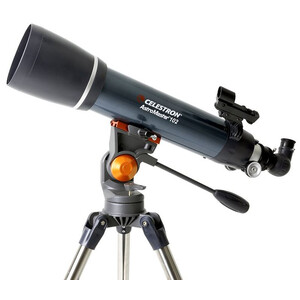
AstroMaster 102AZ
Celestron
102mm · Manual Refractor vs 102mm · Manual Refractor
Full comparison →
StarSense Explorer DX 102AZ
Celestron
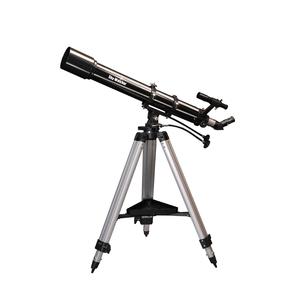
EvoStar 90 EQ2
Sky-Watcher
102mm · Manual Refractor vs 90mm · Manual Refractor
Full comparison →
Frequently asked
Questions from owners
Sourced from Cloudy Nights discussions.
- Is the focuser smooth and usable, or do I need to replace it?
- The stock focuser has excessive grease from the factory that makes it rough and gritty. Multiple owners successfully improved it by disassembling the focuser and replacing the thick grease with Super Lube synthetic lithium grease using mineral spirits for cleaning, transforming it from 'car with square tires' to acceptable smoothness, though not buttery-smooth.
- How stable is the included mount for this scope?
- The mount has noticeable vibration issues and requires 3-4 seconds of settle time after focusing or moving the scope. Users report the wobble is manageable for the 102mm refractor (5 lbs), but using heavier accessories like zoom eyepieces with Barlows increases instability; adding counterweight (like a wrist weight bracelet near the dew shield or steel ball bearings in a velcro pocket) significantly improves performance.
- How does the StarSense tracking system actually work in practice?
- The app-based tracking system is very easy to use and highly praised for finding deep-sky objects quickly—users report finding 10 objects in under 30 minutes versus 1.5 hours manually.
- Should I upgrade eyepieces and diagonals right away?
- The included eyepieces (20mm Kellner) and diagonal are described as junk and poor quality. Most owners recommend upgrading to at least a decent 1.
- Can I use this scope for planetary observing or is it mainly for DSOs?
- The 102mm refractor with f/6.5 focal ratio is described as excellent for deep-sky objects but also good for planetary work like Jupiter and Saturn.
- Is the 102mm refractor really better than the 130mm reflector in this lineup?
- Multiple experienced users prefer the 102mm refractor over the 130mm reflector because it requires no collimation (a learning curve and ongoing maintenance) while still delivering excellent views for DSOs. The 130mm reflector is heavier, adds maintenance burden, and provides only 1 inch more aperture—not a significant practical difference for most observers.
Full Specifications
Optics
| Aperture | 102mm |
| Focal Length | 660mm |
| Focal Ratio | f/6.47 |
| Optical Design | Refractor |
| Coatings | Fully multi-coated achromatic refractor |
Mount & Tracking
| Mount Type | Alt-Az |
| GoTo (Computerised) | No |
| Tracking | No |
Focuser
| Focuser Size | 1.25" |
| Focuser Type | Rack and pinion |
Physical
| OTA Weight | 3.2kg |
| Total Weight (with mount) | 7.5kg |
| Tube Length | 660mm |
| Tube Material | Aluminium |
Included Accessories
| Eyepieces | 25mm and 10mm Kellner |
| Finder Scope | StarSense sky recognition dock (uses your smartphone) |
| Diagonal | Yes |