Browse·Refractors·Explore Scientific ED80 Essential
Explore Scientific
Explore Scientific ED80 Essential
The ED80 Essential is Explore Scientific's entry into the compact APO refractor market — an 80mm f/6 ED doublet that offers a genuine step up from achromatic refractors without the steep price of full triplet APOs. The FCD-1 (Extra-low Dispersion) glass substantially reduces chromatic aberration, and at 480mm focal length the field of view is wide enough for large nebulae and Milky Way imaging. The dual-speed Crayford focuser handles camera weight reliably. For observers upgrading from a first scope or first-time imagers who want a ready-to-go OTA, the ED80 Essential hits a very competitive price point. It is less well-corrected than the Sky-Watcher Esprit 80ED but also significantly cheaper.
Affiliate link — we earn from qualifying purchases at no extra cost to you.
Product image
What you'll see
The ED80 shines as a grab-and-go wide-field refractor, particularly valued for camping and portable observing setups where light weight and rapid deployment matter. Owners appreciate its ability to deliver expansive views of large deep-sky objects—particularly under moderately dark skies (Bortle 5 or better)—and its fast thermal equilibrium compared to larger reflectors. For M31 and other large nebulae, the combination of modest aperture and wide field creates satisfying views that rival much larger scopes from truly dark sites.
However, the ED80's limitations become apparent if planets are your primary target or if you're observing from Bortle 8-9 skies. Multiple forum users noted that planetary observers consistently prefer 4- to 5-inch Maks, SCTs, or larger reflectors for the aperture advantage at high magnification. One experienced observer explicitly stated that most people comparing a 4-inch ED refractor directly to an 8-inch Dob on Jupiter "almost always feel the dob wins." The ED80's 80mm aperture simply cannot match the light-gathering needed for fine planetary detail that drives enthusiast-level observation.
The ED80 works best as a secondary scope paired with a larger aperture reflector—one for wide-field deep-sky work, one for aperture-dependent targets. Mounting matters significantly; users recommend pairing it with a proper alt-az tripod mount (AZ5, Porta II, or AZ-GTi) rather than tabletop Dob mounts, which lack sufficient clearance for refractor viewing geometry. For casual observers willing to accept modest planetary performance in exchange for lightweight portability and excellent wide-field capability, the ED80 delivers genuine value.
Head to head
How it compares
ED80 Essential
Explore Scientific
AstroView 90mm EQ Refractor
Orion
80mm · Manual Refractor vs 90mm · Manual Refractor
Full comparison →
ED80 Essential
Explore Scientific
Omni XLT 102
Celestron
80mm · Manual Refractor vs 102mm · Manual Refractor
Full comparison →
ED80 Essential
Explore Scientific
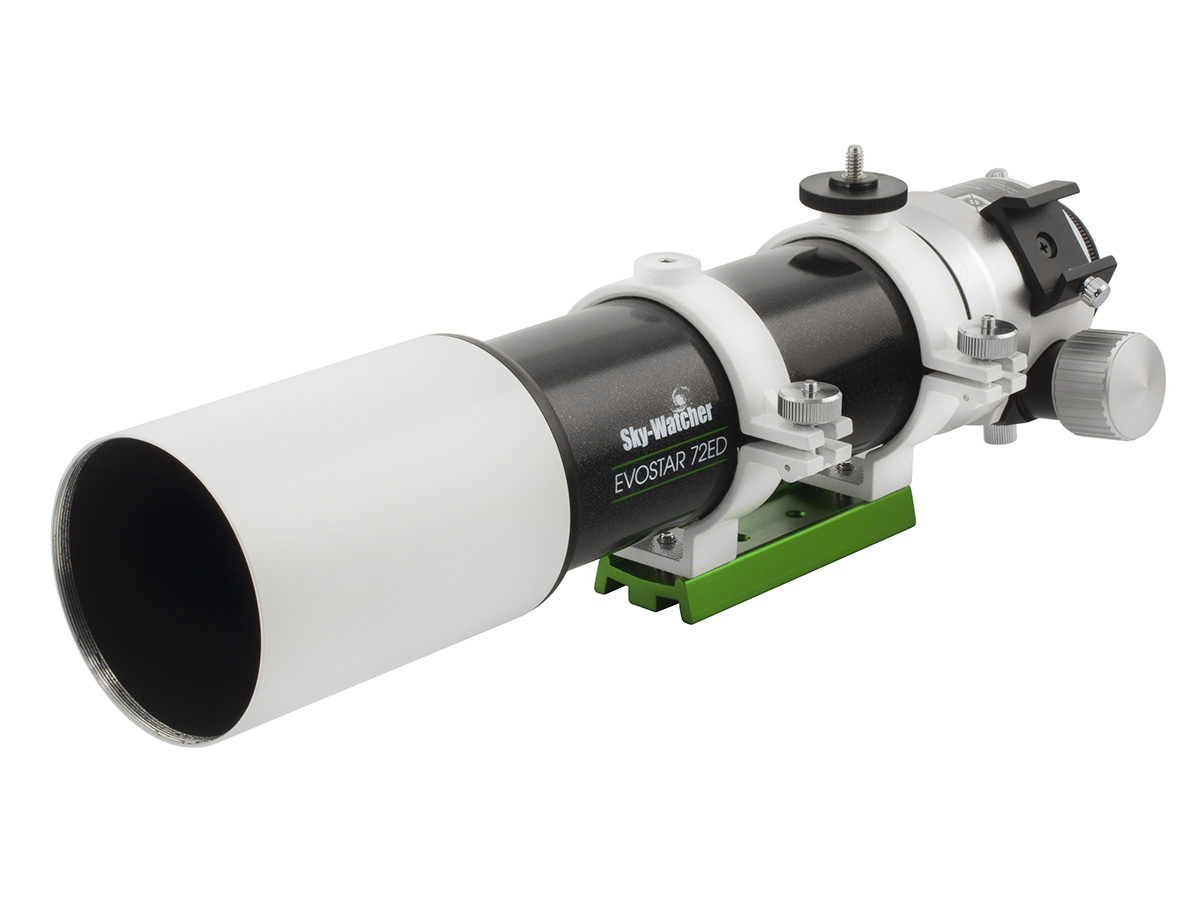
Evostar 72ED
Sky-Watcher
80mm · Manual Refractor vs 72mm · Manual Refractor
Full comparison →
ED80 Essential
Explore Scientific
A80Mf
Vixen
80mm · Manual Refractor vs 80mm · Manual Refractor
Full comparison →
Full Specifications
Optics
| Aperture | 80mm |
| Focal Length | 480mm |
| Focal Ratio | f/6 |
| Optical Design | Refractor |
| Coatings | Fully multi-coated ED doublet (FCD-1 glass) |
Mount & Tracking
| GoTo (Computerised) | No |
| Tracking | No |
Focuser
| Focuser Size | 2" |
| Focuser Type | 2-inch dual-speed Crayford |
Physical
| OTA Weight | 1.9kg |
| Tube Length | 410mm |
| Tube Material | Aluminium |
Included Accessories
| Diagonal | No |