Browse·Reflectors·Sky-Watcher Explorer 150PDS OTA
Sky-Watcher
Sky-Watcher Explorer 150PDS OTA
The 150PDS is one of the most recommended first imaging telescopes on Cloudy Nights and Reddit r/astrophotography, and for good reason. Six inches of aperture at f/5 gives a useful 750mm focal length — long enough for galaxies and smaller nebulae, short enough for manageable guiding. The dual-speed 10:1 Crayford focuser holds critical focus reliably. Paired with an HEQ5 Pro or EQ6-R Pro mount, this is the configuration that a huge number of imagers start with and stay with for years. It is heavier and longer than the 130PDS, which is worth knowing before buying, but the step up in aperture and field of view is meaningful.
Affiliate link — we earn from qualifying purchases at no extra cost to you.
Product image
What you'll see
The Sky-Watcher Explorer 150PDS excels as a dedicated EAA scope for moderately bright and faint galaxies, particularly when paired with modern cameras like the Player One Uranus-C and optical accessories like the Baader Classic Q Barlow. Owners report excellent results on face-on galaxies like M82, where the combination reveals both fine structural detail and natural colours when using an IR/UV cut filter. The scope's design—optimized for astrophotography with generous back focus—makes switching between visual eyepieces and cameras straightforward, needing only modest extension tubes (35mm for the 150PDS with typical eyepieces, less with cameras). The scope performs particularly well on small, faint galaxies; one experienced observer described the 150PDS with x1.7 Barlow and camera as their "best setup" for this class of object.
However, expectations should be calibrated to the scope's actual strengths and limitations. The 150mm aperture is respectable but not generous; faint spiral galaxy whisps that would show dramatically from truly dark skies remain subtle even with careful filtering. The scope's f/5 design and narrower field of view mean it is less suited than shorter refractors for rich-field observing or for visual observation of large, diffuse deep-sky objects. For EAA work, this is less of a limitation—the camera's ability to stack exposures compensates—but visual observers seeking wide vistas should look elsewhere. Most critically: focus position varies measurably between eyepiece and camera use (roughly 15mm difference), requiring planning in your accessory strategy. This is not a handicap, merely a design consequence of the scope's photo-optimized geometry that successful users have learned to work with.
The 150PDS shines in the hands of observers who have invested in quality eyepieces and modern cameras, who are willing to use filters thoughtfully (IR/UV cut for galaxies with colour structure, clear for faint galaxies where signal matters most), and who view EAA as a complement to or even replacement for long visual observing sessions. It is an excellent second scope for someone who has already committed to the hobby, or a capable all-rounder if you plan to do as much imaging as visual work.
Worth knowing before you buy
The focuser requires an extension tube (35mm) to achieve focus with eyepieces, even with standard 1.
Switching between visual observing with eyepieces and EAA with cameras requires managing different extension tube configurations and back-focus distances, making dual-use setup complicated.
The scope has generous back-focus designed for astrophotography, meaning eyepieces need extension tubes to reach focus rather than working directly in the focuser.
Head to head
How it compares
Explorer 150PDS OTA
Sky-Watcher
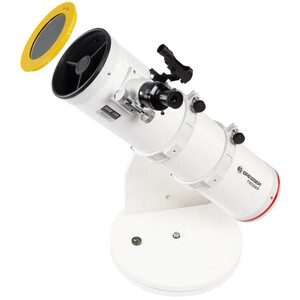
Messier N-150/750
Bresser
150mm · Manual Newtonian Reflector vs 150mm · Manual Newtonian Reflector
Full comparison →
Explorer 150PDS OTA
Sky-Watcher
SkyQuest XT6 Classic Dobsonian
Orion
150mm · Manual Newtonian Reflector vs 150mm · Manual Dobsonian
Full comparison →
Explorer 150PDS OTA
Sky-Watcher
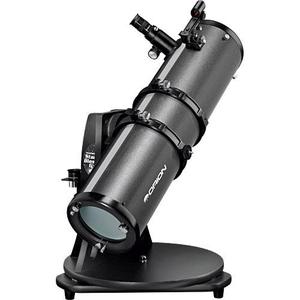
StarBlast 6 Astro Reflector
Orion
150mm · Manual Newtonian Reflector vs 150mm · Manual Newtonian Reflector
Full comparison →
Explorer 150PDS OTA
Sky-Watcher
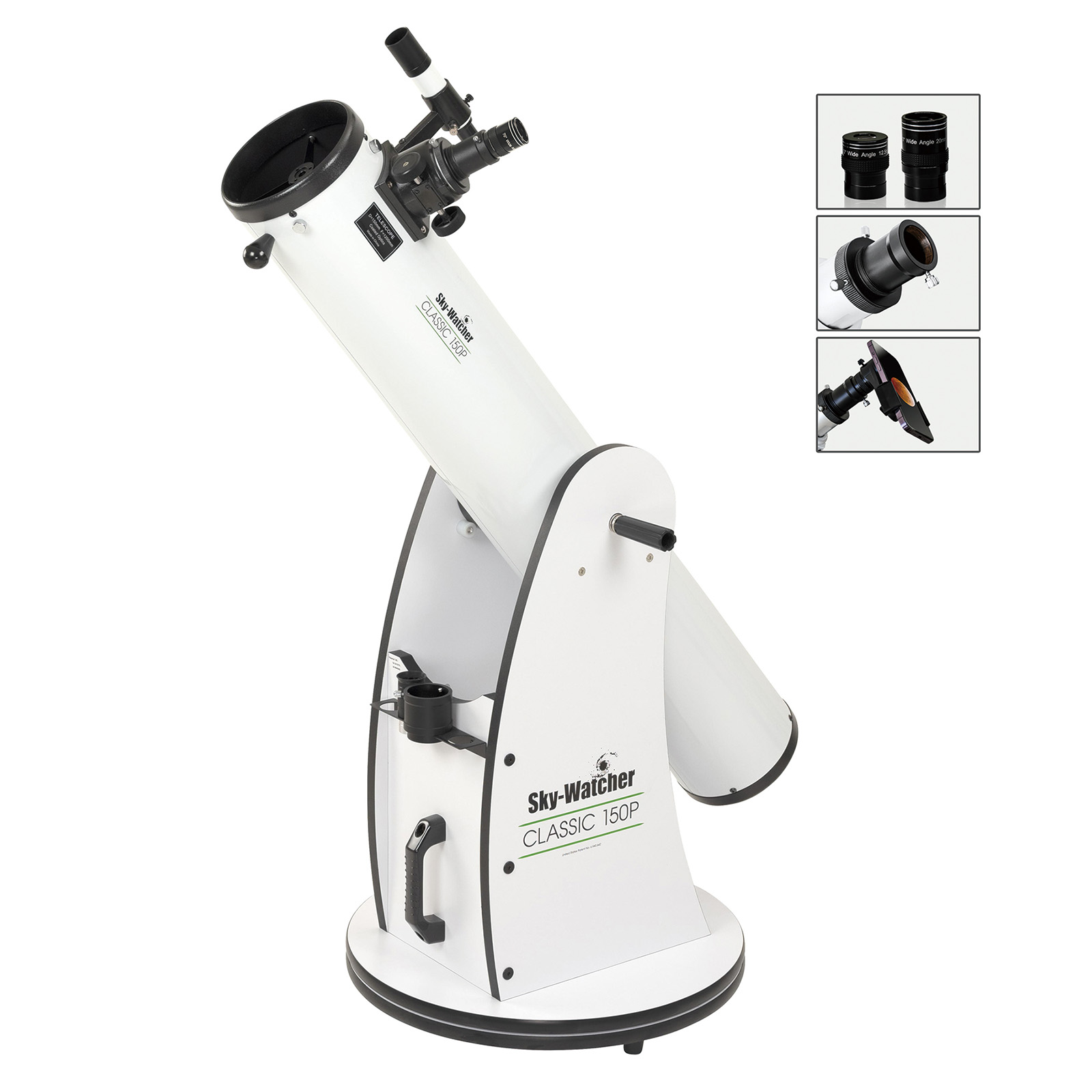
Skyliner 150P
Sky-Watcher
150mm · Manual Newtonian Reflector vs 150mm · Manual Dobsonian
Full comparison →
Full Specifications
Optics
| Aperture | 150mm |
| Focal Length | 750mm |
| Focal Ratio | f/5 |
| Optical Design | Newtonian Reflector |
| Coatings | Parabolic primary mirror with aluminium coating and SiO2 overcoat |
Mount & Tracking
| GoTo (Computerised) | No |
| Tracking | No |
Focuser
| Focuser Size | 2" / 1.25" |
| Focuser Type | Dual-speed Crayford (10:1) |
Physical
| OTA Weight | 5.2kg |
| Tube Length | 710mm |
| Tube Material | Aluminium |
Included Accessories
| Diagonal | No |