Reflector Telescopes
The aperture-per-pound champions. If you want to see the universe in detail without spending a fortune, this is where you start.
32
telescopes in our database
100–254 mm
aperture range
How a reflector works
A parabolic primary mirror gathers and focuses light. A small secondary mirror redirects it sideways to the eyepiece — no lenses involved.
Is a reflector right for you?
Reflectors suit most beginners — but there are a couple of genuine reasons to look elsewhere.
Great if…
- ✓You want maximum aperture for your budget. A 200mm reflector costs roughly the same as a 90mm refractor. Aperture wins on deep-sky objects every time.
- ✓Deep-sky objects excite you. Galaxies, nebulae, star clusters — light-gathering power matters more than anything else here.
- ✓You're happy to learn the basics. Collimation (aligning the mirrors) takes five minutes once you've done it twice. It's not hard — it just sounds it.
Not ideal if…
- ✗You need truly grab-and-go portability. A fast f/5 reflector at 200mm has a tube over 1 metre long. Manageable, but not pocket-sized.
- ✗You want zero maintenance forever. Reflectors need occasional collimation. Refractors and compounds are sealed — point and observe.
Our top reflector picks
Editorially selected — the scopes we'd recommend to most buyers.
Sky-Watcher
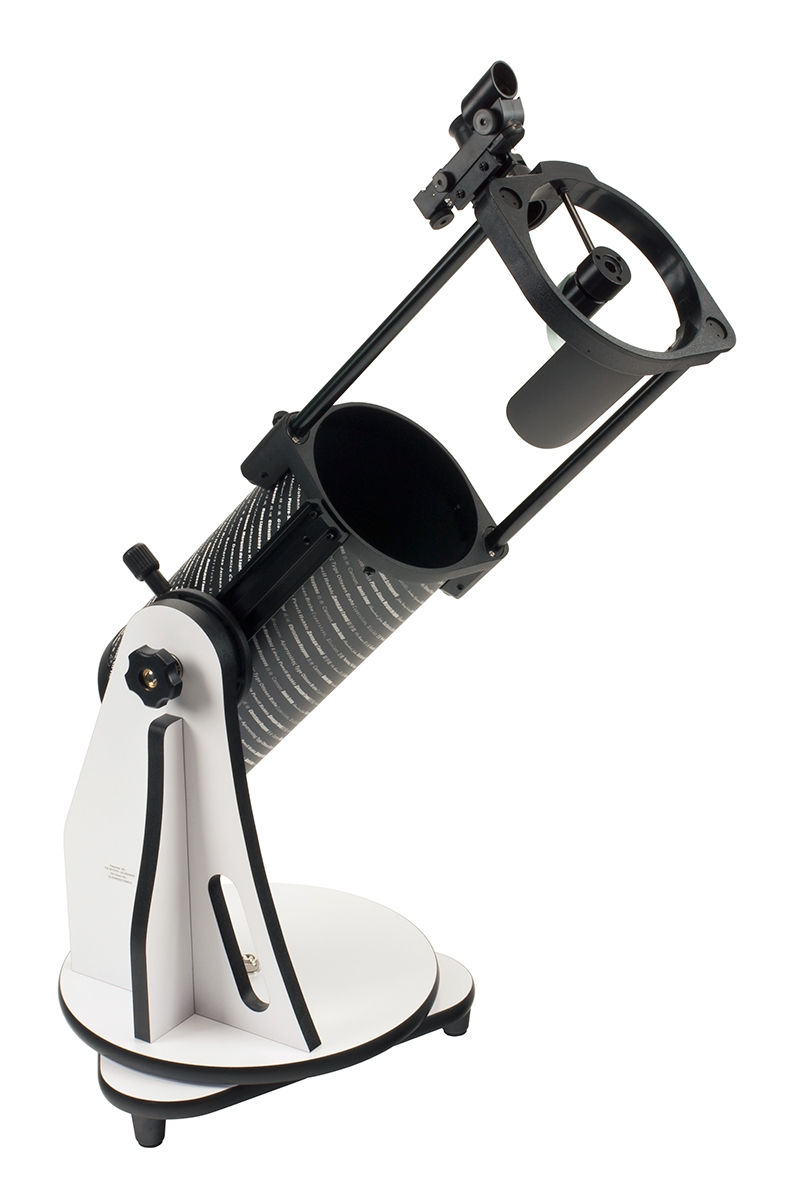
Sky-Watcher Heritage 130P
The Heritage 130P is Sky-Watcher's best-selling beginner scope, and it's easy to see why. A 130mm parabolic primary mirror delivers genuinely impressive views of the Moon, planets, and bright deep-sky objects like the Orion Nebula and the Pleiades. The collapsible FlexTube Dobsonian design means it folds down small enough to live on a bookshelf, making it the most portable 130mm scope you can buy. Setup takes under a minute. The tabletop Dobsonian mount is intuitive — just point and look — which means a complete beginner can be observing in minutes. The trade-off is that you need a table or sturdy surface to set it on, though many owners use a dedicated low stool or build a simple box. The bundled 25mm and 10mm eyepieces are perfectly adequate for starting out. Its main limitation is the 1.25-inch focuser, which caps your eyepiece upgrade path, but that's a concern for when you've outgrown it — which may take longer than you expect.
View telescope →
Sky-Watcher
Sky-Watcher Explorer 200P
The Explorer 200P brings a full 200mm aperture to an EQ5 equatorial mount, giving serious light-gathering capability in a conventional telescope form. The f/5 focal ratio works well for visual deep-sky use and is short enough to make basic astrophotography practical with a motor drive fitted. The dual-speed Crayford focuser handles camera weight adequately. This is a scope for someone who wants a traditional equatorial setup with a genuine upgrade path for imaging.
View telescope →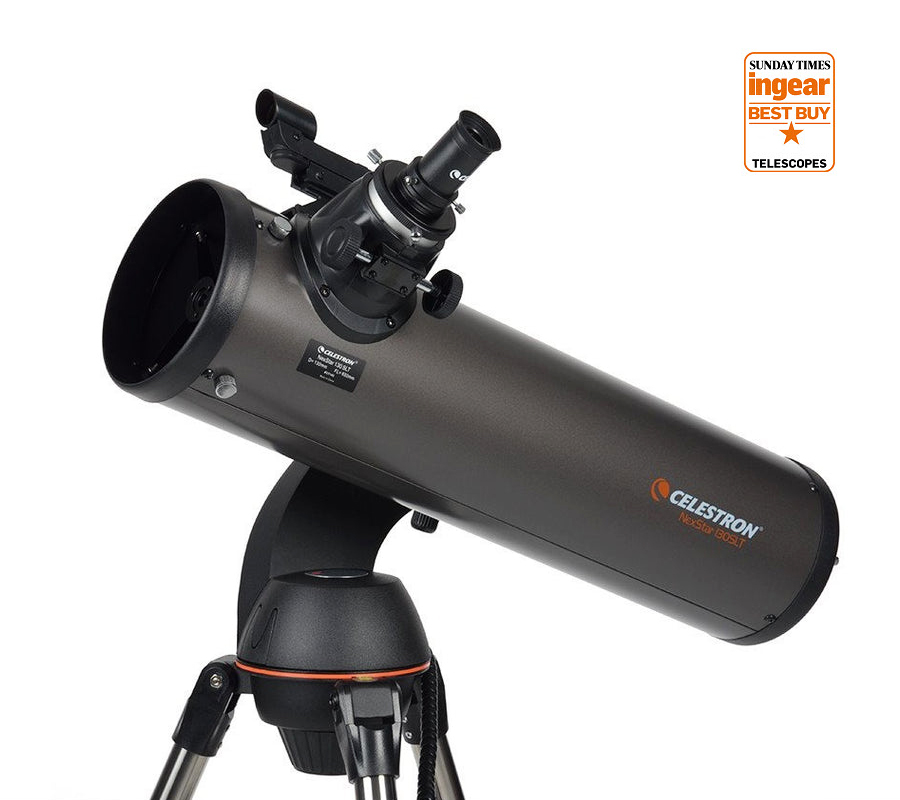
Celestron
Celestron NexStar 130SLT
The NexStar 130SLT is Celestron's entry-level GoTo Newtonian — a 130mm f/5 parabolic reflector on a motorised single-arm alt-az mount with computerised target finding. The SLT mount uses a separate tripod rather than the SE's integrated column, giving it a more traditional look. At 130mm and f/5 the optics are solid for the price; the GoTo makes finding objects accessible for beginners. A direct rival to the Sky-Watcher StarQuest and Virtuoso GTi ranges.
View telescope →Sky-Watcher
Sky-Watcher Explorer 150PDS OTA
The 150PDS is one of the most recommended first imaging telescopes on Cloudy Nights and Reddit r/astrophotography, and for good reason. Six inches of aperture at f/5 gives a useful 750mm focal length — long enough for galaxies and smaller nebulae, short enough for manageable guiding. The dual-speed 10:1 Crayford focuser holds critical focus reliably. Paired with an HEQ5 Pro or EQ6-R Pro mount, this is the configuration that a huge number of imagers start with and stay with for years. It is heavier and longer than the 130PDS, which is worth knowing before buying, but the step up in aperture and field of view is meaningful.
View telescope →
Celestron
Celestron StarSense Explorer DX 130AZ
The StarSense Explorer DX 130AZ is Celestron's clever answer to the perennial beginner problem: finding things in the sky. Rather than a computerised GoTo mount, it uses your smartphone mounted in a special dock. The app uses the phone's camera to recognise star patterns and overlays an arrow telling you which direction to nudge the tube manually. No motors, no alignment procedure, no battery worries — just follow the arrow. It works remarkably well in practice. The 130mm Newtonian optics are solid for a scope at this price; the f/5 ratio gives pleasing wide-field views of star clusters and nebulae. The main limitations are the 1.25-inch focuser and the absence of any motorised tracking — objects drift through the eyepiece and you need to nudge to keep them centred. But for a beginner who wants to explore the sky without the frustration of star-hopping or the expense of a full GoTo system, the StarSense approach is genuinely innovative.
View telescope →Can't decide between the top two?
Heritage 130P vs Explorer 200P →What to look for when buying
Three specs that matter specifically for reflectors — and what they mean in practice.
Aperture
The diameter of the primary mirror, in mm.
This is the single most important number. A 200mm mirror gathers 2.4× more light than a 130mm one — you will see fainter and more detailed objects. Do not be distracted by magnification claims on the box.
Focal ratio (f/number)
Focal length ÷ aperture.
f/5 or lower ("fast"): shorter tube, wider field of view, better for deep-sky. f/8 or higher ("slow"): longer tube, narrower field, more forgiving on cheaper eyepieces, better for planets.
Collimation
Mirror alignment — the one maintenance task.
Mirrors can drift out of alignment after transport. A badly collimated scope gives blurry stars. The fix takes five minutes with a collimation cap (often included). Once you have done it twice, it becomes automatic.
Focal ratio affects tube length
Same 130mm aperture — very different tubes.
The collimation star test
Defocus a bright star. Concentric rings mean you're good to go.
Aperture sizes to scale
Larger circle = more light. Areas are proportional to light-gathering.
Aperture light-gathering calculator
How much more does a bigger mirror actually collect? Move the slider.
Compared to a 70mm starter refractor:
3.4× more light
130mm mirror vs 70mm lens — same sky, 3.4× more photons
70mm
(reference)
130mm
3.4× bigger area
What 130mm unlocks
- ✓Orion Nebula — structure and dark lanes visible
- ✓Saturn — Cassini Division on a steady night
- ✓Andromeda Galaxy — distinct oval smudge with brighter core
Reflector: honest trade-offs
What they do well
Maximum aperture per pound
No other type gives you as much light-gathering for the money. A 200mm reflector costs around £250; a 200mm refractor costs £2,000+.
No chromatic aberration
Mirrors reflect all wavelengths equally. No colour fringing around bright objects — a common issue with cheaper refractors.
Deep-sky performance
Galaxies, nebulae, star clusters — objects that reward aperture. This is where reflectors leave every other type behind at the same price point.
Great beginner value
The Heritage 130P and its siblings represent some of the best genuine first telescopes money can buy.
Honest limitations
Collimation required
Mirrors shift during transport. Checking alignment every few sessions is part of owning a reflector. Easy once learned — but it is not nothing.
Thermal cool-down time
A large primary mirror takes 30–60 minutes to reach ambient temperature. Views are blurry until it does. Take it outside before dark.
Central obstruction
The secondary mirror blocks a small percentage of incoming light and slightly reduces contrast on bright objects like planets. Minor — but a premium refractor will outperform on those targets at the same aperture.
All reflector telescopes in our database
32 telescopes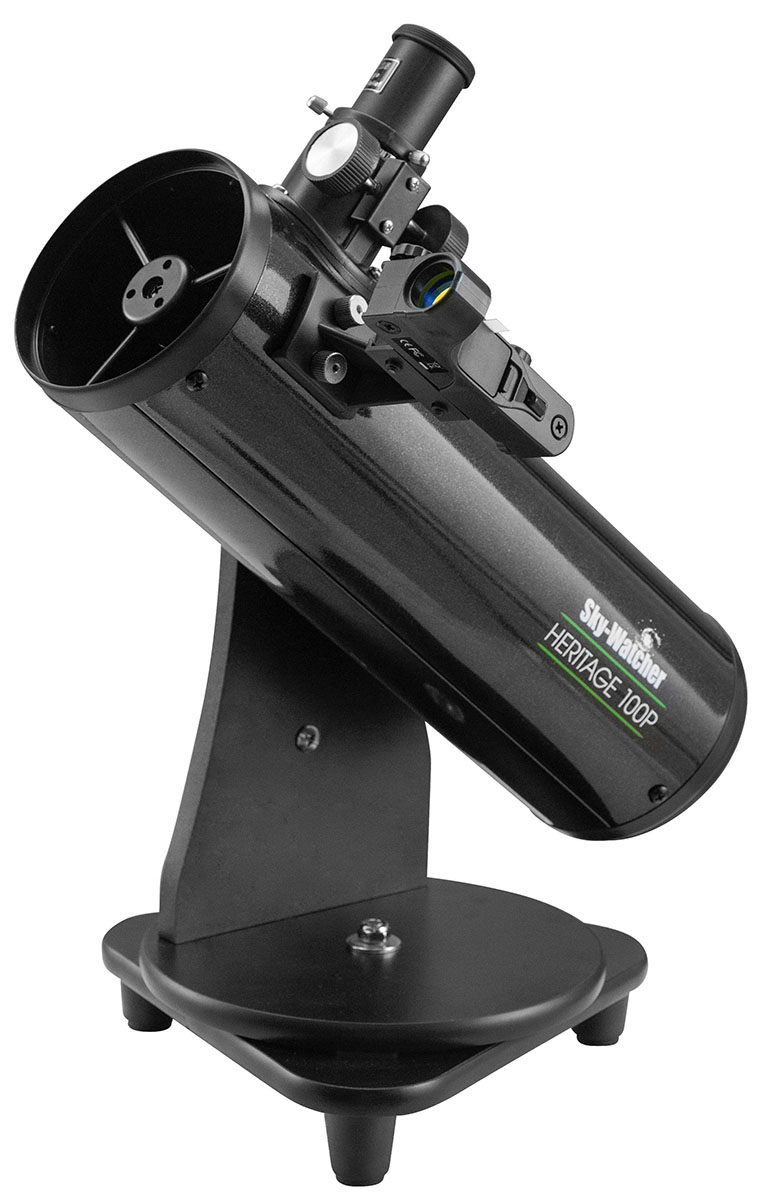
Sky-Watcher
Sky-Watcher Heritage 100P
The Heritage 100P is Sky-Watcher's most affordable tabletop Dobsonian, and it's a genuine telescope rather than a toy.
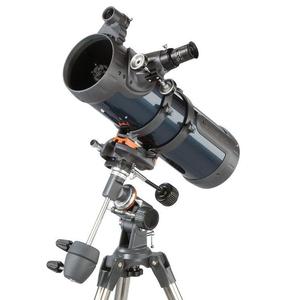
Celestron
Celestron AstroMaster 114EQ
The AstroMaster 114EQ is one of the best-selling beginner reflectors in the world, and for understandable reasons: 114mm of aperture on an equatorial mount at under £200 is a genuine value proposition.
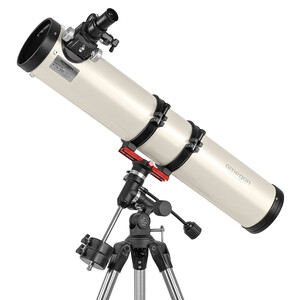
Omegon
Omegon Advanced 114/900 EQ3
A 114mm Newtonian on an EQ3 equatorial mount — one of the most time-tested configurations in entry-level astronomy.
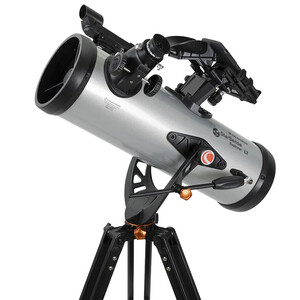
Celestron
Celestron StarSense Explorer LT 114AZ
The StarSense Explorer LT 114AZ puts Celestron's clever star-finding technology into an affordable 114mm Newtonian.
Celestron
Celestron PowerSeeker 127EQ
The PowerSeeker 127EQ appears in toy stores and big-box retailers and is one of the most searched telescopes by first-time buyers.
Celestron
Celestron StarSense Explorer DX 130AZ
The StarSense Explorer DX 130AZ is Celestron's clever answer to the perennial beginner problem: finding things in the sky.
Sky-Watcher
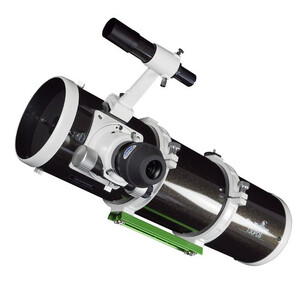
Sky-Watcher Explorer 130PDS OTA
The 130PDS is the imaging-optimised version of the popular Explorer 130 — PDS stands for Planetary-Deep Sky, and the key difference from the standard 130P is the dual-speed 10:1 Crayford focuser.
Celestron
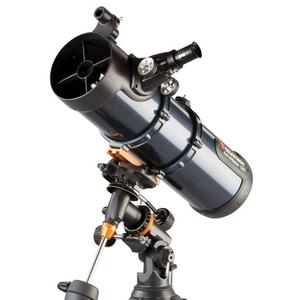
Celestron AstroMaster 130EQ
The AstroMaster 130EQ is a 130mm f/5 Newtonian on an equatorial mount, Celestron's answer to Sky-Watcher's Explorer 130M.
Sky-Watcher
Sky-Watcher Star Discovery P1 130
Sky-Watcher's Star Discovery P1 mount brings WiFi-controlled GoTo to the popular 130mm Newtonian format.
Sky-Watcher
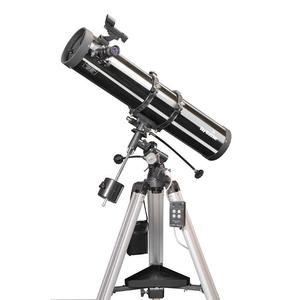
Sky-Watcher Explorer 130M
The Explorer 130M gives you the same 130mm aperture as the Heritage 130P but on an EQ2 equatorial mount rather than a Dobsonian.
Sky-Watcher
Sky-Watcher Virtuoso GTi 130P
The Virtuoso GTi 130P takes the Heritage 130P's proven tabletop Dobsonian optics and adds a motorised dual-axis GoTo base controlled wirelessly via the SynScan app.

Orion
Orion SpaceProbe 130ST EQ Reflector
A 130mm short-tube Newtonian (f/5) on an equatorial mount.
Vixen
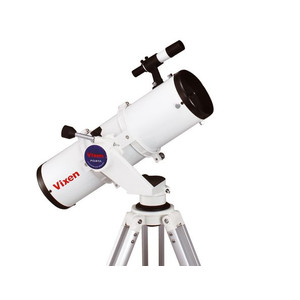
Vixen R130Sf
The R130Sf is Vixen's 130mm f/5 Newtonian reflector OTA — their answer to the Sky-Watcher 130PDS.
Celestron
Celestron NexStar 130SLT
The NexStar 130SLT is Celestron's entry-level GoTo Newtonian — a 130mm f/5 parabolic reflector on a motorised single-arm alt-az mount with computerised target finding.
Sky-Watcher
Sky-Watcher Heritage 130P
The Heritage 130P is Sky-Watcher's best-selling beginner scope, and it's easy to see why.
Bresser
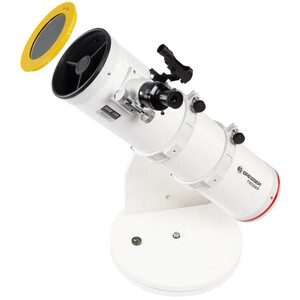
Bresser Messier N-150/750
The Bresser Messier N-150/750 is a 150mm f/5 Newtonian on an equatorial mount — a capable scope for the price, with a dual-speed Crayford focuser that is notably better than the rack-and-pinion fittings on comparable Sky-Watcher offerings at the same price.
Sky-Watcher
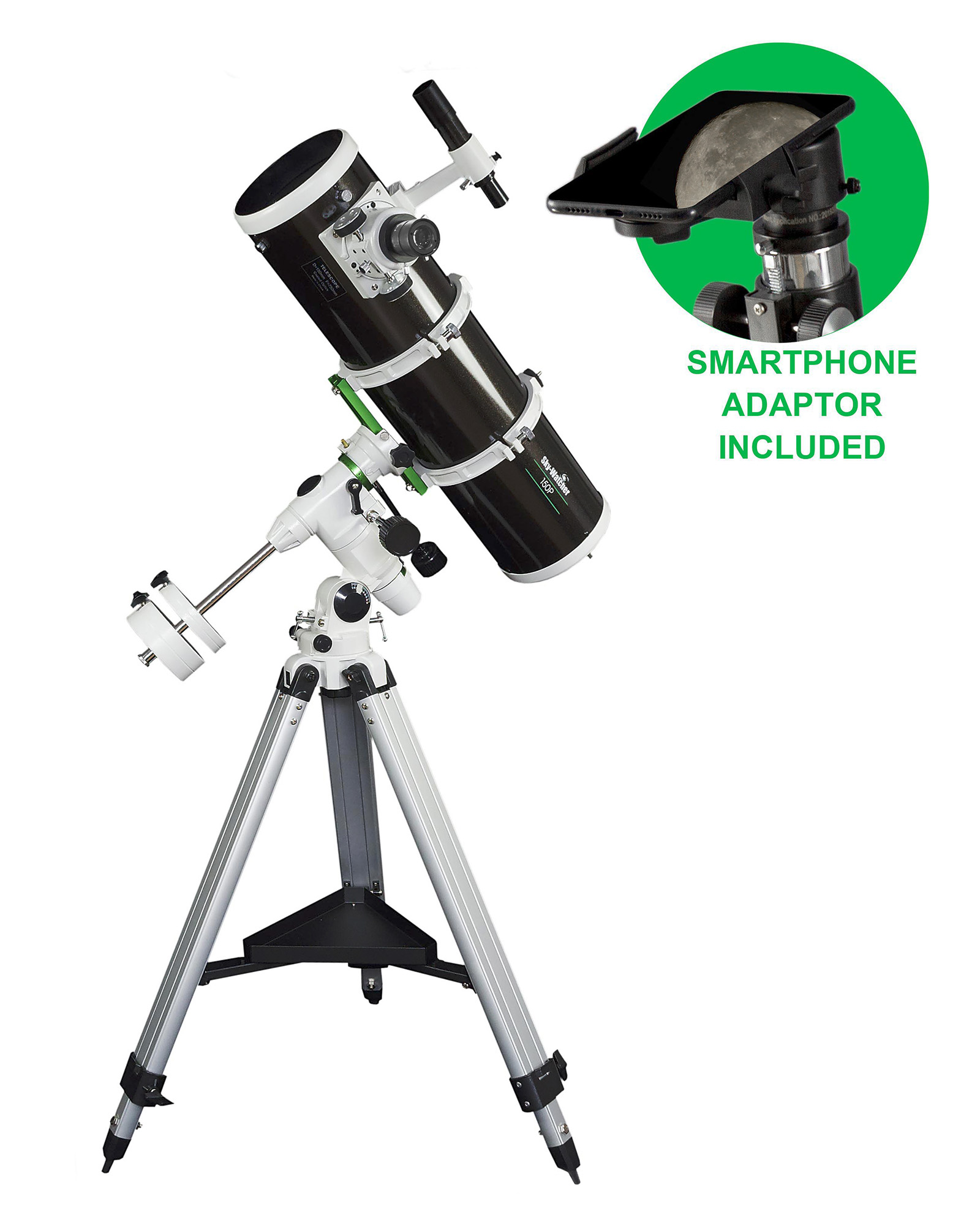
Sky-Watcher Explorer 150PL
The Explorer 150PL is a 150mm f/8 Newtonian on an EQ3-2 equatorial mount — Sky-Watcher's traditional mid-range telescope in a longer focal length configuration.
Orion
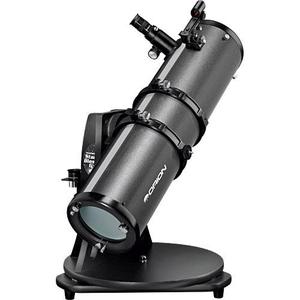
Orion StarBlast 6 Astro Reflector
A 6-inch (150mm) tabletop reflector with a short focal ratio (f/5) that produces genuinely wide-field views.
Sky-Watcher
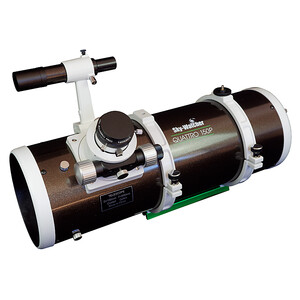
Sky-Watcher Quattro 150P
The Quattro 150P is a 150mm f/5 Newtonian astrograph OTA designed specifically for imaging.
Celestron
Celestron Omni XLT 150
A 150mm Newtonian reflector on the CG-4 equatorial mount.
Sky-Watcher
Sky-Watcher Star Discovery 150P
The Star Discovery 150P gives you six inches of aperture with full WiFi GoTo control — a compelling combination for observers who want meaningful aperture without the learning curve of manual star-hopping.
Sky-Watcher
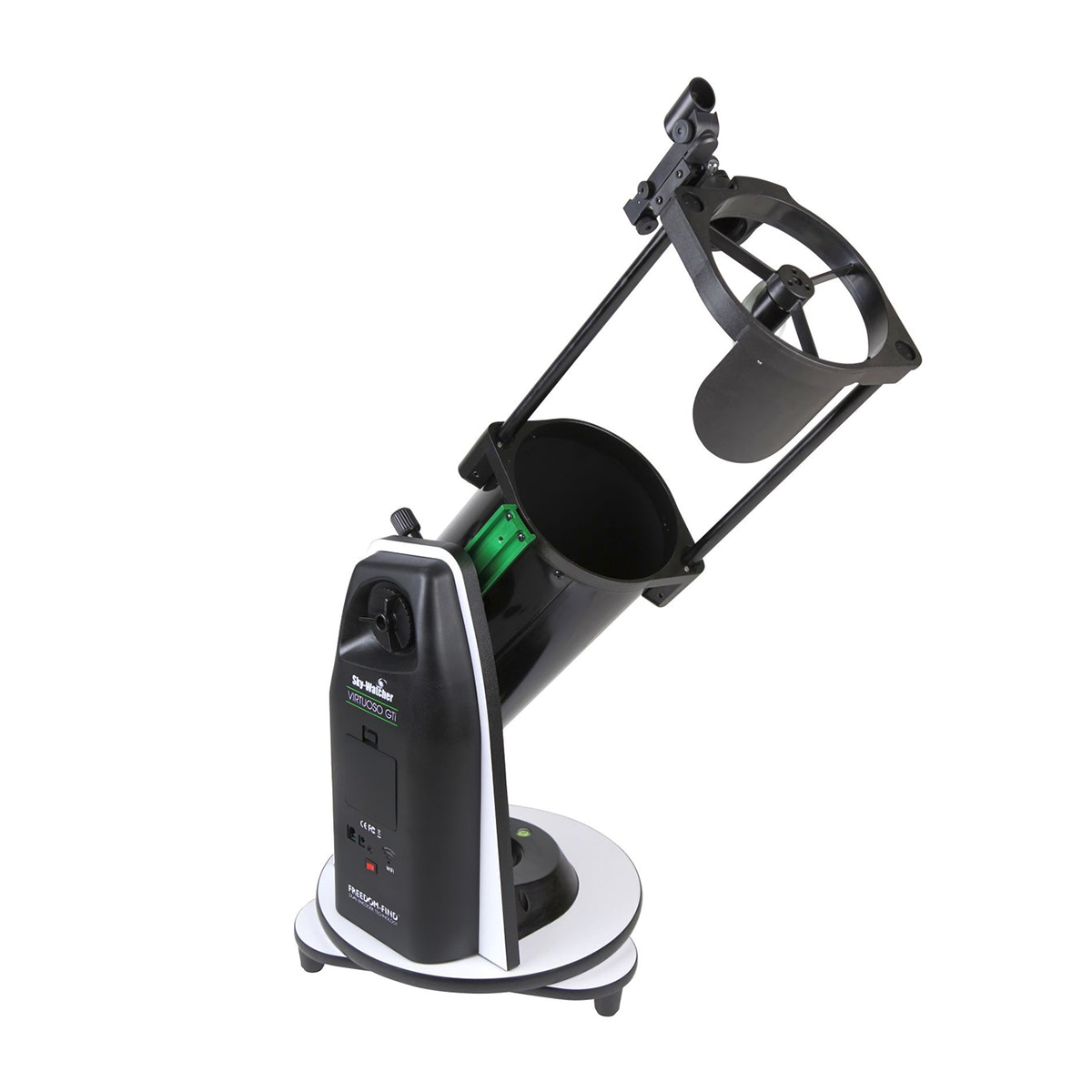
Sky-Watcher Virtuoso GTi 150P
The Virtuoso GTi 150P is the 150mm version of Sky-Watcher's motorised tabletop Dobsonian, stepping up from the 130P with meaningfully more aperture.
Sky-Watcher
Sky-Watcher Explorer 150PDS OTA
The 150PDS is one of the most recommended first imaging telescopes on Cloudy Nights and Reddit r/astrophotography, and for good reason.
Sky-Watcher
Sky-Watcher Heritage 150P
The Heritage 150P is the largest of Sky-Watcher's tabletop Dobsonians, and at 150mm it crosses the threshold where visual astronomy starts to feel genuinely impressive.
Omegon
Omegon Advanced 150/750 EQ3
150mm of aperture on an equatorial mount at f/5 is a significant step up from 114mm entry-level reflectors — you get noticeably brighter images of nebulae and galaxies, and the faster focal ratio suits wider eyepieces well.
Sky-Watcher
Sky-Watcher Explorer 200P
The Explorer 200P brings a full 200mm aperture to an EQ5 equatorial mount, giving serious light-gathering capability in a conventional telescope form.
Sky-Watcher
Sky-Watcher Quattro 200P
The Quattro 200P is an 8-inch (200mm) f/4 Newtonian astrograph — fast, wide, and optimised for deep-sky imaging on an equatorial mount.
StellaLyra
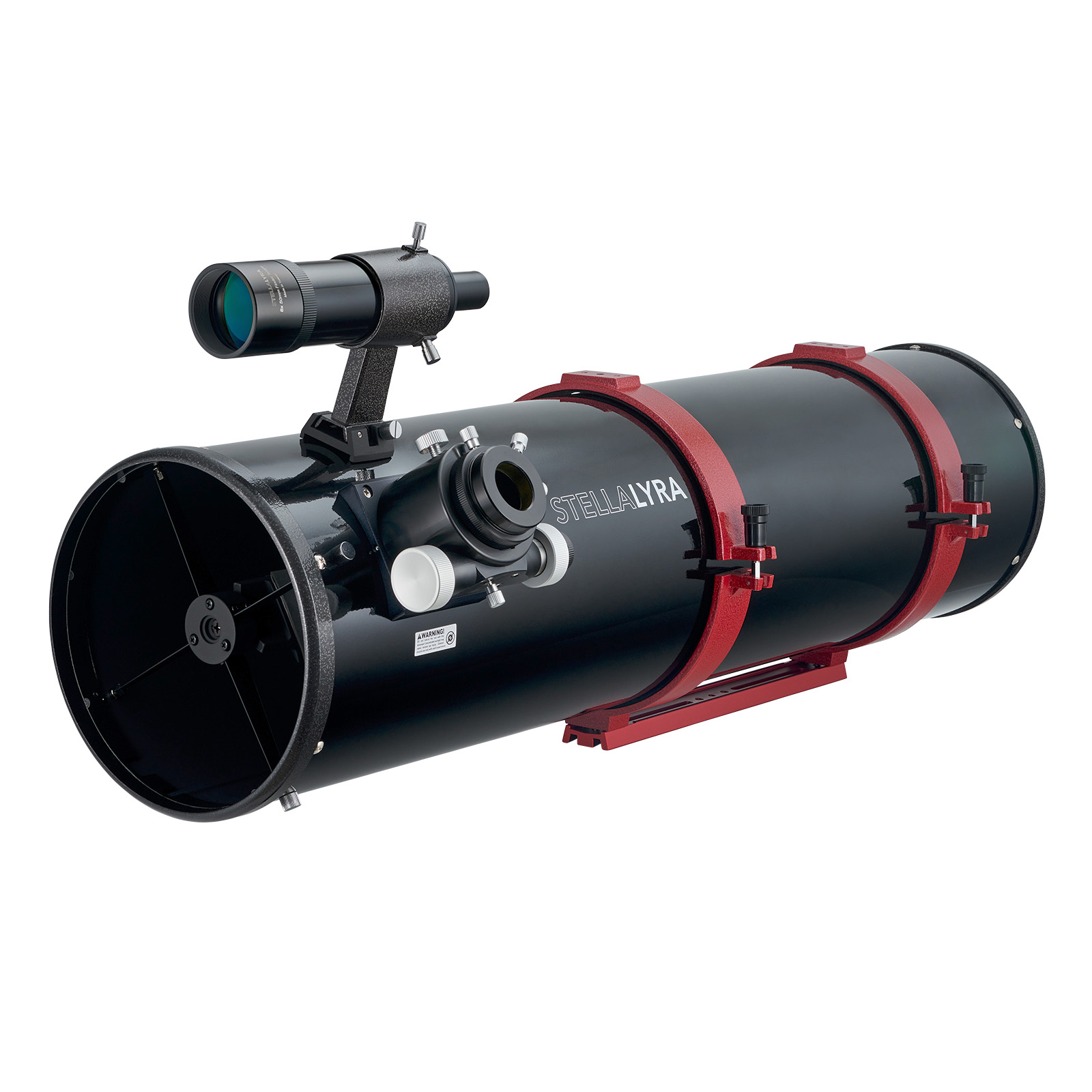
StellaLyra 8" f/5 Newtonian OTA
Meade Instruments
Meade LX85 8" Newtonian
The Meade LX85 8-inch Newtonian combines a 203mm f/5 parabolic Newtonian OTA with the LX85 equatorial GoTo mount — a complete system for visual observing and basic astrophotography.
Omegon
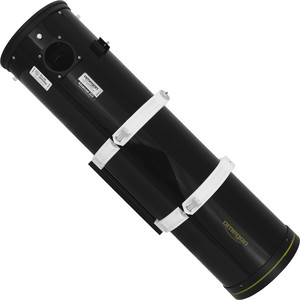
Omegon Advanced 203/1000 EQ4
Eight inches of aperture on an equatorial mount for under £500.
Bresser
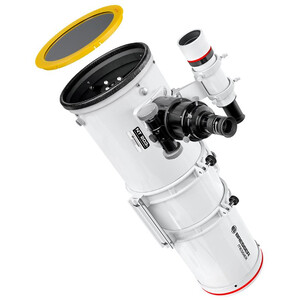
Bresser Messier NT-203/800 OTA
The Messier NT-203/800 is Bresser's 8-inch f/3.
Sky-Watcher
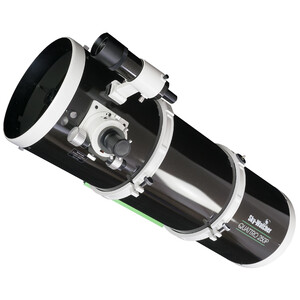
Sky-Watcher Quattro 250P
The Quattro 250P is a 10-inch (254mm) f/3.