Dobsonian Telescopes
Maximum aperture at minimum cost. A Dobsonian puts the biggest mirror possible on the simplest mount possible — and nothing beats it for visual deep-sky observing.
29
telescopes in our database
76–406 mm
aperture range
How a Dobsonian works
A large Newtonian reflector sitting in a simple alt-azimuth rocker box. Same optics as a reflector — different mount philosophy: maximum aperture at minimum cost and complexity.
Is a dobsonian right for you?
Every type has its ideal buyer. Here is how to know if this is yours.
Great if…
- ✓Deep-sky observing is your passion. Galaxies, nebulae, and star clusters reward aperture above all else. A 10-inch Dobsonian gathers more light than any other telescope at the same price — it is not close.
- ✓You want simplicity. Point, look, enjoy. No polar alignment, no computerised handset to learn, no motors to maintain. A Dobsonian is the closest thing in astronomy to picking up a pair of binoculars.
- ✓You're happy without tracking. Objects drift slowly through the eyepiece as Earth rotates. At low magnification it's barely noticeable. At high magnification, a gentle nudge keeps them centred. Most visual observers find this perfectly acceptable.
Not ideal if…
- ✗Astrophotography is on your radar. Without tracking, long-exposure photography is not possible. If imaging interests you, a reflector or compound on an equatorial mount is the right starting point.
- ✗You want GoTo automation. Traditional Dobsonians do not track or point automatically. GoTo Dobsonians exist but add significant cost. If automation matters, a NexStar or similar is a better fit.
Our top dobsonian picks
Editorially selected — the scopes we'd recommend to most buyers.
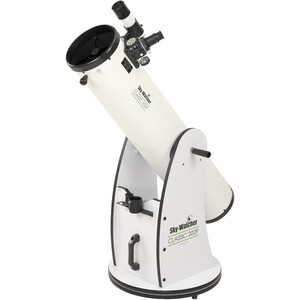
Sky-Watcher
Sky-Watcher Skyliner 200P
The Skyliner 200P is the benchmark by which all other mid-priced beginner telescopes are judged. At 200mm (8 inches), the aperture is large enough to show detail in galaxies, resolve globular clusters into individual stars, and reveal the delicate structure of nebulae in a way that smaller scopes simply cannot. The parabolic primary mirror is properly figured, and the dual-speed Crayford focuser is a cut above what you'd find on cheaper scopes. The Dobsonian rocker box mount is intuitive and rock-solid — no tripod wobble, no polar alignment required. The trade-offs are real though: at 200mm this is not a lightweight scope (the tube alone is over 11kg), and there's no tracking, which means objects drift across the field of view and you need to nudge the tube to keep them centred. That's a non-issue for visual observing but rules it out for any serious astrophotography. If you plan to observe visually and want the most aperture for your money, this is the scope the community recommends first.
View telescope →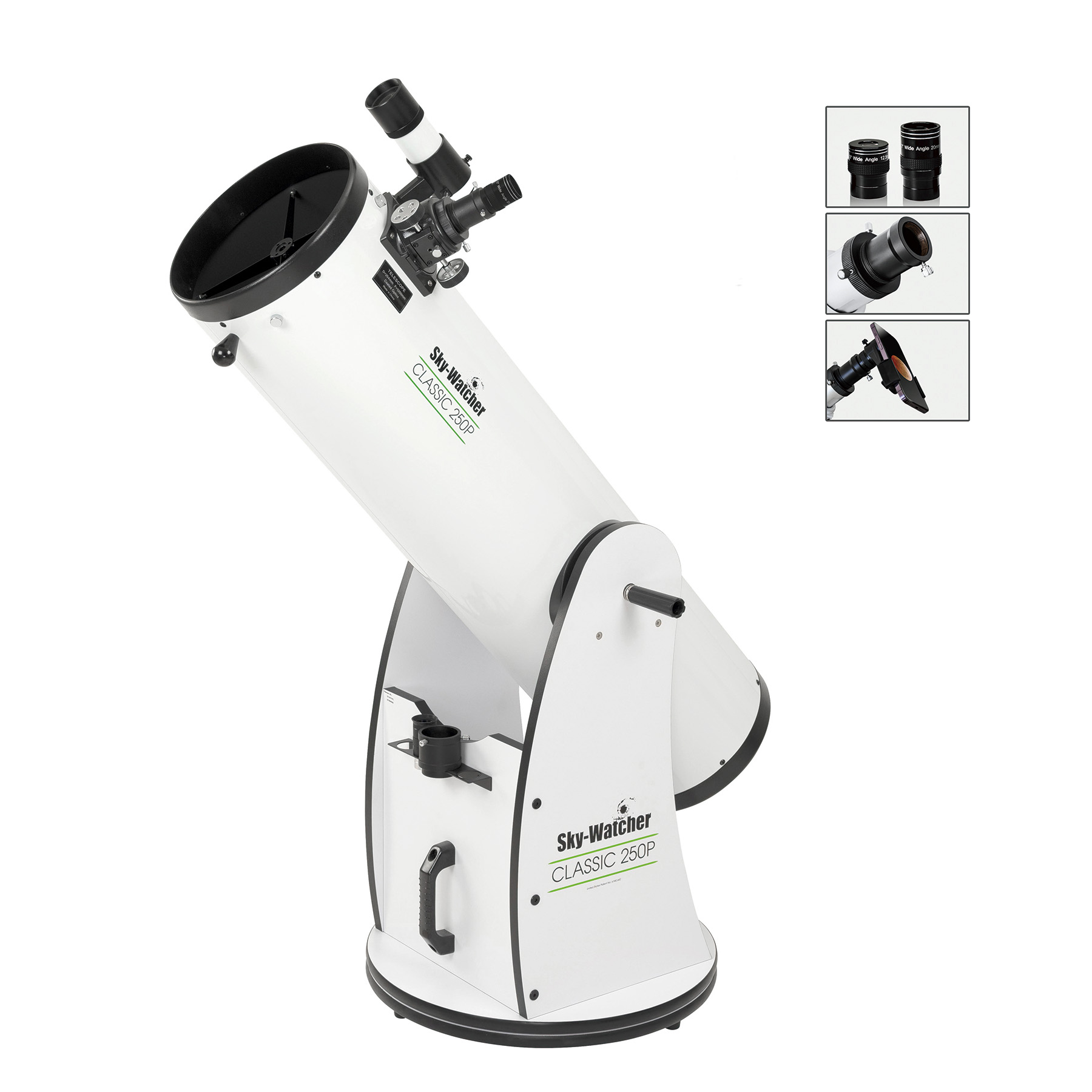
Sky-Watcher
Sky-Watcher Skyliner 250PX
At 254mm (10 inches), the Skyliner 250PX FlexTube is where serious deep-sky visual observing begins. The FlexTube design collapses for transport and the dual-speed Crayford focuser is a significant quality step up from the entry Skyliners. Galaxies, globular clusters, and planetary nebulae all look dramatically better at this aperture — M13 is a breathtaking ball of stars and the Veil Nebula becomes traceable with the naked eye across the field. The tube alone weighs around 17kg, so plan for a dedicated observing site or short-distance transport.
View telescope →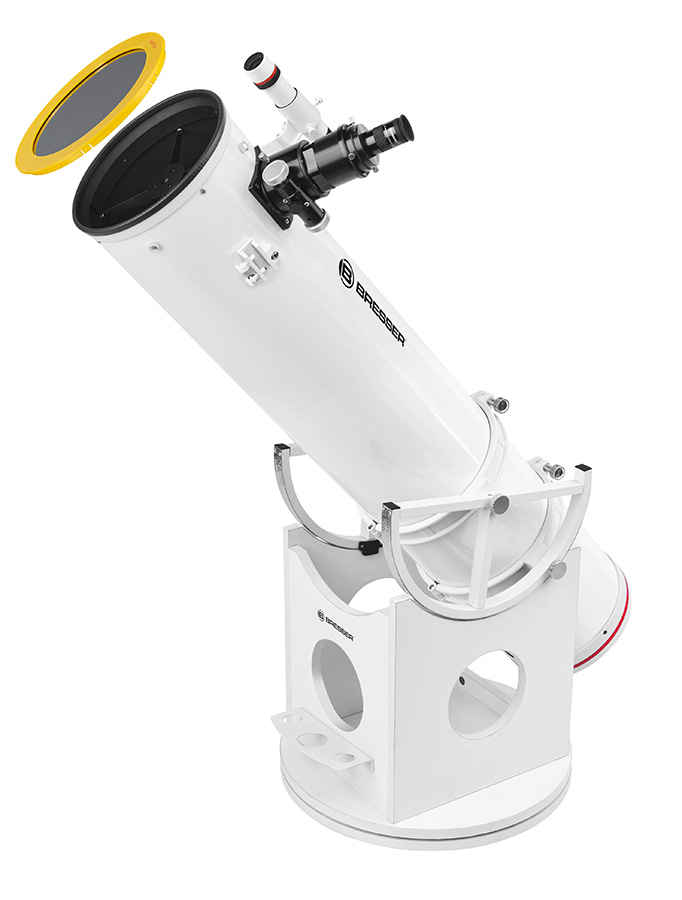
Bresser
Bresser Messier 8" Dobsonian
Bresser's 8-inch Dobsonian is a direct competitor to the Sky-Watcher Skyliner 200P — same aperture class, similar price, different brand. The Bresser version typically includes a dual-speed Crayford focuser as standard (versus Sky-Watcher's single-speed on equivalent models) and similar optical quality. For buyers considering the Skyliner 200P, this is worth comparing directly. At 203mm aperture the views are excellent: globular clusters, galaxies, and nebulae all look genuinely impressive.
View telescope →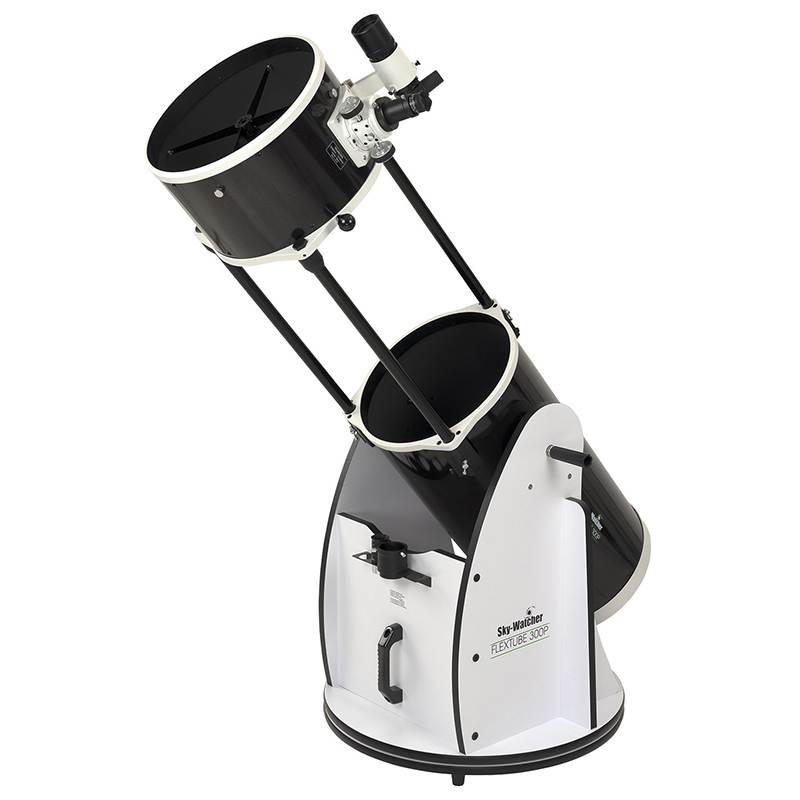
Sky-Watcher
Sky-Watcher Skyliner 300P
The Skyliner 300P is a serious 12-inch (304mm) floor Dobsonian for dedicated visual observers. At this aperture, galaxies that appear as grey smudges through a smaller scope start to show structure — dust lanes, spiral arms, companion galaxies. The 1.5m tube is substantial and the full setup with the rocker box approaches 38kg, so consider transport carefully before buying. Dark skies and patience are required to make the most of it; this is not a suburban back garden scope.
View telescope →Meade Instruments
Meade LightBridge 10"
The Meade LightBridge 10 is a 254mm open-truss Dobsonian — a different design philosophy to the solid-tube Sky-Watcher Skyliners. The open truss structure reduces weight, allows faster thermal equilibration (important for optical quality on cold nights), and makes the scope partially disassemblable for transport. At 254mm and f/4.7 it is a serious deep-sky visual instrument. The LightBridge range has earned a strong reputation among Dobsonian enthusiasts for its transport practicality versus solid-tube alternatives.
View telescope →Can't decide between the top two?
Skyliner 200P vs Skyliner 250PX →What to look for when buying
Three specs that matter specifically for dobsonians — and what they mean in practice.
Aperture
The single most important number for a Dobsonian.
This is why people buy Dobsonians. An 8-inch (200mm) gathers 2.3× more light than a 6-inch (150mm). A 10-inch (250mm) gathers 1.6× more than the 8-inch. Each step up opens a new tier of objects — push to the largest aperture your budget and storage allow.
No tracking
Objects drift — and that is fine.
Earth's rotation means objects move through the eyepiece. At 50× this is slow — a gentle nudge every minute or so keeps them centred. At 200×+ it is more frequent. This is the fundamental trade-off of a Dobsonian: simplicity for the price of having to occasionally move the scope.
Collimation
Same requirement as a reflector — mirrors need occasional alignment.
Like all Newtonians, Dobsonians need occasional collimation after transport. A laser collimator (£20–40) makes this a two-minute job. It is not a reason to avoid the design, but it is something to be aware of.
Dobsonian: honest trade-offs
What they do well
Outstanding value for aperture
An 8-inch Dobsonian costs £250–350. An 8-inch SCT costs £700+. An 8-inch refractor is effectively unobtainable. Nothing comes close on aperture-per-pound.
Simple to use
No alignment procedure, no handset, no motors. Move the tube, look through the eyepiece. New observers are up and running within minutes.
Spectacular deep-sky views
With a 10-inch or larger under a reasonably dark sky, the views of galaxies, globular clusters, and nebulae are genuinely stunning — the kind of views that make people into astronomers for life.
No cool-down delay
Open-tube Newtonians equalise with ambient temperature quickly. Unlike SCTs, you can start observing almost immediately after taking the scope outside.
Honest limitations
No tracking
Objects drift through the eyepiece as Earth rotates. Not a problem at low magnification, but at high power on planets it requires constant nudging.
No astrophotography
Long-exposure deep-sky imaging requires tracking. A Dobsonian on a standard alt-azimuth rocker box cannot do this. Some owners add motorised tracking platforms, but that adds cost and complexity.
Large and heavy at bigger sizes
A 12-inch Dobsonian has a tube over a metre long and a base the size of a small table. An 8-inch is manageable; beyond 10 inches, storage and transport become genuine planning considerations.
Also consider
All dobsonian telescopes in our database
29 telescopes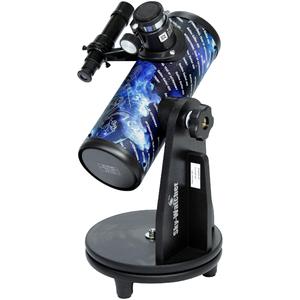
Sky-Watcher
Sky-Watcher Heritage 76
The Heritage 76 is the smallest telescope in Sky-Watcher's Heritage tabletop Dobsonian range, and it is remarkably capable for its size and price.
Sky-Watcher
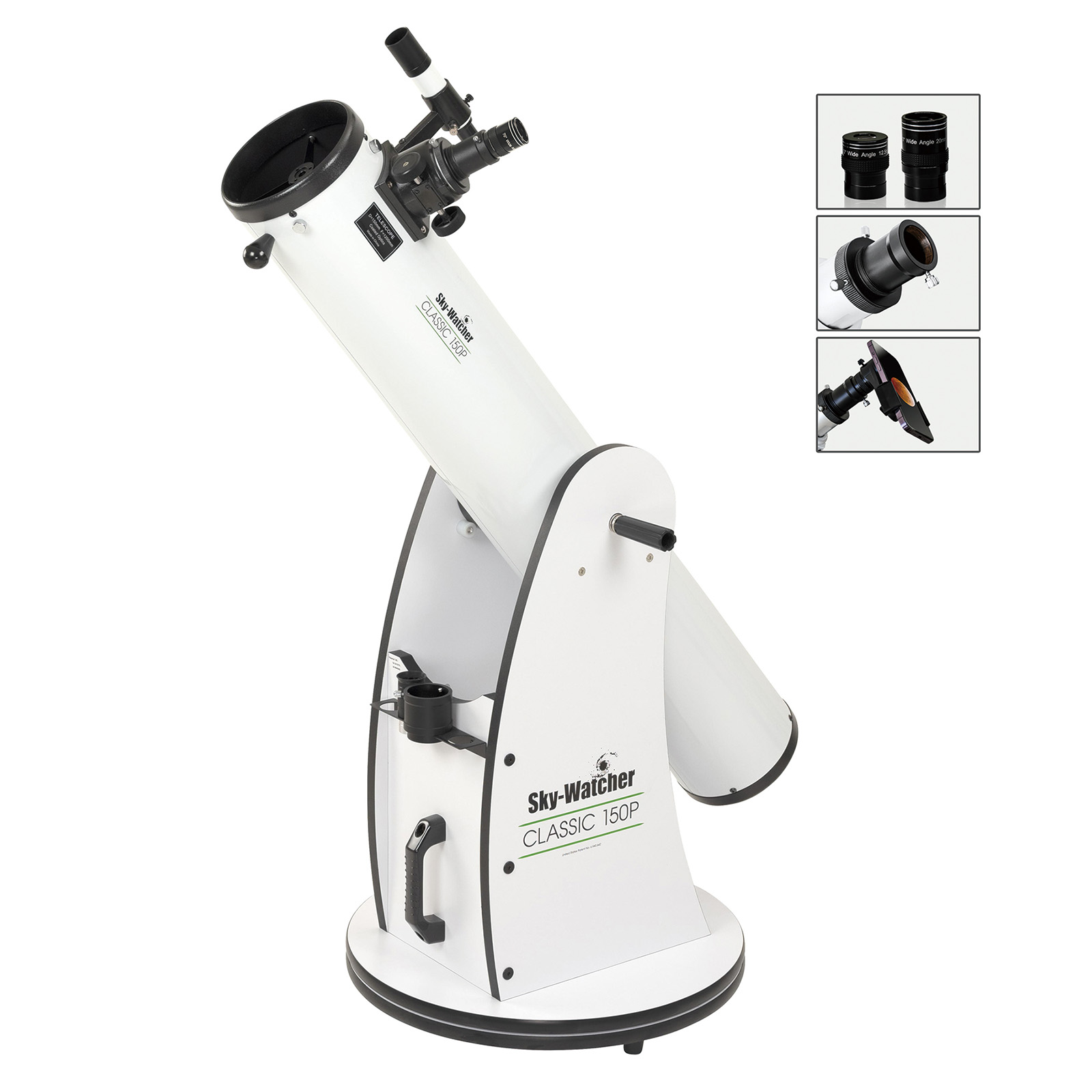
Sky-Watcher Skyliner 150P
The Skyliner 150P is Sky-Watcher's entry floor-standing Dobsonian — a proper 6-inch (150mm) Newtonian on a full rocker box base.
Orion
Orion SkyQuest XT6 Classic Dobsonian
The XT6 is Orion's entry-level full-size Dobsonian — the US equivalent of the Sky-Watcher Heritage 150P, though on a more stable floor-standing rocker box rather than a tabletop base.
Ursa Major
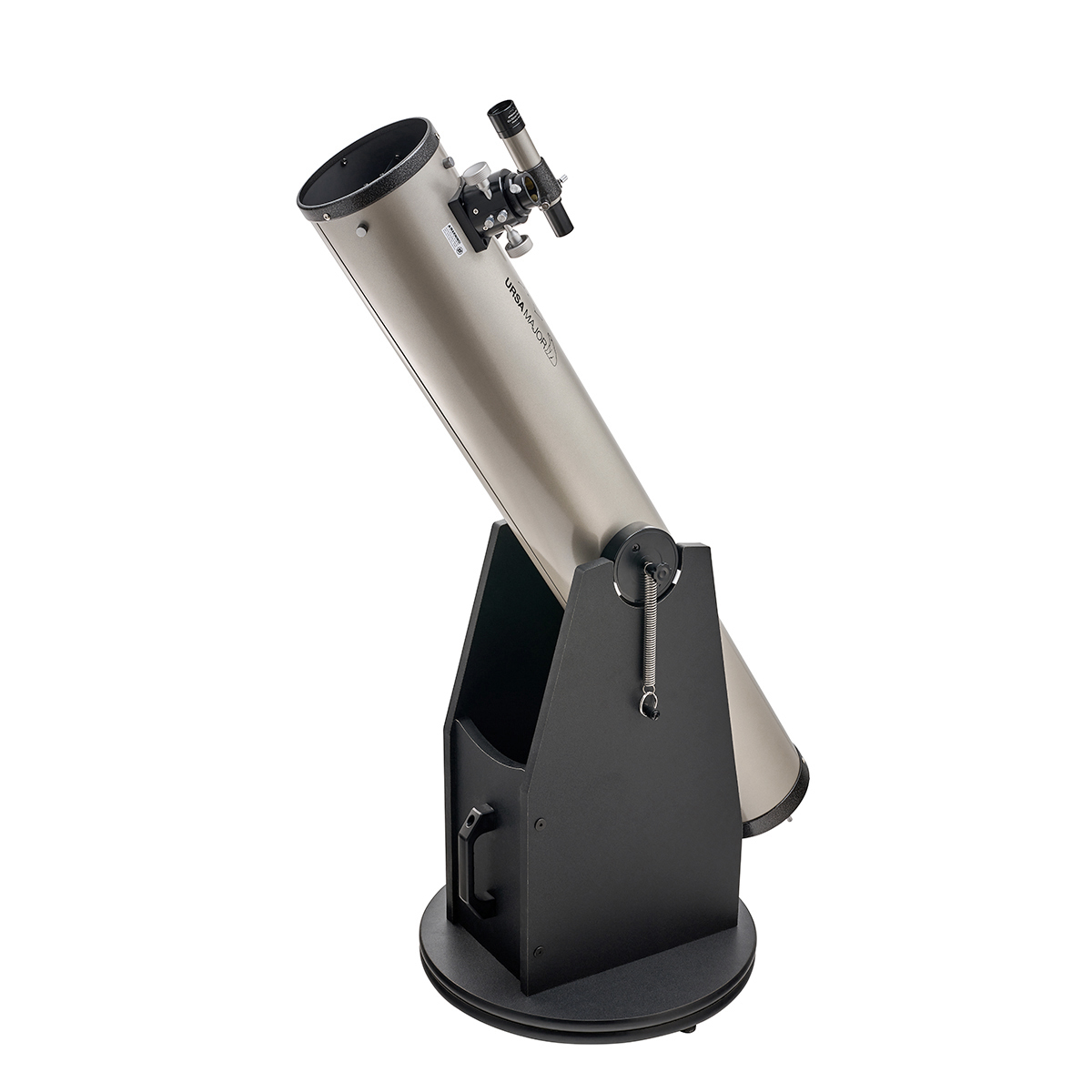
Ursa Major 6" f/8 Planetary Dobsonian
StellaLyra
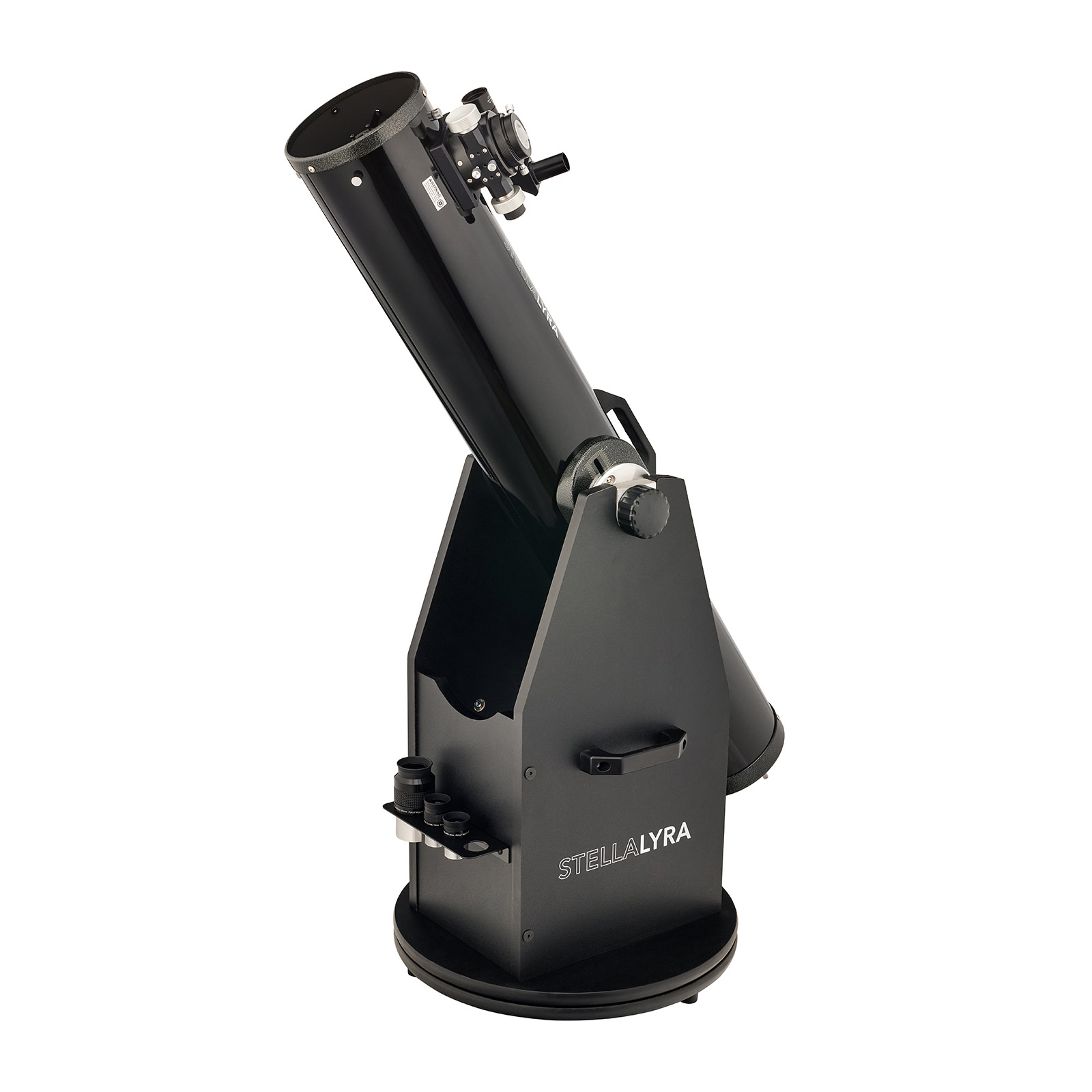
StellaLyra 6" f/8 Planetary Dobsonian
Sky-Watcher
Sky-Watcher Skyliner 200P
The Skyliner 200P is the benchmark by which all other mid-priced beginner telescopes are judged.
Orion
Orion SkyQuest XT8 Classic Dobsonian
Quite possibly the most-recommended beginner telescope in the US market.
Bresser
Bresser Messier 8" Dobsonian
Bresser's 8-inch Dobsonian is a direct competitor to the Sky-Watcher Skyliner 200P — same aperture class, similar price, different brand.
Apertura
Apertura AD8 Dobsonian
The Apertura AD8 is the US market's most consistently recommended 8-inch Dobsonian.
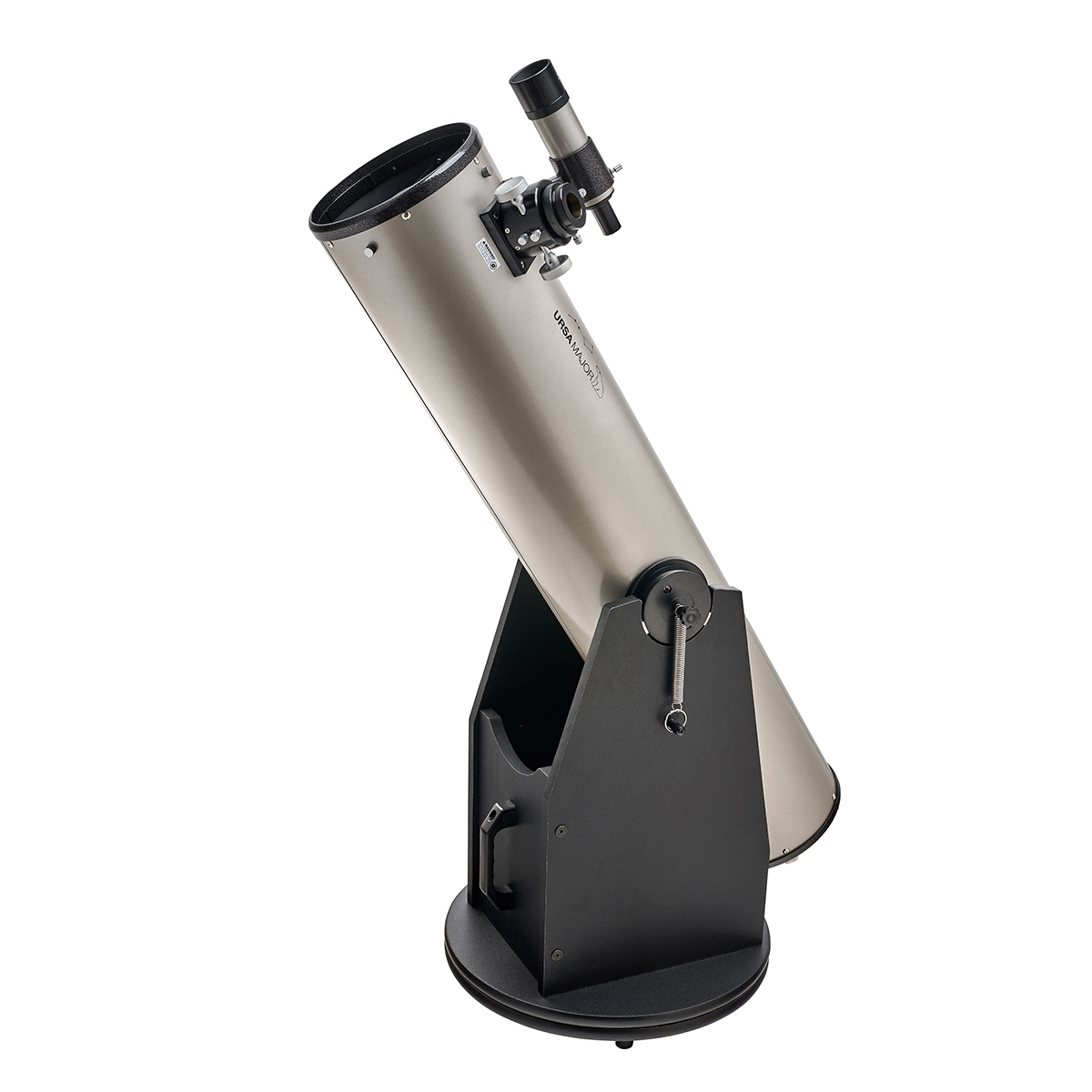
Ursa Major
Ursa Major 8" f/6 Dobsonian

StellaLyra
StellaLyra 8" f/6 Dobsonian
Explore Scientific
Explore Scientific 8" Dobsonian
The Explore Scientific 8-inch Dobsonian is a well-regarded alternative to the Sky-Watcher Skyliner 200P in the US market — similar aperture and performance, with build quality that CN owners consistently rate highly.
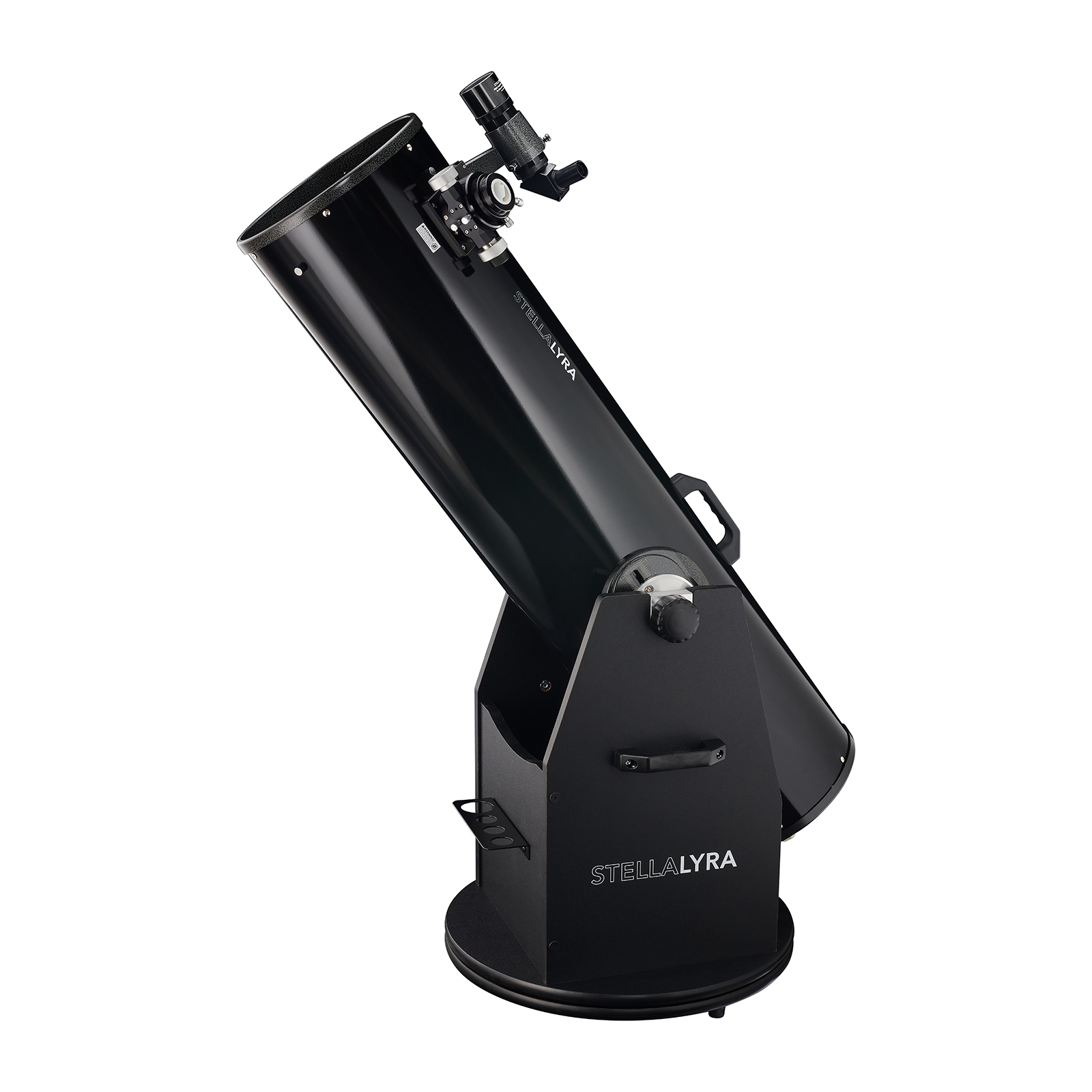
StellaLyra
StellaLyra 10" f/5 Dobsonian
Omegon
Omegon N 254/1250 Dobson
Ten inches of aperture in a Dobsonian — no other telescope format delivers this much light-gathering ability for less money.
Orion
Orion SkyQuest XT10 Classic Dobsonian
The XT10 is where visual astronomy starts to feel serious.
Apertura
Apertura AD10 Dobsonian
The Apertura AD10 is the 10-inch sibling of the AD8 — a 254mm Dobsonian that brings serious aperture to a manageable, self-contained package.
Meade Instruments
Meade LightBridge 10"
The Meade LightBridge 10 is a 254mm open-truss Dobsonian — a different design philosophy to the solid-tube Sky-Watcher Skyliners.
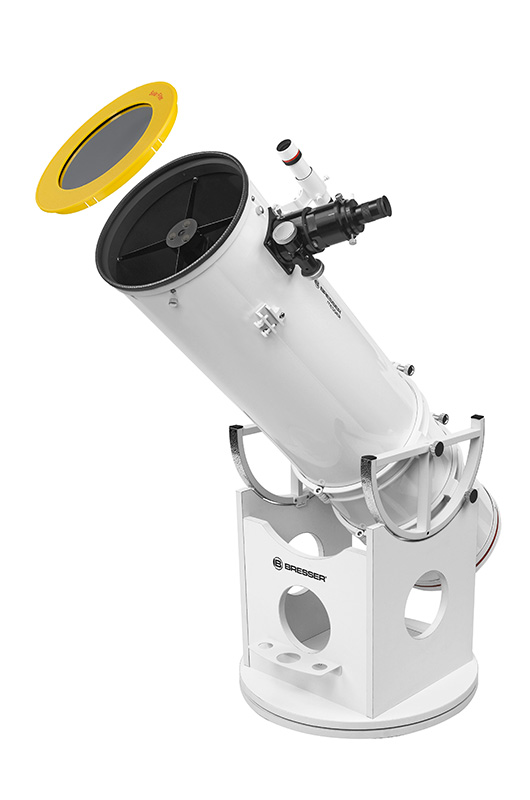
Bresser
Bresser Messier 10" Dobsonian
The Bresser 10-inch Dobsonian gives you 254mm of aperture — serious deep-sky territory — in a package that competes with the Sky-Watcher Skyliner 250PX.
Explore Scientific
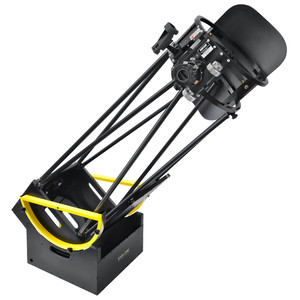
Explore Scientific 10" Dobsonian
The 10-inch Dobsonian is where visual astronomy becomes genuinely capable of objects that are difficult or impossible at 6-8 inches.
Sky-Watcher
Sky-Watcher Skyliner 250PX
At 254mm (10 inches), the Skyliner 250PX FlexTube is where serious deep-sky visual observing begins.
StellaLyra
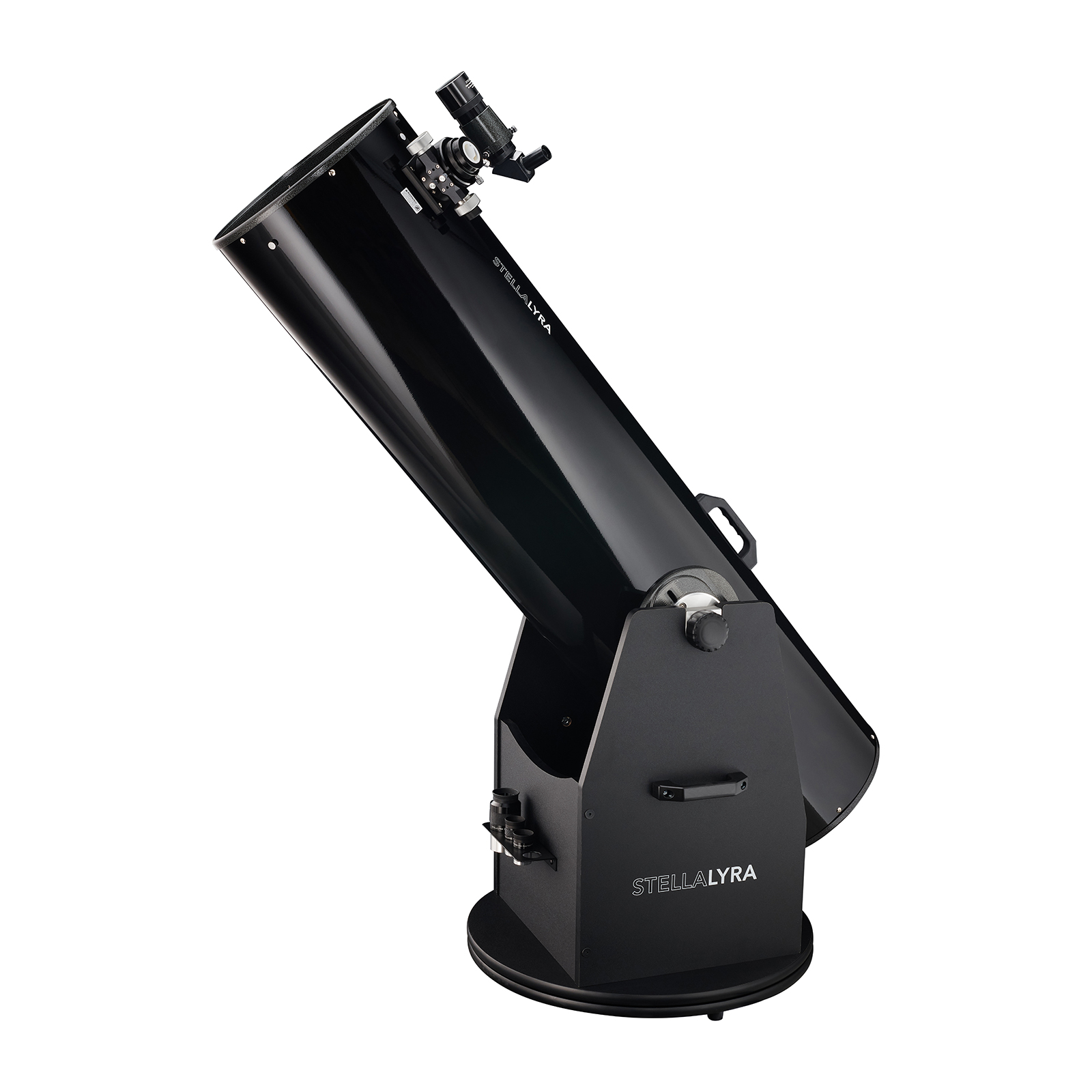
StellaLyra 12" f/5 Dobsonian
Sky-Watcher
Sky-Watcher Skyliner 300P
The Skyliner 300P is a serious 12-inch (304mm) floor Dobsonian for dedicated visual observers.
Explore Scientific
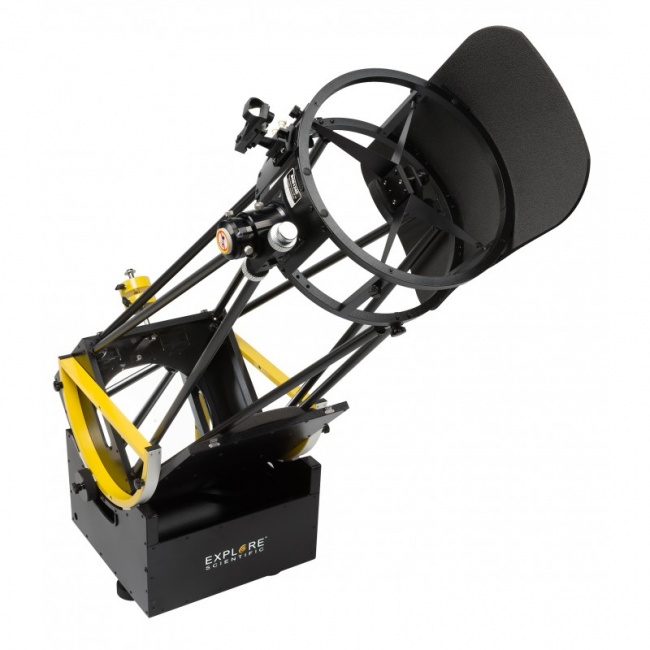
Explore Scientific 12" Dobsonian
Explore Scientific's 12-inch Dobsonian is a serious large-aperture visual instrument that competes with the Sky-Watcher Skyliner 300P and Bresser Messier 12-inch in the 305mm aperture class.
Bresser
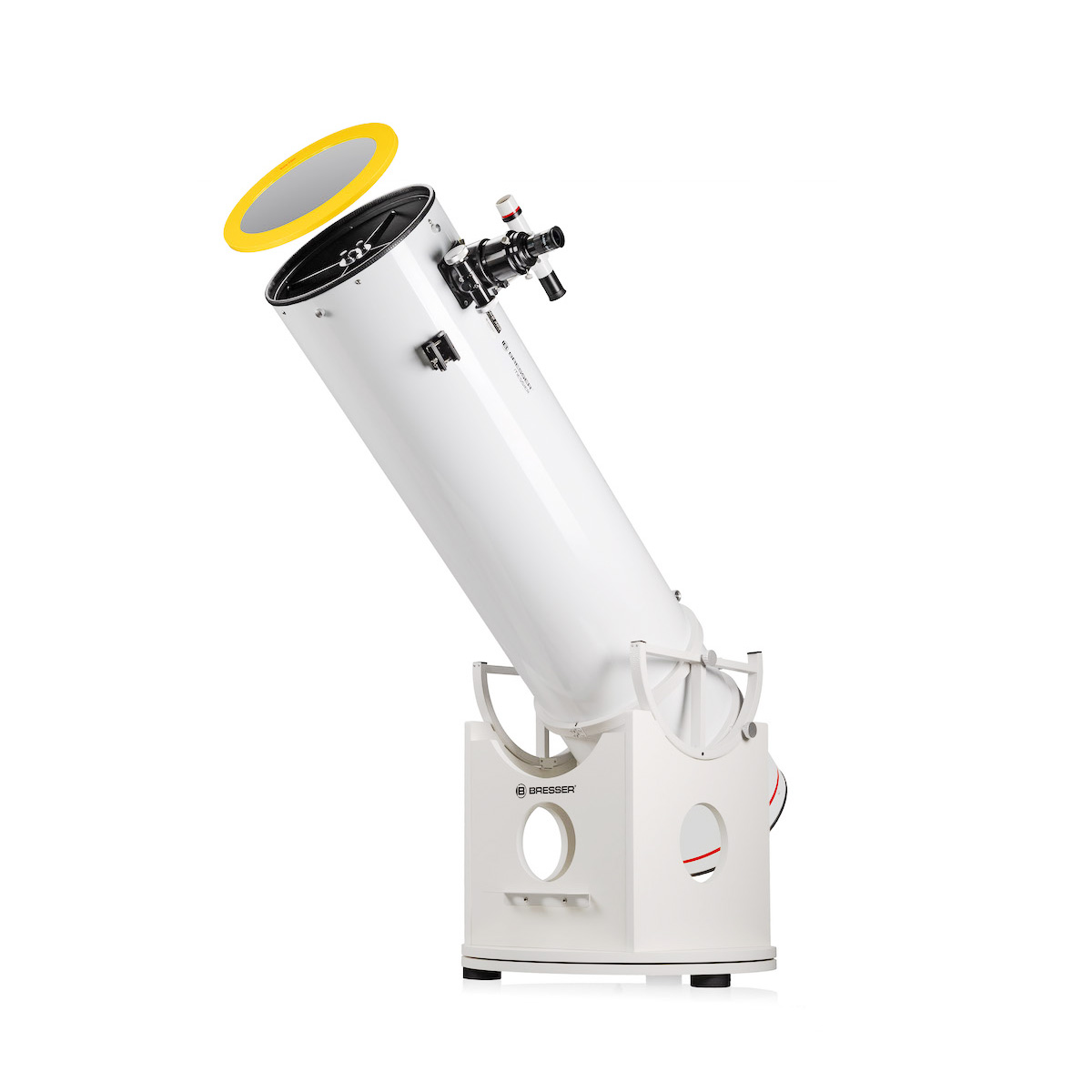
Bresser Messier 12" Dobsonian
The Bresser 12-inch Dobsonian is a serious large-aperture visual instrument, giving you 305mm to attack faint objects from a dark site.
Omegon
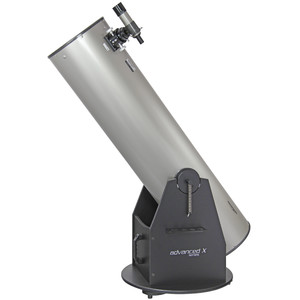
Omegon N 305/1500 Dobson
Twelve inches of aperture is where amateur astronomy starts to overlap with what professional observatories were doing not so long ago.
Meade Instruments
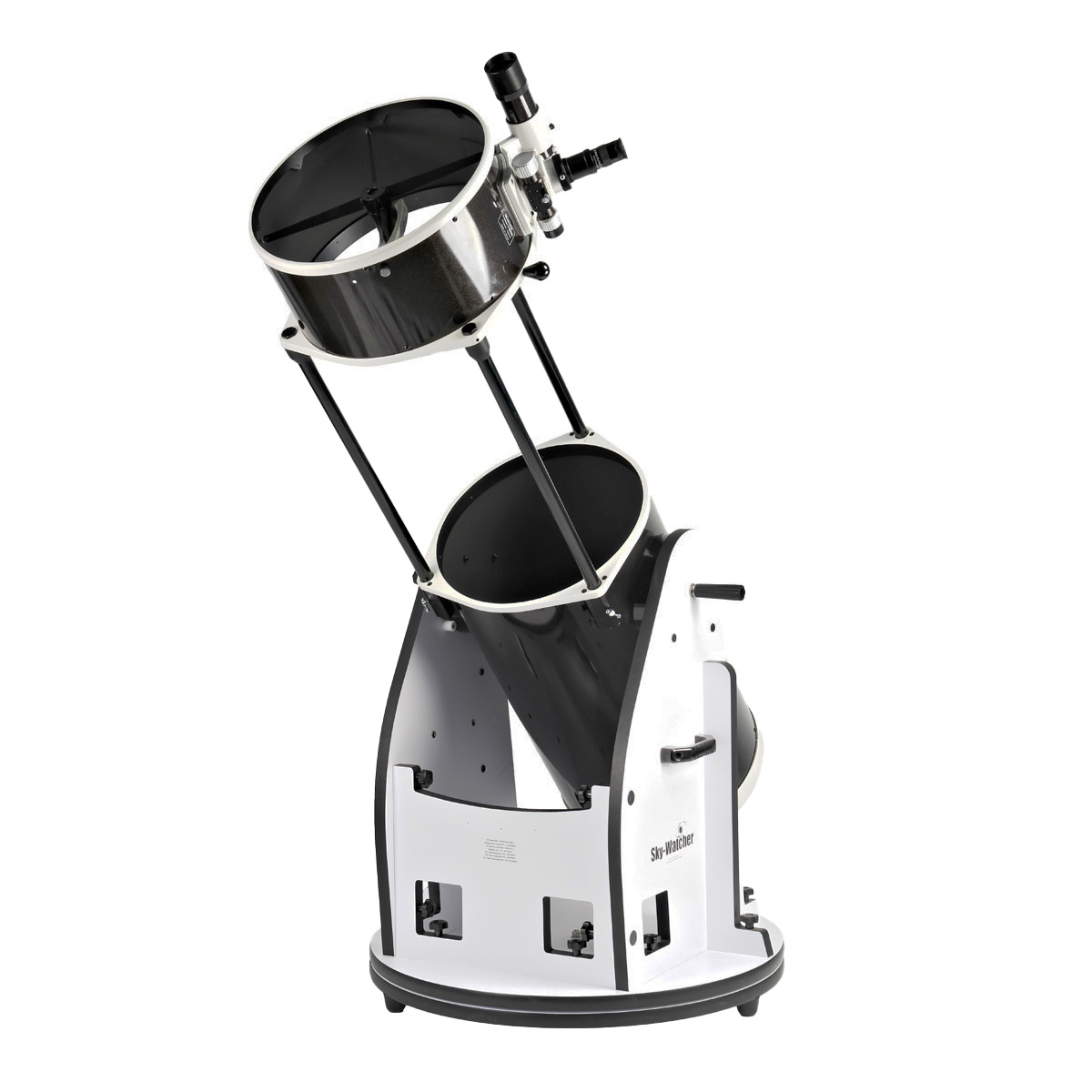
Meade LightBridge 12" Truss Dobsonian
A 12-inch (305mm) truss Dobsonian that disassembles into genuinely portable sections.
Sky-Watcher
Sky-Watcher Skyliner 350P
At 355mm (14 inches), the Skyliner 350P is the largest production Dobsonian in Sky-Watcher's standard range.
Sky-Watcher
Sky-Watcher Skyliner 400P FlexTube
Sixteen inches of aperture in a FlexTube collapsible Dobsonian — the Sky-Watcher Skyliner 400P is the largest telescope in the range that a single person can realistically own, transport, and set up without specialist equipment.
Explore Scientific
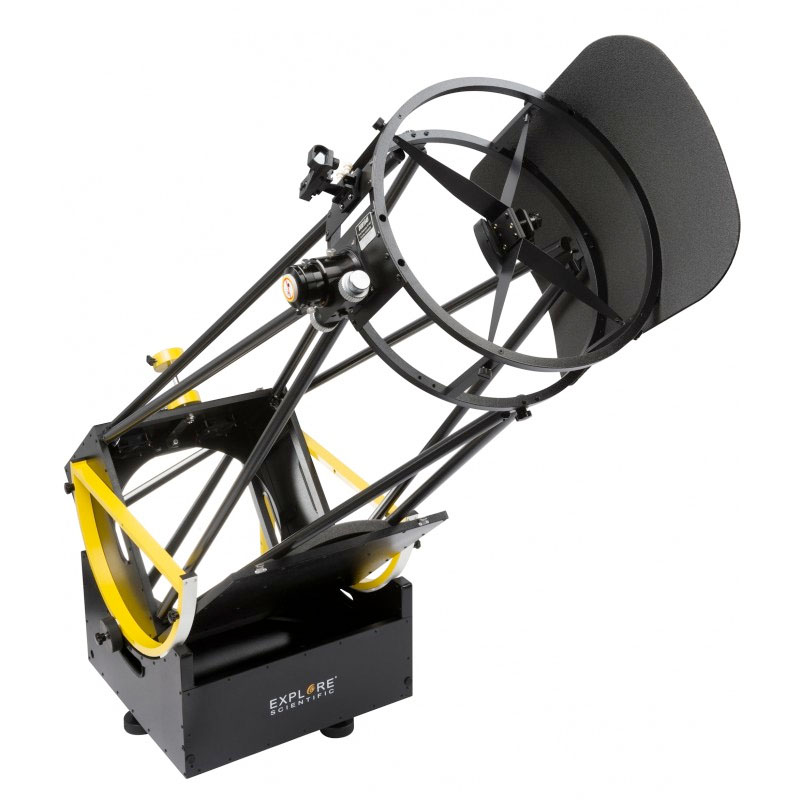
Explore Scientific 16" Dobsonian
The Explore Scientific 16-inch Dobsonian is the kind of telescope that serious visual observers save up for.