Browse·Reflectors·Sky-Watcher Star Discovery 150P
Sky-Watcher
Sky-Watcher Star Discovery 150P
The Star Discovery 150P gives you six inches of aperture with full WiFi GoTo control — a compelling combination for observers who want meaningful aperture without the learning curve of manual star-hopping. Controlled via the SynScan app, it aligns quickly and tracks reliably. At 150mm f/5, nebulae and galaxies show real structure, globular clusters resolve clearly, and the views of Jupiter and Saturn at high magnification are genuinely impressive. The P1 mount is less rigid than a dedicated equatorial but perfectly adequate for visual observing sessions. For the observer who wants maximum aperture and maximum ease in one package, this is a strong choice.
Affiliate link — we earn from qualifying purchases at no extra cost to you.
Product image
What you'll see
The Sky-Watcher Star Discovery 150P excels at lunar observation from suburban skies, delivering crisp crater details, mountain ranges, and even challenging sinuous rilles like Rimae Posidonius at moderate to high magnification (156x-200x). Owners consistently report that the Moon appears 'sharp as could be' with features 'so clear and distinct' even at lower powers like 20x, making this a standout performer for selenography. Planetary observation of Jupiter and Saturn is solid—cloud belts, Cassini Division, and subtle color details in Saturn's rings are readily visible, though high magnification (5mm eyepieces) can struggle in typical suburban humidity and average seeing conditions; the 12mm eyepiece often provides the steadiest view.
Bright deep-sky targets like planetary nebulae (NGC 6826) and globular clusters (M13, M92) show well with good structure detectable at high magnification (300x+), particularly with averted vision and dark adaptation. However, this scope's 150mm aperture has limits. Faint extended objects like M51's spiral arms require sustained averted-vision technique and favorable conditions to glimpse; the North American Nebula and similar nebulae remain out of reach. Very challenging splits like Sirius A/B resist resolution even at 450x+ magnification in typical suburban air. Overall, this telescope rewards lunar and planetary observers and those targeting bright showpiece clusters and planetary nebulae, but deep-sky performance is modest—the 150mm primary is not forgiving of poor transparency or light pollution for faint galaxies and nebulae.
Head to head
How it compares
Star Discovery 150P
Sky-Watcher
SkyQuest XT6 Classic Dobsonian
Orion
150mm · GoTo Newtonian Reflector vs 150mm · Manual Dobsonian
Full comparison →
Star Discovery 150P
Sky-Watcher
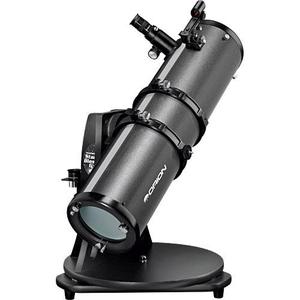
StarBlast 6 Astro Reflector
Orion
150mm · GoTo Newtonian Reflector vs 150mm · Manual Newtonian Reflector
Full comparison →
Star Discovery 150P
Sky-Watcher
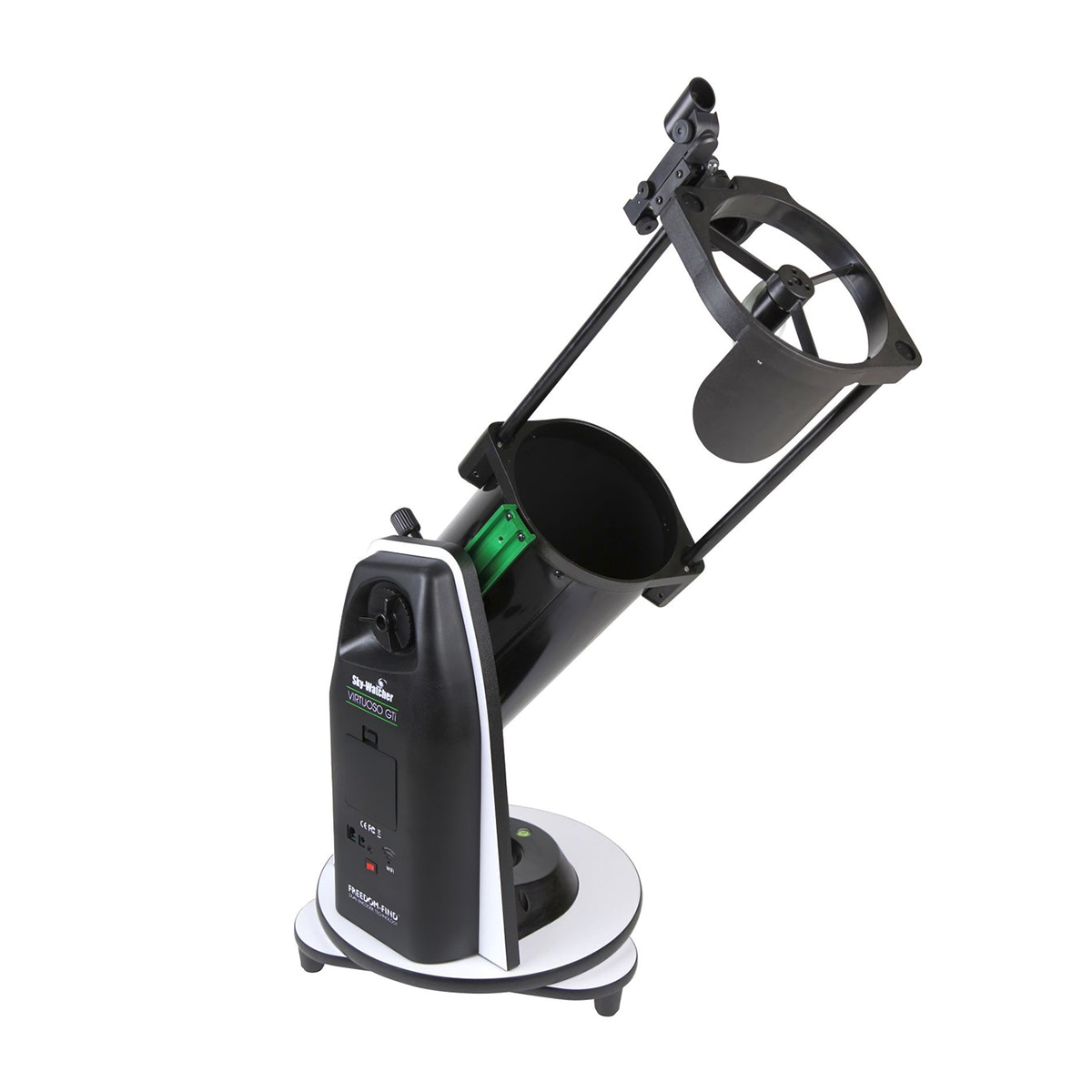
Virtuoso GTi 150P
Sky-Watcher
150mm · GoTo Newtonian Reflector vs 150mm · GoTo Newtonian Reflector
Full comparison →
Star Discovery 150P
Sky-Watcher
Quattro 150P
Sky-Watcher
150mm · GoTo Newtonian Reflector vs 150mm · Manual Newtonian Reflector
Full comparison →
Full Specifications
Optics
| Aperture | 150mm |
| Focal Length | 750mm |
| Focal Ratio | f/5 |
| Optical Design | Newtonian Reflector |
| Coatings | Parabolic primary mirror with aluminium coating and SiO2 overcoat |
Mount & Tracking
| Mount Type | GoTo (Computerised) |
| GoTo (Computerised) | Yes |
| Tracking | Yes |
Focuser
| Focuser Size | 2" |
| Focuser Type | Rack and pinion |
Physical
| OTA Weight | 5.2kg |
| Total Weight (with mount) | 9.5kg |
| Tube Length | 710mm |
| Tube Material | Aluminium |
Included Accessories
| Eyepieces | 10mm and 25mm eyepieces |
| Finder Scope | Red dot finder |
| Diagonal | No |
Smart Telescope Features
| Built-in Camera | No |
| App Controlled | Yes |
| WiFi | Yes |
| Battery Included | No |