Browse·Reflectors·Sky-Watcher Heritage 130P
Sky-Watcher
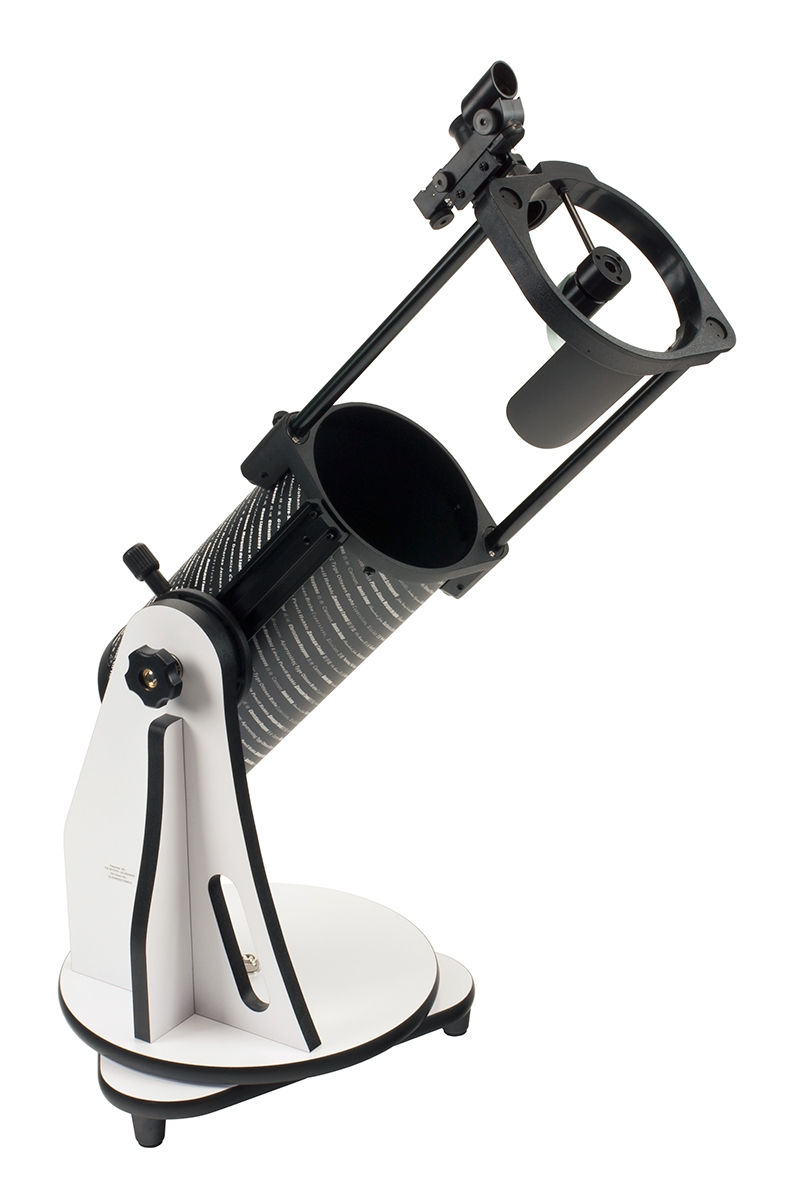
Sky-Watcher Heritage 130P
A five-inch Dobsonian that reveals planetary detail and deep sky objects with surprising ease.
Affiliate link — we earn from qualifying purchases at no extra cost to you.
From the community
What owners say
Based on 25 Cloudy Nights discussions
What they love
- ✓Able to see Jupiter, its moons, Mars, and Saturn's rings right out of the box with minor setup
- ✓Dobsonian mount has smooth bearings with no wobble, making it easy to pick targets
- ✓Can resolve Saturn's rings with this small 5-inch telescope
- ✓Red dot finder is insanely easy to use for point-and-shoot observation
- ✓Collimation procedure is straightforward and can be done with basic equipment
What caught them off guard
- !Mounting hole on dovetail is positioned at geometric center rather than center of mass, causing the telescope to point s…
- !Focuser has noticeable sloppiness and looseness
- !Factory light shield for open truss is far too small
- !DSLR focusing with camera is problematic; focal point after secondary mirror is too close to centerline for camera senso…
- !Red dot finder alone is inadequate for astrophotography (cannot locate planets like Saturn in camera view)
Top targets reported by owners
What you'll see
Saturn's rings
visible even at low power; called 'amazing' that a 5-inch scope can show them
Jupiter and its moons
resolved immediately upon setup
The Moon
excellent detail in daylight and at night; described as 'great' for lunar photography
M13 (Great Hercules Cluster)
consistently observed and photographed with success; described as impressive
Worth knowing before you buy
Focuser has noticeable sloppiness and looseness that can be improved by applying heavy grease (such as wheel bearing grease) to the threads, though this requires care to avoid getting grease on hands and optics.
The dovetail mounting hole is positioned on the geometric center rather than the center of mass, causing the telescope to tip forward on alt-azimuth mounts and requiring users to drill additional mounting holes for proper balance.
Factory light shield on the open truss tube is too small and inadequate, requiring users to build a custom internal sleeve or baffle to reduce stray light and improve image quality.
Head to head
How it compares
Heritage 130P
Sky-Watcher

SpaceProbe 130ST EQ Reflector
Orion
130mm · Manual Newtonian Reflector vs 130mm · Manual Newtonian Reflector
Full comparison →
Heritage 130P
Sky-Watcher
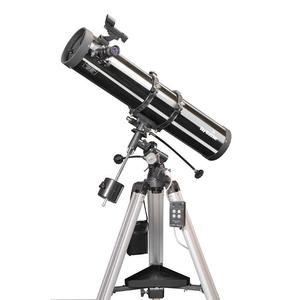
Explorer 130M
Sky-Watcher
130mm · Manual Newtonian Reflector vs 130mm · Manual Newtonian Reflector
Full comparison →
Heritage 130P
Sky-Watcher
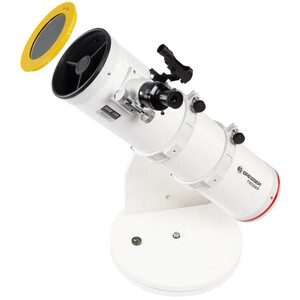
Messier N-150/750
Bresser
130mm · Manual Newtonian Reflector vs 150mm · Manual Newtonian Reflector
Full comparison →
Heritage 130P
Sky-Watcher
SkyQuest XT6 Classic Dobsonian
Orion
130mm · Manual Newtonian Reflector vs 150mm · Manual Dobsonian
Full comparison →
Frequently asked
Questions from owners
Sourced from Cloudy Nights discussions.
- Can you do astrophotography with this scope?
- Yes, but it requires workarounds. The focal point sits too close to the optical axis for a DSLR to focus directly; users solve this by inserting a barlow or using eyepieces with T-threads as an intermediary.
- How bad is focuser sloppiness?
- Multiple users describe the focuser as loose and annoying, particularly when adding camera weight. The standard fix is to apply heavy grease (like wheel bearing grease) to the focuser threads, which several members report dramatically improves the feel and reduces play—though some prefer to avoid grease near optics.
- Is the dovetail mounting hole in the right place?
- No. The mounting hole on the dovetail is positioned at the geometric center rather than the center of mass, causing the scope to tilt upward under gravity when mounted on an alt-azimuth tripod.
- Is the factory light baffle adequate?
- No. Multiple users report the factory light shield is too small and fails to block stray light effectively on the open truss design.
- How does it perform visually right out of the box?
- Excellent. Users consistently report seeing Jupiter's moons, Mars, Saturn's rings, and numerous deep-sky objects (M13, M5, M81/M82, M57) with minimal setup.
- Is the included red dot finder adequate?
- The red dot finder works well for naked-eye stargazing and pointing the scope in the right direction, but it is insufficient for locating faint objects in a camera or for precise positioning. Users imaging planets typically add a guide scope (like the Orion ST80 refractor) to reliably frame targets on their sensor.
Full Specifications
Optics
| Aperture | 130mm |
| Focal Length | 650mm |
| Focal Ratio | f/5 |
| Optical Design | Newtonian Reflector |
| Coatings | Parabolic primary mirror with high-transmission coatings |
Mount & Tracking
| Mount Type | Dobsonian |
| GoTo (Computerised) | No |
| Tracking | No |
Focuser
| Focuser Size | 1.25" |
| Focuser Type | Rack and pinion |
Physical
| OTA Weight | 3.1kg |
| Total Weight (with mount) | 3.1kg |
| Tube Length | 560mm |
| Tube Material | Steel (collapsible FlexTube) |
Included Accessories
| Eyepieces | 25mm and 10mm Kellner |
| Finder Scope | Red dot finder |
| Diagonal | No |