Browse·Smart Scopes·Unistellar eQuinox 2
Unistellar
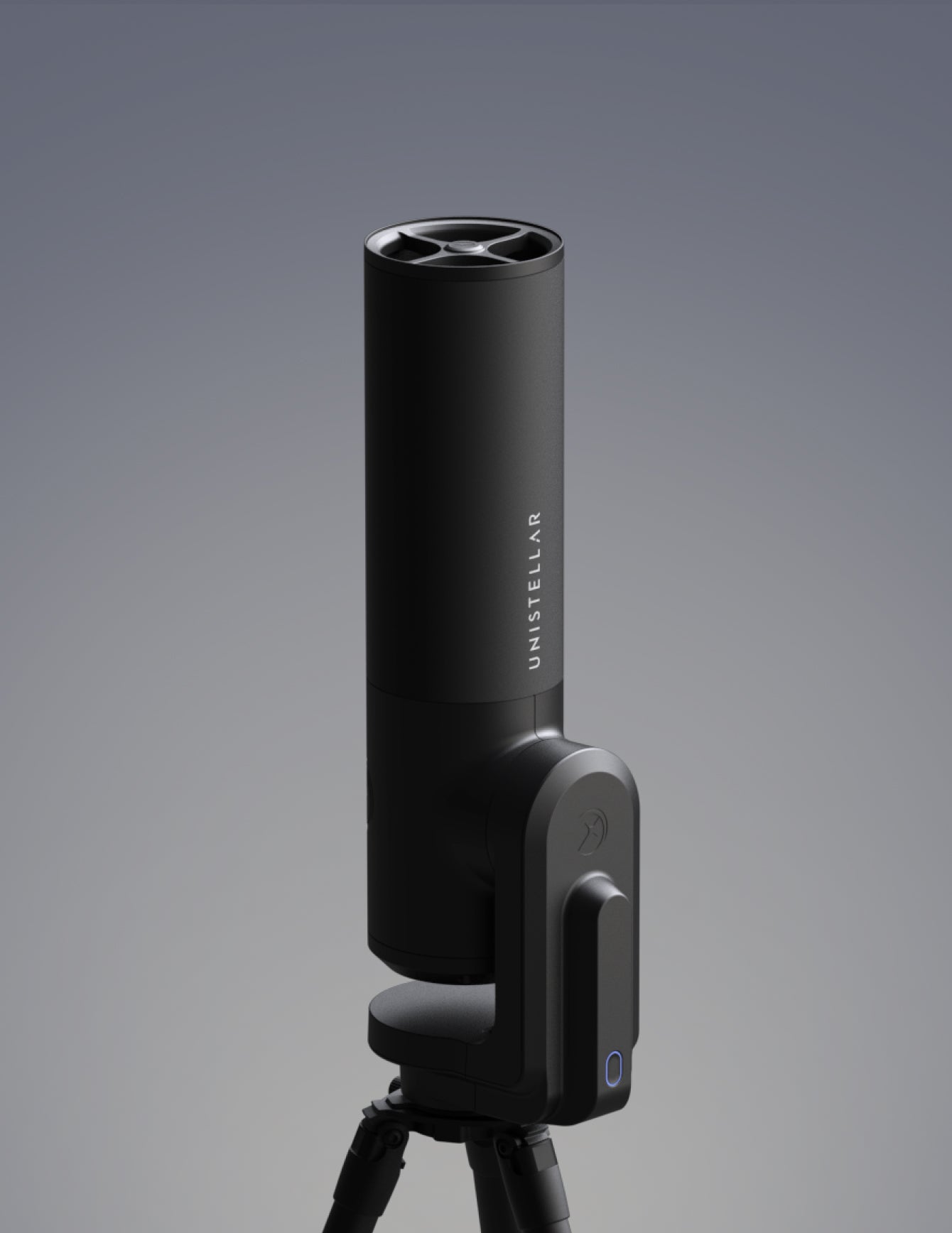
Unistellar eQuinox 2
A capable smart reflector that delivers impressive deep-sky performance despite its learning curve.
Affiliate link — we earn from qualifying purchases at no extra cost to you.
From the community
What owners say
Based on 22 Cloudy Nights discussions
What they love
- ✓Able to confirm 17.
- ✓Viewed over 1500 DSOs in 10 months of ownership
- ✓Effective light pollution filtering software
- ✓Easy to use once software is learned
- ✓Manual focus using Bahtinov mask is straightforward and part of normal startup routine
What caught them off guard
- !Collimation can be very difficult, though only needed once after initial setup
- !Requires manual focus setup each evening using Bahtinov mask
- !Very narrow field of view - just slightly more than full moon's diameter
- !Coma inherent to F4 Newtonian design
- !Numerous software bugs requiring workarounds before updates fix issues
Top targets reported by owners
What you'll see
Andromeda galaxy
wide-field views with surrounding area due to 0.
Globular clusters
achieves sharp star resolution; user reduces brightness by 70%+ to avoid core overexposure
Orion and Running Man, Horse Head and Flame nebulae
benefits from the 450mm focal length
Smaller DSOs generally
450mm focal length better suited than shorter refractors
Worth knowing before you buy
Manual focus wheel requires use of Bahtinov mask for precise focusing; no autofocus available like competing models
Narrow field of view (slightly more than full moon diameter) with only three FOV options (0.
No equatorial mount capability; field rotation occurs during long exposures, limiting stacking time and corner retention…
Frequently asked
Questions from owners
Sourced from Cloudy Nights discussions.
- How difficult is it to use the Equinox2 compared to other smart telescopes?
- The Equinox2 requires more setup work than competitors: you must level the tripod, align, take dark frames, and perform collimation and manual focus using a Bahtinov mask. Once learned, the software is described as very effective, but initial setup is more involved than the plug-and-play experience of Vespera or SeeStar.
- Can the Equinox2 be used in cold weather?
- Members report operating the Equinox2 in upper 20s Fahrenheit without significant problems, though sluggish behavior and tracking issues can occur in lower temperatures. The device disables charging below 10°C, so you cannot operate it if the battery fully depletes in very cold conditions.
- How good is the field of view on the Equinox2?
- The Equinox2 has a narrow field of view—just slightly larger than the full moon's diameter. Users can select between 0.
- How do you access raw FITS files from the Equinox2 for post-processing?
- Accessing raw FITS files is described as 'extraordinarily difficult and time-consuming.' You must first upload images to Unistellar's servers, wait for processing notification, then download them—a cumbersome workflow compared to competitors like Vespera or SeeStar that offer more direct raw file access.
- Is the electronic eyepiece on the Equinox2 worth the extra cost?
- Owners express mixed views: while the eyepiece offers a novel feature for star parties, the electronic display lacks the 'wow factor' of actual optical viewing and has noticeable lag. Since you should not touch the scope during imaging anyway, the eyepiece is considered more of a gimmick by some than a practical advantage for the cost premium.
- How does the Equinox2 perform on deep-sky objects compared to other smart scopes?
- The Equinox2's 450mm focal length and larger sensor allow it to capture smaller DSOs effectively better than wider-field competitors. However, coma is inherent to its f/4 Newtonian design, making stars appear less sharp and the field less flat than refractor-based smart scopes.
Full Specifications
Optics
| Aperture | 114mm |
| Focal Length | 450mm |
| Focal Ratio | f/3.95 |
| Optical Design | Smart Telescope |
| Coatings | Multi-coated primary reflector optics |
Mount & Tracking
| Mount Type | Integrated |
| GoTo (Computerised) | Yes |
| Tracking | Yes |
| Tracking Motor | Integrated dual-axis motorised alt-az with autonomous field detection |
Focuser
| Focuser Type | Motorised electric focuser with auto-focus |
Physical
| OTA Weight | 8kg |
| Total Weight (with mount) | 8kg |
| Tube Length | 400mm |
| Tube Material | Aluminium alloy |
Included Accessories
| Diagonal | No |
Smart Telescope Features
| Built-in Camera | Yes |
| App Controlled | Yes |
| WiFi | Yes |
| Battery Included | No |
| Sensor | 1/1.8" Sony IMX347 CMOS |
| Sensor Resolution | 7.7MP |