Browse·Refractors·Vixen ED80Sf
Vixen
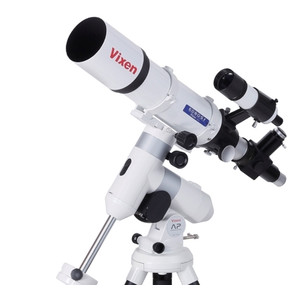
Vixen ED80Sf
A nimble achromatic refractor that reveals surprising planetary detail despite modest aperture.
Affiliate link — we earn from qualifying purchases at no extra cost to you.
From the community
What owners say
Based on 21 Cloudy Nights discussions
What they love
- ✓Excellent planetary detail visible on Jupiter including belt structure, GRS color and detail, moon shadows, and knotty f…
- ✓Sharp lunar views with clear crater detail, mountain formations, and terminator features
- ✓Very capable for observing Saturn, Moon, and planetary objects despite small aperture
- ✓Quick cool-down time (60+ seconds for 80mm)
- ✓Excellent performance on double stars with stable, clean airy disks
What caught them off guard
- !Limited detail compared to larger apertures (100mm+, 120mm+, 150mm+) when viewing the same objects
- !Dimmer image at higher magnifications (140x+), requiring skilled observer technique to extract detail
- !Chromatic aberration visible as blue halos, especially in achromatic versions
- !Some users found themselves wanting more detail on planets despite decent views
- !Difficult to use with certain eyepieces due to balance issues on lighter mounts like Porta II
Top targets reported by owners
What you'll see
Jupiter
Great Red Spot clearly visible with orange-red coloration, Galilean moons with shadow transits, belt…
Moon
Lunar terminator shows mountain formations with exceptional clarity, Montes Teneriffe structure, Mon…
Double stars (especially bright ones like Castor)
Textbook airy disk patterns, stable clean star images, easy separation even at high magnification (5…
Saturn
Rings and polar regions visible but less detailed than Jupiter
Worth knowing before you buy
The focuser on the Starbase 80 is described as poor quality with inadequate single-speed design compared to competing entry-level scopes with dual-speed focusers.
The included alt-az mount appears flimsy and inadequate for the optical tube, with users noting balance issues when using larger eyepieces and recommending migration to a sturdier mount.
An 80mm refractor requires significant observer skill and excellent seeing conditions to show planetary detail comparable to larger apertures; beginners often struggle to see what the scope can theoretically reveal.
Head to head
How it compares
ED80Sf
Vixen
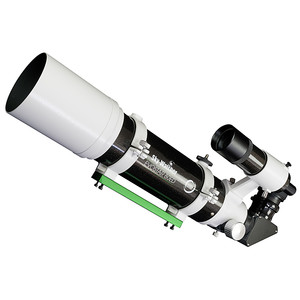
Evostar 80ED + HEQ5 Pro
Sky-Watcher
80mm · Manual Refractor vs 80mm · GoTo Refractor
Full comparison →
ED80Sf
Vixen
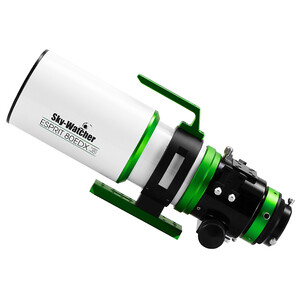
Esprit 80ED
Sky-Watcher
80mm · Manual Refractor vs 80mm · Manual Refractor
Full comparison →
ED80Sf
Vixen
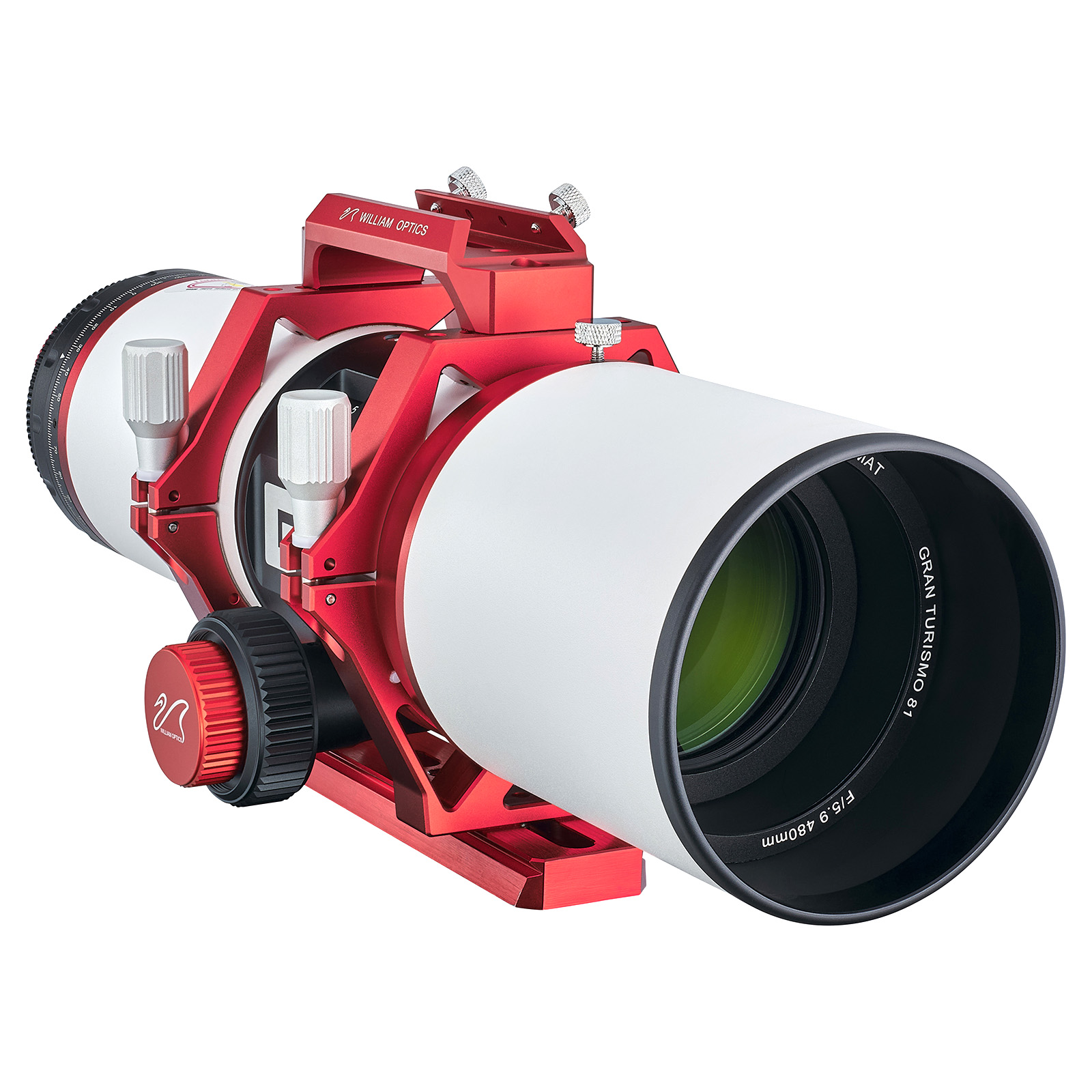
GT81
William Optics
80mm · Manual Refractor vs 81mm · Manual Refractor
Full comparison →
ED80Sf
Vixen
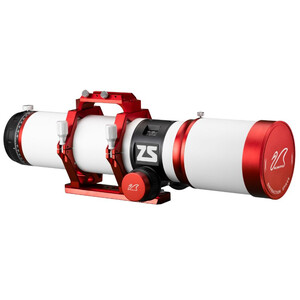
Zenithstar 81
William Optics
80mm · Manual Refractor vs 81mm · Manual Refractor
Full comparison →
Frequently asked
Questions from owners
Sourced from Cloudy Nights discussions.
- How good is an 80mm refractor for observing planets?
- An 80mm can provide satisfying planetary views with good seeing and skilled observation, showing Jupiter's belts, the Great Red Spot, and lunar detail clearly. However, multiple observers report that larger apertures (100-150mm) show noticeably more detail with less effort, especially for beginners.
- Is an 80mm refractor worth buying if I want a grab-and-go scope?
- Yes—80mm refractors excel as grab-and-go instruments due to fast cool-down (under a minute), extreme portability, and usability on lightweight mounts and tripods. Many owners specifically value them for this role and accept the aperture limits in exchange for actually using the scope frequently rather than leaving larger equipment in storage.
- How does the Starbase 80 compare to other 80mm options like the Vixen A80M?
- The Starbase 80 is marketed with Takahashi branding but is not actually manufactured by Takahashi—it's made by another Japanese optics company under contract. At ~$610 with mount versus the Vixen A80M at ~$500, the Starbase offers orthoscopic eyepieces and a basic mount, while the Vixen is described as entry-level.
- Should I buy an 80mm or a larger refractor if I'm starting out?
- Most experienced observers recommend beginners consider 100mm or larger for planetary observing, as it shows more detail more easily and helps beginners learn faster. However, an 80mm ED or quality achromat is significantly cheaper and portable, making it a valid choice if you prioritize grab-and-go convenience or have space/budget constraints.
- What eyepiece magnifications work best with an 80mm for planetary observing?
- Observers report starting at ~100x for Jupiter and moving to 140-190x for sharper detail when seeing permits, with some pushing to 250x on exceptional nights. However, at these higher magnifications the image dims significantly, requiring excellent seeing and trained observation skills.
- Do I need an expensive ED or APO 80mm, or will a regular achromat work?
- Even inexpensive 80mm achromats can provide pleasant planetary views with some chromatic aberration visible as color fringing, particularly on bright objects like the Moon. ED and APO versions reduce this false color significantly and are preferred by serious observers, but classic long-focus (f/11 to f/15) achromats from reputable makers perform competently.
Full Specifications
Optics
| Aperture | 80mm |
| Focal Length | 600mm |
| Focal Ratio | f/7.5 |
| Optical Design | Refractor |
| Lens Elements | 2-element |
| Coatings | Fully multi-coated ED doublet on all air-to-glass surfaces |
Mount & Tracking
| GoTo (Computerised) | No |
| Tracking | No |
Focuser
| Focuser Size | 2" |
| Focuser Type | Dual-speed Crayford (with 1.25" adapter) |
Physical
| OTA Weight | 1.8kg |
| Tube Length | 528mm |
| Tube Material | Aluminium |
Included Accessories
| Diagonal | No |