Browse·Smart Scopes·ZWO Seestar S30 Pro
ZWO
ZWO Seestar S30 Pro
The Seestar S30 Pro is the upgraded version of ZWO's entry-level smart telescope, adding a built-in solar filter, enhanced battery life, and improved stacking algorithms over the original S30. At 30mm f/5.3, the aperture is genuinely small — you are working with light-collecting area comparable to a 30mm binocular — but the automated live stacking technology compensates by building up exposures over minutes. Wide nebulae like the Orion Nebula fill the field of view beautifully; galaxies appear as extended glows with hints of structure from a dark site. The built-in solar filter makes daytime solar observing completely painless. For a pocket-sized all-weather package that just works, the S30 Pro is an impressive piece of engineering.
Affiliate link — we earn from qualifying purchases at no extra cost to you.
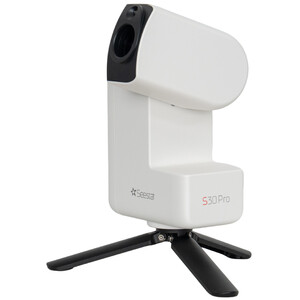
What you'll see
The Seestar S30 Pro excels as an EAA (electronically assisted astronomy) platform for live-stacking faint galaxies and nebulae from suburban and dark-sky sites. Owners consistently report that spiral galaxies—particularly M81, NGC 4631, and the Arp peculiar catalogue—reveal their structure best when exposures are allowed to stack for 15–30 minutes, building signal in real-time via SharpCap or equivalent software. The combination of reasonable aperture and dedicated EAA workflow means faint dust lanes, HII regions, and galaxy jets that would be invisible in visual observation become apparent. Narrowband H-alpha and OIII imaging of emission nebulae produces striking color-separated views of objects like Thor's Helmet and the Jellyfish Nebula; these are targets where the rig genuinely shines, bringing out intricate structure that rewards patient stacking.
However, this is not a general-purpose visual scope, and the EAA approach has real limits. Extended faint objects like supernova remnants and low-altitude planetaries require integration times longer than EAA typically provides—these observers often note they would return with longer-exposure astrophotography to do justice to the target. Plate solving can fail on small fields of view at high focal length, forcing manual alignment. And while live stacking improves signal dramatically, extremely faint transient objects like the recent supernova in M108 remain challenging to detect without deliberate enhancement and comparison work. Globular clusters impress when altitude permits; Omega Centauri at a dark site produces a memorable view, but at extreme low angles the mount and guiding become limiting factors. The scope rewards owners who are patient with stacking, comfortable with software control, and willing to accept that some targets—particularly faint extended nebulae—may be better left to longer exposures from a motorized observatory setup.
Head to head
How it compares
Seestar S30 Pro
ZWO
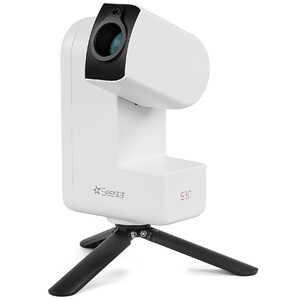
Seestar S30
ZWO
30mm · GoTo Smart Telescope vs 30mm · GoTo Smart Telescope
Full comparison →
Seestar S30 Pro
ZWO
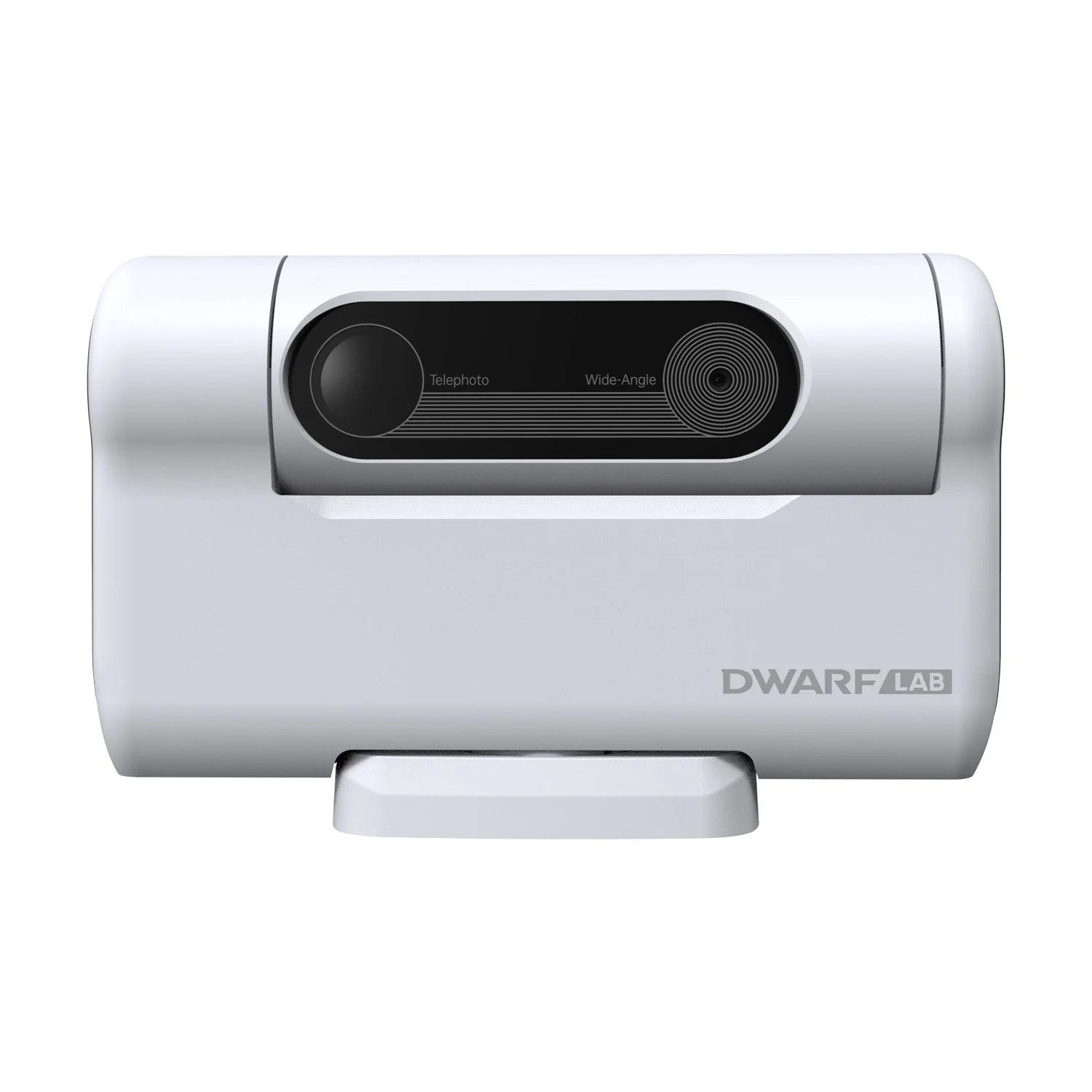
DWARF II
Dwarf Labs
30mm · GoTo Smart Telescope vs 24mm · GoTo Smart Telescope
Full comparison →
Seestar S30 Pro
ZWO
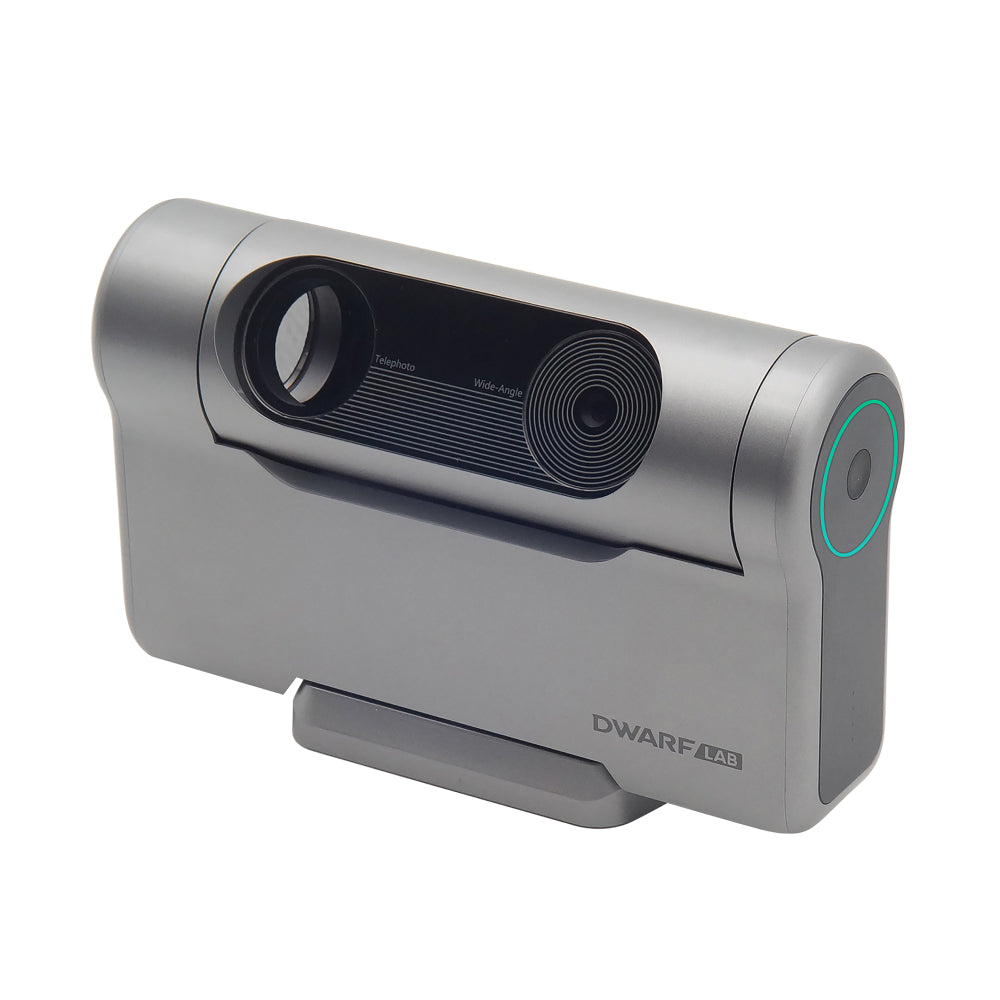
DWARF III
Dwarf Labs
30mm · GoTo Smart Telescope vs 24mm · GoTo Smart Telescope
Full comparison →
Full Specifications
Optics
| Aperture | 30mm |
| Focal Length | 160mm |
| Focal Ratio | f/5.3 |
| Optical Design | Smart Telescope |
| Coatings | Fully multi-coated apochromatic doublet |
Mount & Tracking
| Mount Type | Integrated |
| GoTo (Computerised) | Yes |
| Tracking | Yes |
Physical
| OTA Weight | 0.8kg |
| Total Weight (with mount) | 1.5kg |
Included Accessories
| Diagonal | No |
Smart Telescope Features
| Built-in Camera | Yes |
| App Controlled | Yes |
| WiFi | Yes |
| Battery Included | Yes |
| Sensor | 1/2 inch |
| Sensor Resolution | 2.1MP |