Browse·Smart Scopes·ZWO Seestar S50
ZWO
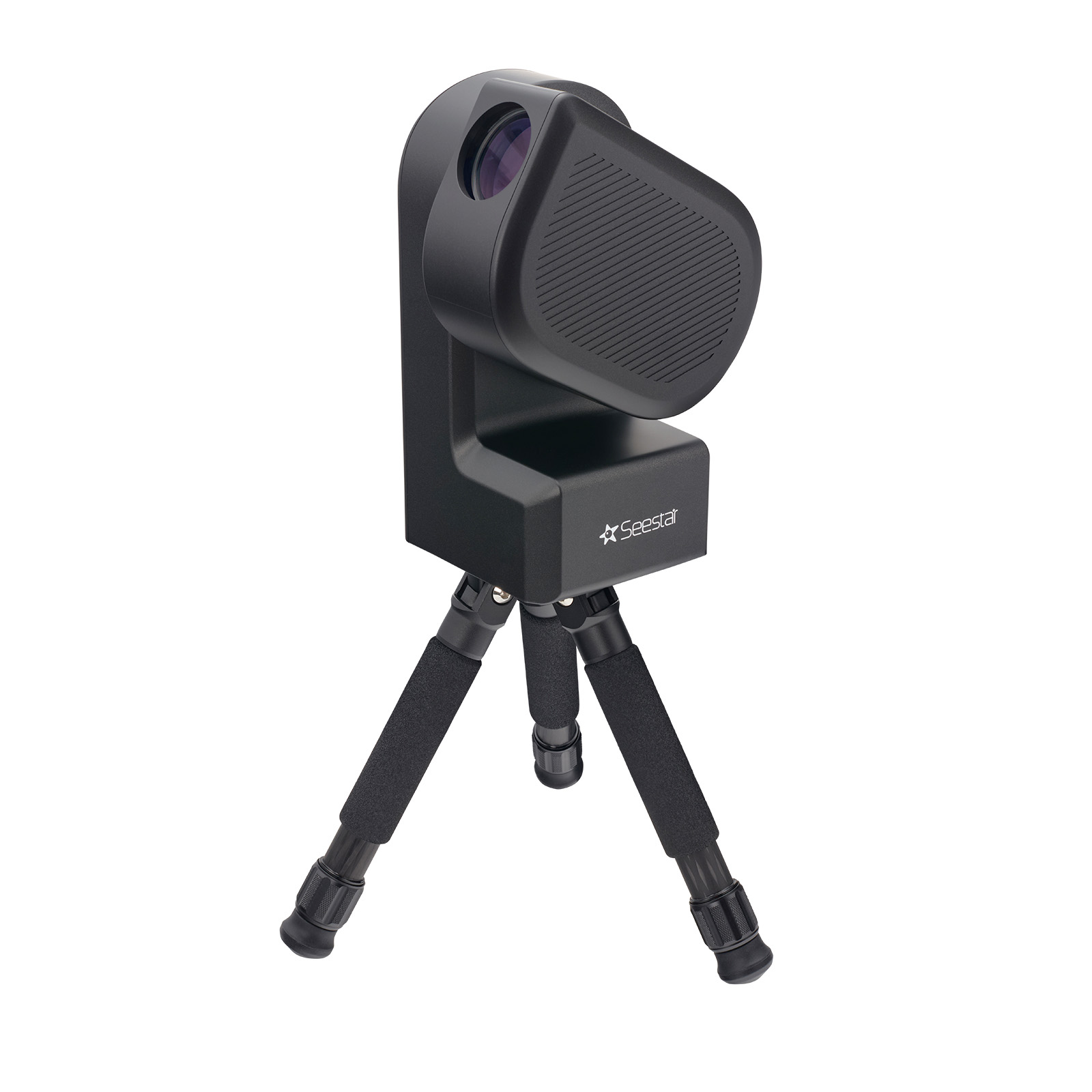
ZWO Seestar S50
A smart scope that captures deep sky objects with zero setup fuss or expertise required.
Affiliate link — we earn from qualifying purchases at no extra cost to you.
From the community
What owners say
Based on 23 Cloudy Nights discussions
What they love
- ✓Surprisingly good image quality for the price point, especially for deep-sky objects
- ✓Extremely fast setup and ease of use compared to traditional rigs (5 minutes from unboxing to imaging)
- ✓Ability to see deep-sky objects that visual observation struggles with
- ✓Lightweight and portable for backcountry hiking and travel (3kg complete rig)
- ✓Images suitable for post-processing and basic astrophotography
What caught them off guard
- !Software is half-baked with sloppy coding and design issues
- !App and firmware updates introduce more instability rather than improvements
- !Poor performance on planets and bright star clusters compared to visual observation
- !Limited educational content integrated into the software
- !Image quality noticeably inferior to traditional astrophotography rigs with post-processing
Top targets reported by owners
What you'll see
M42 (Orion Nebula)
described as 'exciting' even in raw form; friends post-processed it successfully; shows enough detai…
M51 (Whirlpool Galaxy)
spiral structure visible enough to recognize, though crude in raw output
Pluto
owner specifically plans to capture its motion against background stars; considered achievable goal
Faint nebulae and galaxies in Bortle 6+ skies
'surprisingly good' performance; notably better than visual observation through traditional scopes
Worth knowing before you buy
The Alt-Az mount design causes field rotation during long exposures, requiring sensor rotation compensation which may no…
Software is buggy and unfinished with sloppy coding, inaccurate translations in the app and manual, and instability that…
Limited educational value integrated into the software; users need to bring external references to learn about observed…
Head to head
How it compares
Frequently asked
Questions from owners
Sourced from Cloudy Nights discussions.
- How good are the images compared to traditional astrophotography setups?
- The Seestar produces surprisingly good deep-sky images for its price and convenience, but they are noticeably less detailed than images from dedicated astrophotography rigs with post-processing. However, members agree the raw frames can be processed in software like Astro Pixel Processor or Siril to improve results significantly, and for beginners seeing DSOs for the first time, the images are impressive.
- Is the software stable and complete, or is it still buggy?
- Multiple owners report the software feels rushed and unfinished, with sloppy coding, stability issues in app/firmware updates, and inaccurate translations in the manual and app. However, ZWO regularly releases updates, and members expect these issues to improve over time as the product matures, similar to early smartphone technology.
- How long does setup take compared to traditional telescopes?
- The Seestar sets up in about 5 minutes with just leveling and GPS calibration, versus 30+ minutes for traditional rigs requiring polar alignment, focusing, darks, and flats. This speed makes it practical for quick imaging sessions during limited clear-sky windows or when traveling.
- Can it perform well for astrophotography, or is it just for visual observing?
- The Seestar is marketed as an EAA (Electronically Assisted Astronomy) device rather than a dedicated astrophotography tool. It excels at live stacking and quick observations but lacks the advanced features (filters, multiple sensors, customization) of traditional AP setups; unprocessed images are adequate but modest.
- Is it suitable as a first telescope for children or beginners?
- The Seestar is excellent for introducing children and beginners to deep-sky objects without frustration, as it handles all technical details automatically and displays results on a phone or tablet they already know how to use. However, some purists argue it skips the learning experience of traditional observing like star-hopping and constellation recognition.
- Does the field rotation compensation work well for long exposures?
- The Seestar uses sensor rotation rather than an equatorial mount to compensate for Earth's rotation, which members confirm works for moderate exposures. However, some owners specifically chose it hoping for longer AP sessions and found the compensation adequate but not perfect for very long stacks.
Full Specifications
Optics
| Aperture | 50mm |
| Focal Length | 250mm |
| Focal Ratio | f/5 |
| Optical Design | Smart Telescope |
| Coatings | Multi-coated ED doublet objective |
Mount & Tracking
| Mount Type | Integrated |
| GoTo (Computerised) | Yes |
| Tracking | Yes |
| Tracking Motor | Integrated dual-axis motorised alt-az with auto-alignment |
Focuser
| Focuser Type | Motorised electric focuser (auto-focus via software) |
Physical
| OTA Weight | 2.5kg |
| Total Weight (with mount) | 2.5kg |
| Tube Length | 270mm |
| Tube Material | Aluminium alloy with polycarbonate housing |
Included Accessories
| Diagonal | No |
Smart Telescope Features
| Built-in Camera | Yes |
| App Controlled | Yes |
| WiFi | Yes |
| Battery Included | Yes |
| Sensor | 1/2.8" Sony IMX462 CMOS |
| Sensor Resolution | 2.1MP |