Browse·Compounds·Celestron NexStar 6SE
Celestron
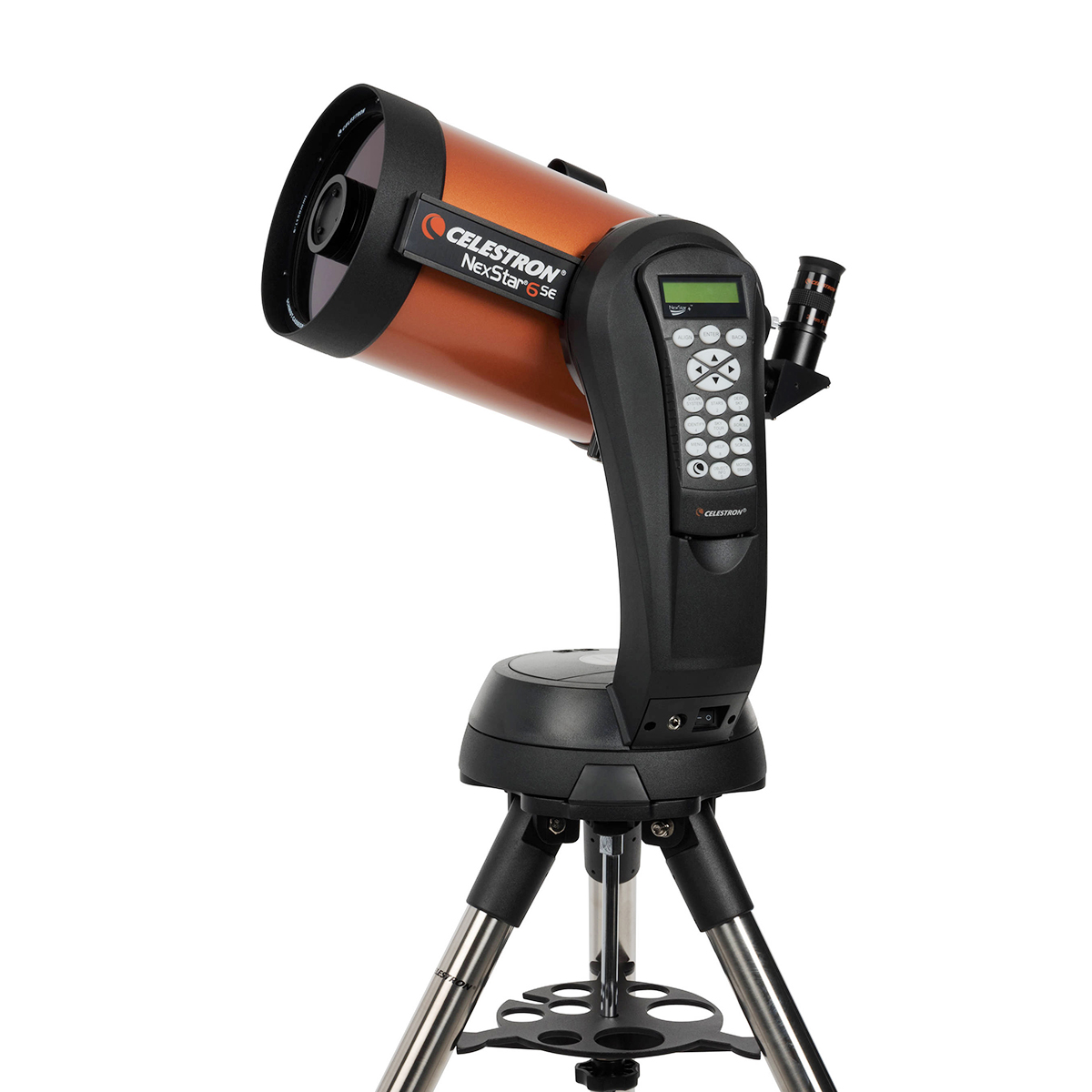
Celestron NexStar 6SE
A lightweight grab-and-go six-inch that delivers sharp planetary views with motorized convenience.
Affiliate link — we earn from qualifying purchases at no extra cost to you.
From the community
What owners say
Based on 25 Cloudy Nights discussions
What they love
- ✓Deadly accurate go-to alignment, often finding targets within the center third of a low power eyepiece field
- ✓Surprisingly accurate tracking - was able to locate Neptune in a 7mm eyepiece and Uranus just inside the field of view a…
- ✓Very portable and easy to set up once go-to alignment process is mastered
- ✓Optics are identical to the 6" Evolution model
- ✓Works well with StarSense auto-alignment system
What caught them off guard
- !Requires external power supply (no internal battery like Evolution models)
- !Uses spur gear system with more backlash compared to Evolution's worm gears
- !Less stable than Evolution mount due to lighter construction
- !Setup is more time-consuming than Evolution (requires powered slew to alignment stars rather than manual clutch position…
- !Central obstruction reduces effective aperture brightness
Top targets reported by owners
What you'll see
Jupiter and Venus
bright, high-magnification views with no chromatic aberration; internal obstruction not noticeable i…
Moon
crisp detail of dusty surface under good seeing and collimation
Saturn
resolves well at high power when cooled and seeing permits
Brighter globular clusters (M13, M15)
observable even from light-polluted urban yards; rewarding though not as impressive as larger apertu…
Worth knowing before you buy
Spur gear system in the mount has more backlash than the worm gears in the Evolution model, though this can be managed t…
Requires an external power supply or external battery pack (users report attaching lithium batteries with Velcro to the…
Some users report WiFi interference issues when using optional WiFi adapters, though Bluetooth adapters appear to work r…
Head to head
How it compares
NexStar 6SE
Celestron
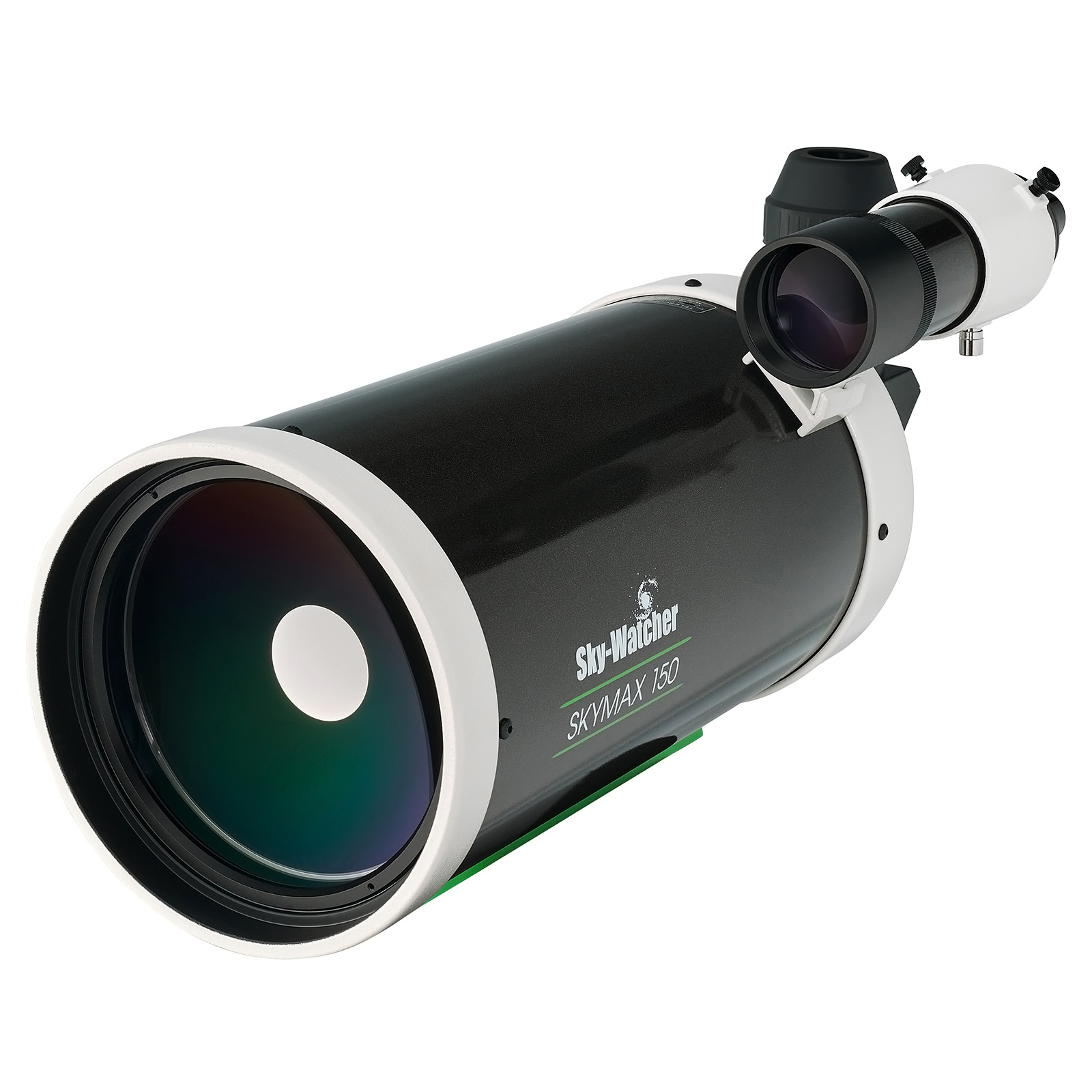
SkyMax 150 Pro + HEQ5
Sky-Watcher
150mm · GoTo Schmidt-Cassegrain vs 150mm · GoTo Maksutov-Cassegrain
Full comparison →
NexStar 6SE
Celestron
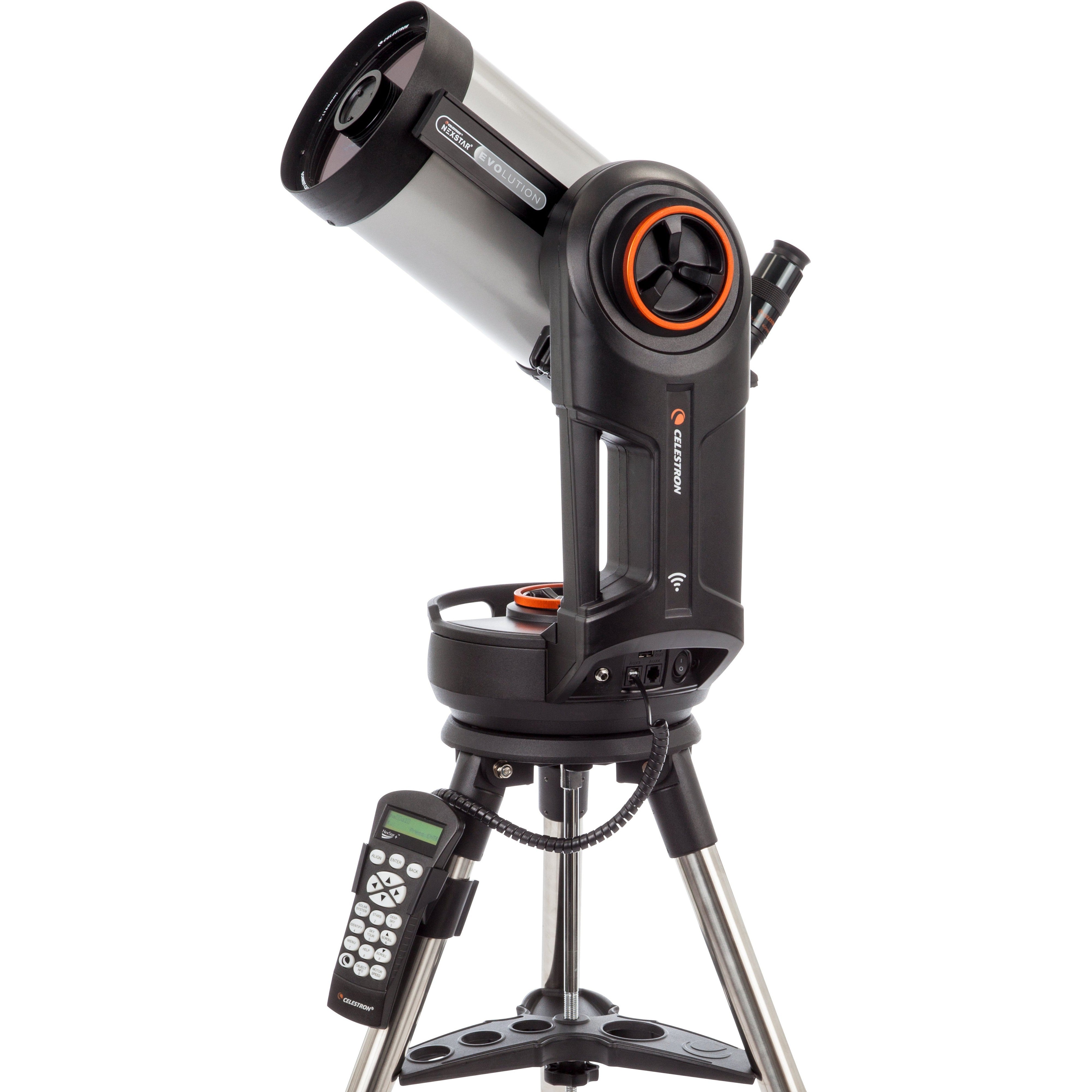
NexStar Evolution 6
Celestron
150mm · GoTo Schmidt-Cassegrain vs 150mm · GoTo Schmidt-Cassegrain
Full comparison →
NexStar 6SE
Celestron
Meade LX65 6" Mak
Meade Instruments
150mm · GoTo Schmidt-Cassegrain vs 152mm · GoTo Maksutov-Cassegrain
Full comparison →
NexStar 6SE
Celestron
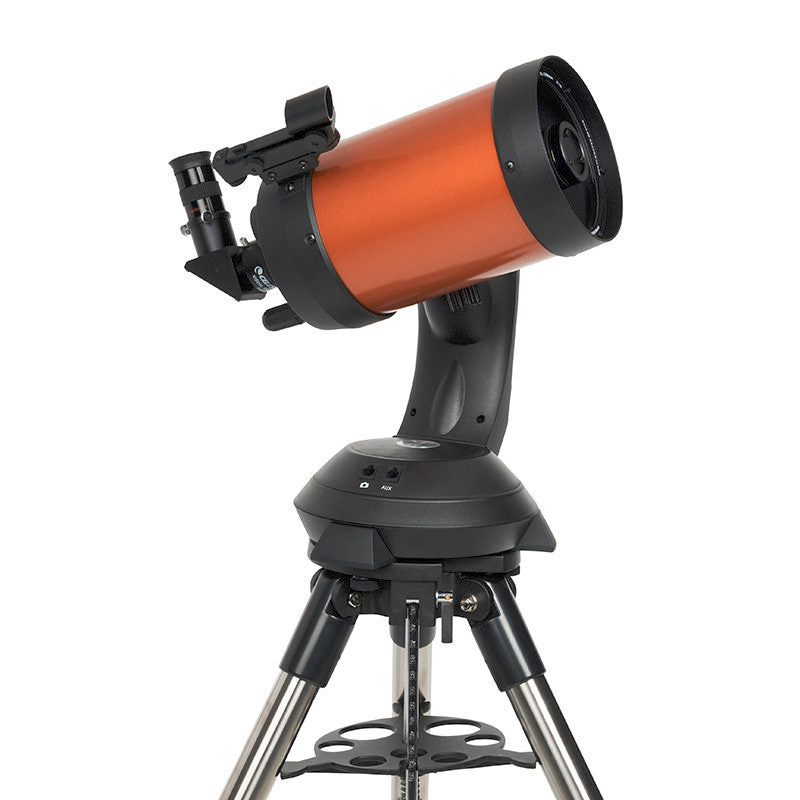
NexStar 5SE
Celestron
150mm · GoTo Schmidt-Cassegrain vs 125mm · GoTo Schmidt-Cassegrain
Full comparison →
Frequently asked
Questions from owners
Sourced from Cloudy Nights discussions.
- Is the 6SE worth buying over the Evolution 6, or should I spend the extra $600?
- The 6SE is optically identical to the Evolution 6 and adequate for casual observing, but the Evolution offers a more solid mount with worm gears (better tracking), clutches for manual slewing, internal battery, and longer tripod legs. Multiple users report the Evolution is worth the premium for stability and convenience, though the 6SE performs well if budget is tight and you add external battery and Bluetooth adapter.
- How quickly can I align the 6SE and get observing?
- Users report alignment takes 5-7 minutes with the hand controller, or faster with StarSense auto-alignment. Once aligned, GoTo is accurate enough to place targets within the center third of a low-power eyepiece field, and users have successfully split double stars at high magnification after alignment.
- Does the 6SE's spur gear system and backlash cause tracking problems?
- The spur gears do have more backlash than the Evolution's worm gears, but members report this is manageable by carefully adjusting the anti-backlash feature and aligning with the star in the lower left, moving it up and right to center. Once set, the scope tracks satisfactorily for hours of observing.
- What are the main differences between the 6SE and 5-inch Maks for planetary viewing?
- The 6SE offers more aperture and wider field of view, while 5-inch Maks like the Celestron 127 or Orion Apex have longer focal ratios (f/12) and narrower fields, but superior color correction and no central obstruction issues. For planets specifically, the Mak provides sharper, crisper views with better contrast, though both are capable instruments.
- Is the 6SE stable enough on its single-arm mount?
- Users report no stability complaints with the 6SE, particularly because the OTA is lighter than the 8SE. The single-arm mount performs well for visual observing and imaging, and can support accessories like heavy eyepieces and dew shields without undue shake.
- Do I need an external battery for the 6SE, and is WiFi worth adding?
- The 6SE requires an external power supply or battery pack; users commonly velcro a lithium battery to the fork arm for $18-20. WiFi capability can be added via Celestron's adapter, but several members report WiFi interference issues with the Evolution line, while Bluetooth adapters like SkyBT work reliably without external interference.
Full Specifications
Optics
| Aperture | 150mm |
| Focal Length | 1500mm |
| Focal Ratio | f/10 |
| Optical Design | Schmidt-Cassegrain |
| Coatings | StarBright XLT fully multi-coated on all optical surfaces |
Mount & Tracking
| Mount Type | GoTo (Computerised) |
| GoTo (Computerised) | Yes |
| Tracking | Yes |
| Tracking Motor | Single axis (alt-az) |
Focuser
| Focuser Size | 1.25" |
| Focuser Type | SCT rear-cell focuser |
Physical
| OTA Weight | 3.5kg |
| Total Weight (with mount) | 11.5kg |
| Tube Length | 394mm |
| Tube Material | Aluminium |
Included Accessories
| Eyepieces | 25mm Plössl |
| Finder Scope | StarPointer red dot finder |
| Diagonal | No |