Browse·Compounds·Celestron NexStar 8SE
Celestron
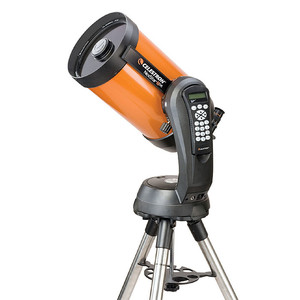
Celestron NexStar 8SE
A smart eight-inch SCT that delivers serious aperture in a genuinely portable package.
Affiliate link — we earn from qualifying purchases at no extra cost to you.
Top targets reported by owners
What you'll see
Jupiter and Mars at high magnification (250x noted as optimal for the 127mm Mak), with excellent planetary detail and contrast when thermally stable
The Moon
repeatedly praised as spectacular, with 'jaw dropping' views of dusty surface detail in good seeing…
Venus
bright and well-rendered without chromatic aberration
Double stars
performs well at higher powers for splitting
Worth knowing before you buy
Central obstruction causes less pinpoint stars and a more prominent first diffraction ring compared to refractors, makin…
Requires extended cooldown time (up to 1 hour) to reach thermal equilibrium, making it unsuitable for grab-and-go observ…
Narrow field of view (approximately 1 degree with typical eyepieces) significantly limits viewing of larger deep sky obj…
Head to head
How it compares
NexStar 8SE
Celestron
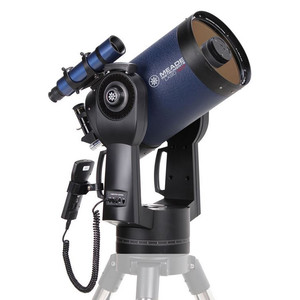
Meade LX90 8" ACF
Meade Instruments
203mm · GoTo Schmidt-Cassegrain vs 203mm · GoTo Schmidt-Cassegrain
Full comparison →
NexStar 8SE
Celestron
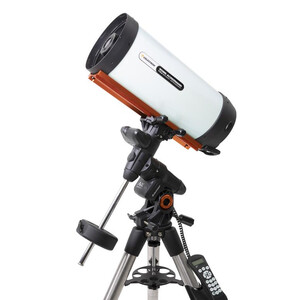
RASA 8"
Celestron
203mm · GoTo Schmidt-Cassegrain vs 203mm · Manual Schmidt-Cassegrain
Full comparison →
NexStar 8SE
Celestron
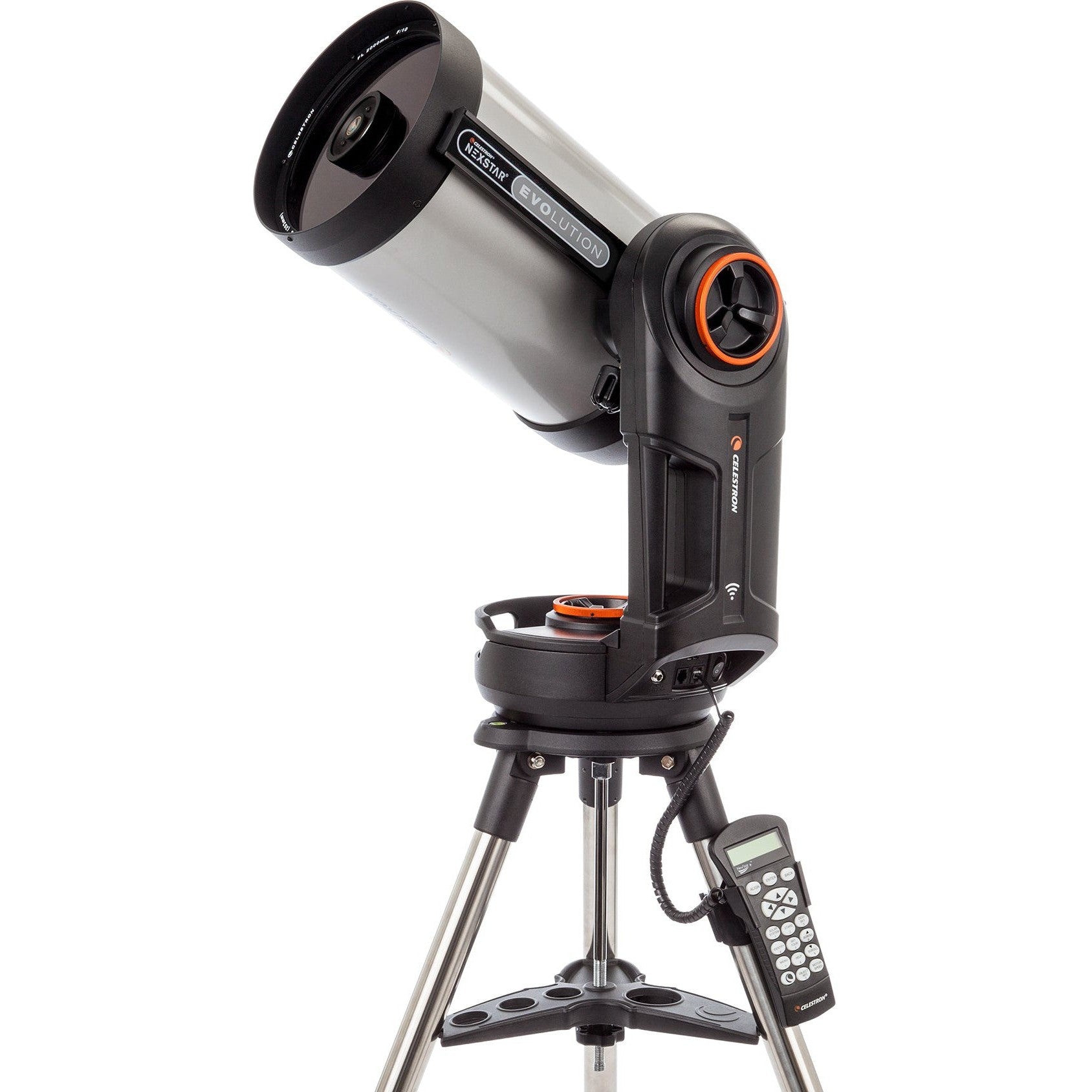
NexStar Evolution 8
Celestron
203mm · GoTo Schmidt-Cassegrain vs 203mm · GoTo Schmidt-Cassegrain
Full comparison →
NexStar 8SE
Celestron
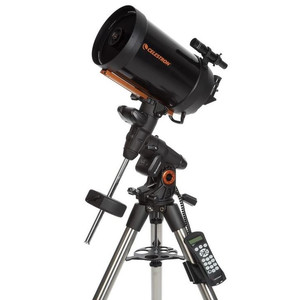
Advanced VX 8 SCT
Celestron
203mm · GoTo Schmidt-Cassegrain vs 203mm · GoTo Schmidt-Cassegrain
Full comparison →
Frequently asked
Questions from owners
Sourced from Cloudy Nights discussions.
- How does a 5-inch Mak compare to a 4-inch refractor for the objects I want to observe?
- A 5-inch Mak has roughly equal effective aperture to a 4-inch refractor but provides better planetary views due to longer focal length and no chromatic aberration, though it has a narrower field of view and requires thermal equilibration time. For deep-sky objects like globular clusters and open clusters, the refractor's wider field of view is a significant advantage; globulars are observable but less impressive in the Mak's narrow field.
- Will I get pinpoint stars like my refractor produces?
- Maks and SCTs produce a more prominent diffraction ring around the star's central disc compared to refractors, making them appear less perfectly pinpoint, especially before the scope reaches thermal equilibrium. Achieving sharp star images requires good seeing conditions, proper thermal management, and adequate time for the scope to cool—more demanding than with a refractor.
- How long does a Mak or SCT take to cool down?
- Members report Maks typically require 45 minutes to an hour of cooling before delivering optimal planetary views, significantly longer than the 15-20 minutes a refractor needs. Temperature swings during an observing session noticeably degrade image quality in ways that don't affect refractors as severely.
- Can I use wide-field eyepieces effectively in a Mak?
- The 5-inch Mak's narrow field of view (roughly 1 degree with a 32mm eyepiece) severely limits wide-field observing; users note you're confined mostly to 1-inch eyepieces. A 32mm Plossl fits the field adequately for bright objects, but wide-field observing—a strength of refractors—is not a realistic option with a Mak.
- What are the real advantages of an 8-inch SCT over a 5-inch Mak?
- An 8-inch SCT like the NexStar 8SE provides significantly more aperture (effectively around 7.5 inches after obstruction) for better deep-sky resolution and brighter planetary images, weighs only slightly more, and can be used on remarkably modest mounts.
- Should I buy a 4-inch ED refractor, a 5-inch Mak, or a C5/6 SCT if I want one portable scope?
- A 4-inch ED refractor (f/6.5 to f/7) is shorter and lighter than a 4-inch achromat, provides excellent planetary and double-star performance, and requires no thermal adjustment, but is harder to find and more expensive than either a Mak or SCT.
Full Specifications
Optics
| Aperture | 203mm |
| Focal Length | 2032mm |
| Focal Ratio | f/10.01 |
| Optical Design | Schmidt-Cassegrain |
| Coatings | StarBright XLT fully multi-coated on all optical surfaces |
Mount & Tracking
| Mount Type | GoTo (Computerised) |
| GoTo (Computerised) | Yes |
| Tracking | Yes |
| Tracking Motor | Single axis (alt-az), with optional wedge for polar tracking |
Focuser
| Focuser Size | 1.25" |
| Focuser Type | SCT rear-cell focuser |
Physical
| OTA Weight | 5.44kg |
| Total Weight (with mount) | 18kg |
| Tube Length | 432mm |
| Tube Material | Aluminium |
Included Accessories
| Eyepieces | 25mm Plössl |
| Finder Scope | StarPointer red dot finder |
| Diagonal | No |