Browse·Refractors·Celestron StarSense Explorer LT 80AZ
Celestron
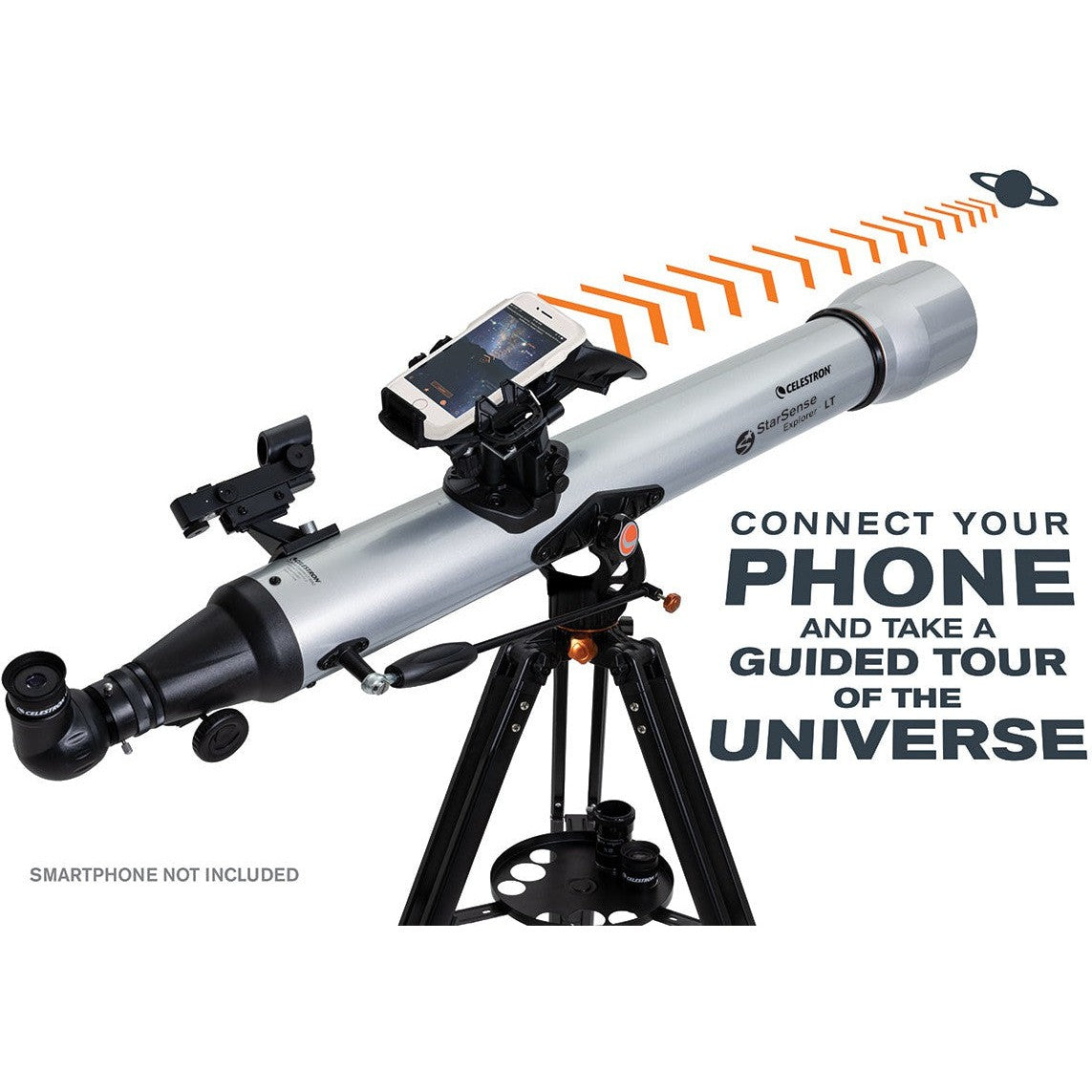
Celestron StarSense Explorer LT 80AZ
A smartphone-enabled refractor that finds everything for you without fuss.
Affiliate link — we earn from qualifying purchases at no extra cost to you.
From the community
What owners say
Based on 21 Cloudy Nights discussions
What they love
- ✓Much better views than similarly priced models even for beginners
- ✓Able to track down Jupiter and see color bands as a newbie
- ✓StarSense app is very easy to use and accurate for finding objects
- ✓Can find 10 celestial objects in less than half an hour versus 1.
- ✓Lightweight and easy to move around
What caught them off guard
- !Focuser comes with excessive grease that makes it very stiff, described as having 'square tires' smoothness before clean…
- !Unlock code for StarSense activation did not work out of the box, required calling Celestron during long hold times
- !Included eyepieces and diagonal are poor quality
- !Mount has vibration and wobble issues, especially noticeable when focusing
- !Focuser smoothness even after degreasing is still only 'crunchy peanut buttery smooth', not ideal
Top targets reported by owners
What you'll see
Jupiter with color bands visible (mentioned for DX 102 refractor, same optical quality as LT 80AZ)
The Moon (more forgiving than planets for poor seeing conditions)
DSO objects using the StarSense tracking system to locate them quickly
Worth knowing before you buy
The focuser has excessive factory grease that makes focusing feel rough and gritty; users report significant improvement after degreasing and relubrication with synthetic lithium grease.
The included AZ mount and tripod are undersized for heavier OTAs or high magnification use, causing vertical drift and requiring 3-4 seconds settle time after focusing or slewing.
The 80mm refractor is considered primarily useful as a platform for transferring the StarSense tracker to other telescopes rather than as a capable viewing instrument on its own.
Head to head
How it compares
StarSense Explorer LT 80AZ
Celestron
AstroView 90mm EQ Refractor
Orion
80mm · Manual Refractor vs 90mm · Manual Refractor
Full comparison →
StarSense Explorer LT 80AZ
Celestron
AR102
Explore Scientific
80mm · Manual Refractor vs 102mm · Manual Refractor
Full comparison →
StarSense Explorer LT 80AZ
Celestron
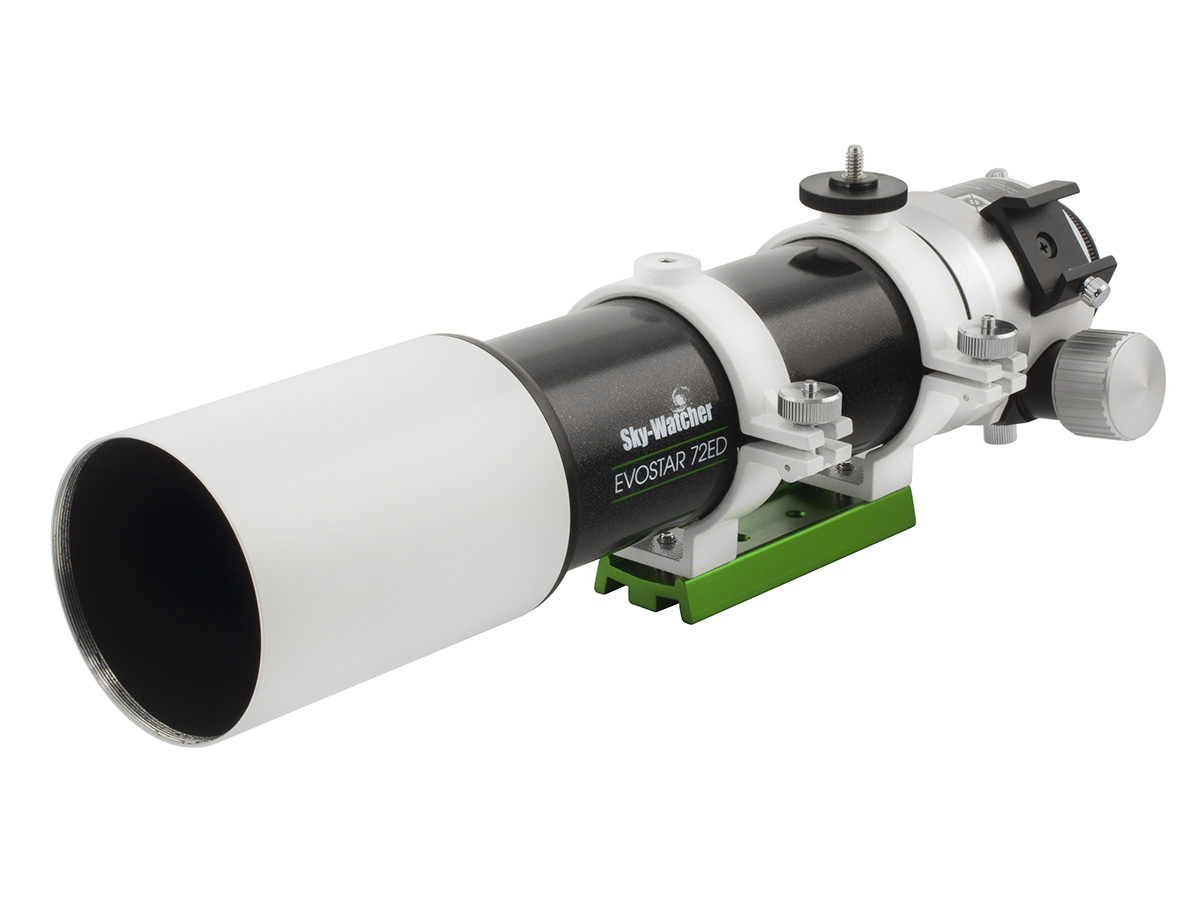
Evostar 72ED
Sky-Watcher
80mm · Manual Refractor vs 72mm · Manual Refractor
Full comparison →
StarSense Explorer LT 80AZ
Celestron
EvoStar 90 EQ2
Sky-Watcher
80mm · Manual Refractor vs 90mm · Manual Refractor
Full comparison →
Frequently asked
Questions from owners
Sourced from Cloudy Nights discussions.
- Is the mount stable enough for this telescope?
- The mount is the weak point of this package. Multiple users report noticeable wobble and 3-4 second settle times after focusing or moving the scope, especially when using zoom eyepieces or heavy accessories.
- How smooth is the focuser out of the box?
- The focuser comes overly greased with what one user described as 'car with square tires' smoothness. Several owners have disassembled it, removed the excess grease with mineral spirits, and replaced it with synthetic lithium grease (Super Lube), which dramatically improves operation without full replacement.
- Should I upgrade the eyepieces and diagonal that come with it?
- Multiple users report the included 25mm Kellner is acceptable but the diagonal and red dot finder are poor quality. Most recommend upgrading to better Plossl or Svbony eyepieces and a quality prism diagonal, which together cost around $100-150 and significantly improve views.
- Is the StarSense tracking system easy to use for beginners?
- Yes—users consistently praise the smartphone app for being intuitive even for non-technical people and for dramatically speeding up object location. Unlike GoTo systems, it requires no battery pack, alignment routine per session, or menu navigation, making it ideal for casual observers.
- Can I put the StarSense tracker on a different, better mount?
- The tracker is attached to the OTA on the 80mm model, making transfer to other mounts possible but requiring custom fabrication work. However, replacing just the tripod with a heavier unit (while keeping the included mount head) is straightforward and significantly improves stability and reduce settle time.
- Is this a good first telescope choice?
- Multiple experienced users recommend the 102mm refractor version over the 80mm, citing dramatically better views of planets and deep-sky objects while still being portable and beginner-friendly. The 80mm is better suited as a secondary grab-and-go scope or for transferring the StarSense system to another telescope.
Full Specifications
Optics
| Aperture | 80mm |
| Focal Length | 900mm |
| Focal Ratio | f/11.25 |
| Optical Design | Refractor |
| Coatings | Fully coated achromatic refractor optics |
Mount & Tracking
| Mount Type | Alt-Az |
| GoTo (Computerised) | No |
| Tracking | No |
Focuser
| Focuser Size | 1.25" |
| Focuser Type | Rack and pinion |
Physical
| OTA Weight | 2.1kg |
| Total Weight (with mount) | 5.8kg |
| Tube Length | 900mm |
| Tube Material | Aluminium |
Included Accessories
| Eyepieces | 25mm and 10mm eyepieces |
| Finder Scope | StarSense sky recognition dock (uses your smartphone) |
| Diagonal | Yes |